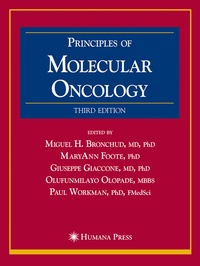
Principles of Molecular Oncology
Description

Drawing on years of significant scientific advances and clinical developments, the editors of POMO III have thoroughly updated the highly praised first and second editions and added new chapters to reflect the knowledge emerging from research on genomics, proteomics, chemoprevention strategies, new molecular targets, therapeutic monoclonal antibodies, and innovative cytotoxic and cytostatic small molecular-weight molecules. The first edition of this book (Humana Press, 2000) was also the first comprehensive presentation of the concept of cancer as a "disease process" involving key regulatory pathways. The second edition (2004) reaffirmed this dynamic concept, incorporating more recent evidence, and introducing such new topics of special interest as the combination of molecular diagnostics--expression profiling of genes and proteins--with developmental therapeutics, and the "binary state" concept (active/inactive) that seeks more relevant targets within the global molecular matrix of a given cancer. Comprehensive and intellectually stimulating, POMO III not only clearly elucidates the fundamentals of this dramatically advancing field, but also interprets the vast and often complex molecular data available. It fills a much neglected gap between "information" and "knowledge", and holds out the hope of new anticancer strategies that will reduce cancer cell proliferation and significantly reduce metastasis.
Reviews / Votes
From the reviews of the third edition:
"This is an update of a book of individual reviews of molecular oncology topics written by specialists in the field. . The intention is to present a broad overview of the concepts in molecular medicine and tumor biology that form the basis of many ongoing drug discovery projects . . The book is written for a broad audience, including students, house officers and clinical fellows, beginning researchers in cancer biology, and even practitioners of oncology." (Alexander C Minella, Doody's Review Service, 2008)
"The book provides a comprehensive and in-depth view of molecular basis of cancer. . it is a valuable resource of knowledge for both clinical and experimental oncologists. Those who are interested in the basic understanding of great progress which has been achieved in molecular oncology in last year will enjoy this book as well." (C. Altaner, Neoplasma, September, 2008)
More details
Other editions
Additional editions