

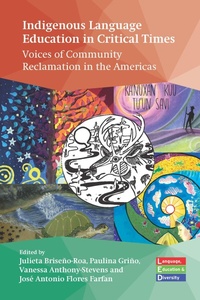
Indigenous Language Education in Critical Times
Voices of Community Reclamation in the Americas
Published on 15. July 2025
238 pages
978-1-80041-841-7 (ISBN)
Description

This book builds a space in which a diversity of voices - Indigenous teachers, activists and committed academics - are foregrounded in the processes of Indigenous education with the goal of Indigenous language reclamation. It decenters state systems of education (e.g. schooling) and instead considers the efforts of teachers (defined broadly), community activists and scholars who are developing initiatives to support Indigenous language practices in, around and beyond schooling, thereby emphasizing diverse processes of language reclamation in complex and varied settings. The authors invite the reader to reconsider language reclamation in the face of climate change and neocolonial exploitation, offering a source of radical hope for the future. Central to the book are narratives regarding community-based collaborations, which subvert the asymmetrical power relations between academia and educational practitioners and activists, and call into question the categories constructed by a top-down approach, as well as the colonial relationships that linguistic anthropology and linguistics have constructed within the spaces and people they 'study'.
Reviews / Votes
The Americas are expansive, beautiful, and resilient human and more than human communities. Life is always languaged here, and the authors in this volume bring forward this recognition through lived experience. They share lessons and ideas embedded in powerful stories and narratives. Carefully stewarded by dedicated editors, this collection is a delight to read and an inspiration to remember. * Elizabeth Sumida Huaman, University of Minnesota, USA * Immersing oneself in this powerful collection of transcultural narratives of resilience and persistence in the daily context of 'uneasy co-habitation of severely threatened "local" languages alongside dominant "global" ones' is to become embraced in an empowering experience of solidarity with the storyteller-authors. Solidarity in tenacity of spirit - qatsi'nangwa, in the Hopi sense, as 'the will to survive' through our gifts of languages. * Sheilah E. Nicholas, University of Arizona, USA *More details
Series
Language
English
Place of publication
Bristol
United Kingdom
Target group
College/higher education
Product notice
Reflowable
File size
9,45 MB
ISBN-13
978-1-80041-841-7 (9781800418417)
Copyright in bibliographic data and cover images is held by Nielsen Book Services Limited or by the publishers or by their respective licensors: all rights reserved.
Schweitzer Classification
Other editions
Additional editions
Julieta Briseno-Roa | Paulina Grino | Vanessa Anthony-Stevens
Indigenous Language Education in Critical Times
Voices of Community Reclamation in the Americas
Book
07/2025
Multilingual Matters
€42.10
Shipment within 10-20 days
Persons
Julieta Briseno-Roa is Professor-Researcher at the Centro de Investigaciones y Estudios Superiores en Antropologia Social (CIESAS), Mexico. She considers it fundamental to contribute to land-based education as a form of cultural reclamation, defense of the territory and action against the climate catastrophe.
Paulina Grino is Professor in the Facultad de Educacion, Universidad Autonoma de Chile. She is part of educational initiatives which reconnect community knowledge with school curricula.
Vanessa Anthony-Stevens is an Associate Professor in the Department of Curriculum and Instruction at the University of Idaho, USA. Her more than 20-year career in Indigenous education and Tribal Nation-building efforts centers on practices and policies of educational sovereignty.
Jose Antonio Flores Farfan is Professor in the Centro de Investigaciones y Estudios Superiores en Antropologia Social (CIESAS), Mexico. Over several decades he has worked with Indigenous communities to produce materials which vindicate the use of minoritized languages.
Paulina Grino is Professor in the Facultad de Educacion, Universidad Autonoma de Chile. She is part of educational initiatives which reconnect community knowledge with school curricula.
Vanessa Anthony-Stevens is an Associate Professor in the Department of Curriculum and Instruction at the University of Idaho, USA. Her more than 20-year career in Indigenous education and Tribal Nation-building efforts centers on practices and policies of educational sovereignty.
Jose Antonio Flores Farfan is Professor in the Centro de Investigaciones y Estudios Superiores en Antropologia Social (CIESAS), Mexico. Over several decades he has worked with Indigenous communities to produce materials which vindicate the use of minoritized languages.
Content
Contributors
Map
Elizabeth Alva Sumida Huaman: Foreword: Weaving Indigenous Words and Worlds and the Work of Everyday Hope
Julieta Briseno-Roa, Paulina Grino, Vanessa Anthony-Stevens and Jose Antonio Flores Farfan: Introduction
Part 1: Narratives of Reclamation: Lifework and Learning in Dialogue
Chapter 1. Julee Dehose, Jennie Burns and Vanessa Anthony-Stevens: 'We Are Not Going to Be Who We Were Meant to Be if We Don't Speak Our Language'
Chapter 2. David E.K. Smith and Richard Atuk: Nunayaagvi?mi Itut Uvlumini in Anchorage: A Conversation about Language Revitalization and Reciprocal Research Practices
Chapter 3. Angel Sobotta Talaltlilpt: Reclamation of Language, Stories, Relationship to the Land: Niimiipuu Female as a Storyteller
Poem by Celerina Patricia Sanchez Santiago: Nchii Naa Kuu/?Quien Soy? /Who Am I?
Part 2: Pedagogies and Practices of Indigenous Language Reclamation in and around Schools
Chapter 4. Erika Candelaria Hernandez Aragon and Haydee Morales Flores: Communal Education, Existence of Shared Autonomy
Chapter 5. Teresa Damian Jara: Experiences and Spaces of Opportunity for Work with the Ngigua Language
Chapter 6. Beatriz Gonzalez and Cornelio Hernandez Perez: The Use of Indigenous Languages in Community-based Indigenous Education in Oaxaca, Mx
Chapter 7. Ernesto Colin: Toward a Methodology of Urban Indigenous Youth Language Learning
Poem by Felipe Ruiz Jimenez: Gidro' Lihdxan/Placenta
Part 3: Redefining Language Learning in Diverse Spaces and Modes
Chapter 8. Louie Lorenze and Philip Stevens: Nlt'eego Benaldiih: The Dissemination of Ndee Epistemology in Contemporary Times
Chapter 9. Jessica Matsaw and Sammy Matsaw: Reconnecting to Homelands through Digital Storywork
Chapter 10. Marta Silva Fernandez, Jennifer Brito Pacheco and Paulina Grino: Learning from Narratives: Life Stories of Indigenous Students in Chilean Graduate Science Programs as Voices of Advocacy for University Space Reclamation
Chapter 11. Carolina Kueruef Poblete, Silvia Calfuqueo and Kelly Baur: Reflections and Actions on Linguistic Resistance in Formal and Informal Spaces as a Proposal for Decolonization in Wallmapu/Wajmapu
Poem by Celerina Patricia Sanchez Santiago: Kuu Teku/Ser de colores/Being of Colours
Julieta Briseno-Roa, Paulina Grino, Vanessa Anthony-Stevens and Jose Antonio Flores Farfan: Epilogue
Index
Map
Elizabeth Alva Sumida Huaman: Foreword: Weaving Indigenous Words and Worlds and the Work of Everyday Hope
Julieta Briseno-Roa, Paulina Grino, Vanessa Anthony-Stevens and Jose Antonio Flores Farfan: Introduction
Part 1: Narratives of Reclamation: Lifework and Learning in Dialogue
Chapter 1. Julee Dehose, Jennie Burns and Vanessa Anthony-Stevens: 'We Are Not Going to Be Who We Were Meant to Be if We Don't Speak Our Language'
Chapter 2. David E.K. Smith and Richard Atuk: Nunayaagvi?mi Itut Uvlumini in Anchorage: A Conversation about Language Revitalization and Reciprocal Research Practices
Chapter 3. Angel Sobotta Talaltlilpt: Reclamation of Language, Stories, Relationship to the Land: Niimiipuu Female as a Storyteller
Poem by Celerina Patricia Sanchez Santiago: Nchii Naa Kuu/?Quien Soy? /Who Am I?
Part 2: Pedagogies and Practices of Indigenous Language Reclamation in and around Schools
Chapter 4. Erika Candelaria Hernandez Aragon and Haydee Morales Flores: Communal Education, Existence of Shared Autonomy
Chapter 5. Teresa Damian Jara: Experiences and Spaces of Opportunity for Work with the Ngigua Language
Chapter 6. Beatriz Gonzalez and Cornelio Hernandez Perez: The Use of Indigenous Languages in Community-based Indigenous Education in Oaxaca, Mx
Chapter 7. Ernesto Colin: Toward a Methodology of Urban Indigenous Youth Language Learning
Poem by Felipe Ruiz Jimenez: Gidro' Lihdxan/Placenta
Part 3: Redefining Language Learning in Diverse Spaces and Modes
Chapter 8. Louie Lorenze and Philip Stevens: Nlt'eego Benaldiih: The Dissemination of Ndee Epistemology in Contemporary Times
Chapter 9. Jessica Matsaw and Sammy Matsaw: Reconnecting to Homelands through Digital Storywork
Chapter 10. Marta Silva Fernandez, Jennifer Brito Pacheco and Paulina Grino: Learning from Narratives: Life Stories of Indigenous Students in Chilean Graduate Science Programs as Voices of Advocacy for University Space Reclamation
Chapter 11. Carolina Kueruef Poblete, Silvia Calfuqueo and Kelly Baur: Reflections and Actions on Linguistic Resistance in Formal and Informal Spaces as a Proposal for Decolonization in Wallmapu/Wajmapu
Poem by Celerina Patricia Sanchez Santiago: Kuu Teku/Ser de colores/Being of Colours
Julieta Briseno-Roa, Paulina Grino, Vanessa Anthony-Stevens and Jose Antonio Flores Farfan: Epilogue
Index
