

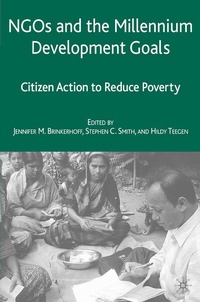
NGOs and the Millennium Development Goals
Description

Reviews / Votes
"This book uses a focus on the Millennium Development Goals to articulate and apply an ecological perspective on the roles of NGOs in fostering social development. The authors and their contributors make a persuasive case for NGOs as complements to government and business in creating and implementing the global partnerships for intransigent development problems. The book will a valuable resource in identifying the comparative advantages of NGOs and crafting the alliances to use those advantages effectively to achieve the MDGs and solve many other challenging problems." - L. David Brown, Hauser Center for Nonprofit Organizations, Harvard University"This book, packed with great material,is essential reading for those keen on building political willfor reducing poverty and achieving theMillennium Development Goals."
- Coralie Bryant, co-author of Going Global: Transforming Relief and Development NGOs
'Although governments and private firms can and must do more to address poverty throughout the world, this volume is the first to cogently demonstrate the vital and unique roles that NGOs play in ensuring that the promise of the MDGs is met through a wide range of citizen actions and engagement. The book's scholarly contributions, tempered through direct input from leading practitioners in the field, provide invaluable insight into how and why NGOs matter for poverty alleviation. National leaders, policy scholars and society at large will benefit immensely fromthe knowledge captured here as we work together in the fight against global poverty.'
- Leonel Fernandez, President of the Dominican Republic "A well-thought out and ambitious attempt to place the roles of NGOs within the multi-faceted and often muddled challenge of achieving Millennium Development Goals (MDGs). The authors' knowledge about the NGOs in our contemporary, globalized society makes clear what roles they are playing now and can do more of in our collective call against poverty."
- Kumi Naidoo, Secretary General, CIVICUS: World Alliance for Citizen Participation
More details
Other editions
Additional editions
Persons
STEPHEN C. SMITH is Professor of Economics, George Washington University, USA.
HILDY TEEGEN is Associate Professor of International Business, George Washington University, USA.
