

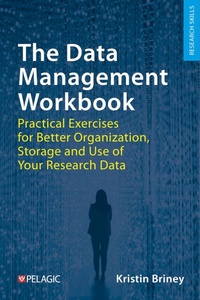
The Data Management Workbook
Practical Exercises for Better Organization, Storage and Use of Your Research Data
Published on 2. December 2025
114 pages
978-1-78427-574-7 (ISBN)
Description

If you want to manage your research data better but don't know where to begin, this short workbook will help you get started!
The Data Management Workbook helps researchers design useful data-management plans through a step-by-step series of structured exercises, worksheets and checklists, including:
- creating a data dictionary
- evaluating a lab notebook
- finding the best way to organize your files
- setting up useful file naming conventions
- writing effective README.txt files
- selecting the right data repository
- determining data stewardship
- preparing data for future use
Suitable for researchers working in many different disciplines, this guide also shows how to customize data-management plans to better fit your individual workflows, methodologies, laboratories and datasets. Author Kristin Briney builds on the foundations in her previous book, Data Management for Researchers, to help bridge the gap between understanding the principles and being able to implement data management as part of your research practice.
The Data Management Workbook helps researchers design useful data-management plans through a step-by-step series of structured exercises, worksheets and checklists, including:
- creating a data dictionary
- evaluating a lab notebook
- finding the best way to organize your files
- setting up useful file naming conventions
- writing effective README.txt files
- selecting the right data repository
- determining data stewardship
- preparing data for future use
Suitable for researchers working in many different disciplines, this guide also shows how to customize data-management plans to better fit your individual workflows, methodologies, laboratories and datasets. Author Kristin Briney builds on the foundations in her previous book, Data Management for Researchers, to help bridge the gap between understanding the principles and being able to implement data management as part of your research practice.
Reviews / Votes
Briney's workbook strikes an effective balance between approachable narrative framing and structured practical application.... [it] provides a clear and manageable roadmap for more consistent and sustainable data management practices. -- Matthew Greengold * Medical Reference Services Quarterly *More details
Series
Language
English
Place of publication
Exeter
United Kingdom
Target group
College/higher education
Product notice
Reflowable
File size
5,75 MB
ISBN-13
978-1-78427-574-7 (9781784275747)
Copyright in bibliographic data and cover images is held by Nielsen Book Services Limited or by the publishers or by their respective licensors: all rights reserved.
Schweitzer Classification
Other editions
Additional editions
Kristin Briney
The Data Management Workbook
Practical Exercises for Better Organization, Storage and Use of Your Research Data
Book
12/2025
Pelagic Publishing
€30.10
Shipment within 10-15 days
Person
Kristin Briney is the Biology & Biological Engineering Librarian at the California Institute of Technology. She is the author of Data Management for Researchers and coauthor, with Becky Yoose, of Managing Data for Patron Privacy. She has a PhD in chemistry and an MLIS, both from the University of Wisconsin-Madison. She specializes in research data management, institutional data policy, and patron privacy with respect to library data handling. Kristin is an advocate for the adoption of the international date standard ISO 8601 (YYYY-MM-DD) and likes to spend her free time making data visualizations out of yarn.
Content
Chapter 1. Introduction
1.1 What is Data Management?
1.2 The Research Data Lifecycle
1.3 Why Do Data Management?
1.4 Using This Book to Manage Your Data Better
Chapter 2. Documentation
Exercise 2.1: Evaluate a Laboratory/Research Notebook
Exercise 2.2: Document Project Information
Exercise 2.3: Create a Data Dictionary
Exercise 2.4: Build a Documentation Template
Chapter 3. File Organization and Naming
Exercise 3.1: Set up a File Organization System
Exercise 3.2: Create a File Naming Convention
Chapter 4. Data Storage and Security
Exercise 4.1: Pick Storage and Backup Systems
Exercise 4.2: Test Your Backup
Exercise 4.3: Create a Strong Passphrase
Chapter 5. Data Management Planning and Policies
Exercise 5.1: Write a Data Management Plan for a Funding Application
Exercise 5.2: Write a Living Data Management Plan
Exercise 5.3: Identify Applicable Data Policies
Exercise 5.4: Determine Data Stewardship
Chapter 6. Data Sharing
Exercise 6.1: Make a Spreadsheet more Accessible and Reusable
Exercise 6.2: Write a README File for Shared Data
Exercise 6.3: Write Alt Text for a Data Visualization
Exercise 6.4: Pick a Data Repository for Sharing
Exercise 6.5: Select a License for Your Shared Data
Exercise 6.6: Share Data
Exercise 6.7: Cite a Publicly Available Dataset
Chapter 7. Project Wrap-up
Exercise 7.1: Convert Data File Types
Exercise 7.2: Create an "Archive" Folder
Exercise 7.3: Prepare Data for Future Use
Exercise 7.4: Separate from Your Institution
1.1 What is Data Management?
1.2 The Research Data Lifecycle
1.3 Why Do Data Management?
1.4 Using This Book to Manage Your Data Better
Chapter 2. Documentation
Exercise 2.1: Evaluate a Laboratory/Research Notebook
Exercise 2.2: Document Project Information
Exercise 2.3: Create a Data Dictionary
Exercise 2.4: Build a Documentation Template
Chapter 3. File Organization and Naming
Exercise 3.1: Set up a File Organization System
Exercise 3.2: Create a File Naming Convention
Chapter 4. Data Storage and Security
Exercise 4.1: Pick Storage and Backup Systems
Exercise 4.2: Test Your Backup
Exercise 4.3: Create a Strong Passphrase
Chapter 5. Data Management Planning and Policies
Exercise 5.1: Write a Data Management Plan for a Funding Application
Exercise 5.2: Write a Living Data Management Plan
Exercise 5.3: Identify Applicable Data Policies
Exercise 5.4: Determine Data Stewardship
Chapter 6. Data Sharing
Exercise 6.1: Make a Spreadsheet more Accessible and Reusable
Exercise 6.2: Write a README File for Shared Data
Exercise 6.3: Write Alt Text for a Data Visualization
Exercise 6.4: Pick a Data Repository for Sharing
Exercise 6.5: Select a License for Your Shared Data
Exercise 6.6: Share Data
Exercise 6.7: Cite a Publicly Available Dataset
Chapter 7. Project Wrap-up
Exercise 7.1: Convert Data File Types
Exercise 7.2: Create an "Archive" Folder
Exercise 7.3: Prepare Data for Future Use
Exercise 7.4: Separate from Your Institution
