

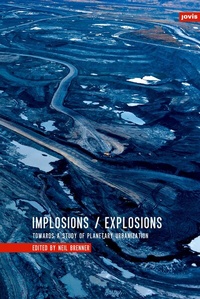
Implosions /Explosions
Description

1970 formulierte Henri Lefebvre seine radikale These der vollkommenen Urbanisierung der Gesellschaft, eine Entwicklung, die seiner Meinung nach den radikalen Umschwung von einer Analyse der Stadtformen zur Untersuchung von Urbanisierungsprozessen erforderte.
Indem es klassische und zeitgenössische Texte zur "Urbanisierungsfrage" zusammenführt, untersucht dieses Buch verschiedene theoretische, erkenntnistheoretische, methodologische und politische Schlussfolgerungen aus Lefebvres These. Es versammelt eine Reihe von analytischen und kartografischen Interventionen, die traditionelle Raumontologien ablösen (städtisch/ländlich, Stadt/Land, Stadt/Nicht-Stadt, Gesellschaft/Natur), um die heterogenen Implosionen und Explosionen der vom Kapitalismus bestimmten Urbanisierung über Orte, Regionen, Territorien, Kontinente und Ozeane hinweg bis in planetare Größenordnungen hinein zu untersuchen.
More details
Other editions
Additional editions
Person
Content
- Cover
- Back Cover
- Title
- Preface
- Contents
- 1. Introduction: Urban Theory Without an Outside
- Notes
- One: Foundations-The Urbanization Question
- 2. From the City to Urban Society
- 3. Cities or Urbanization?
- Cities Limited and Unlimited
- Capitalist Urbanization
- Alternative Urbanization
- An Adequate Language
- Conclusions
- Notes
- 4. Networks, Borders, Differences: Towards a Theory of the Urban
- The Thesis of Complete Urbanization
- The City in Urban Society
- Perceived, Conceived and Lived Space
- Urban Space: Networks, Borders, Differences
- A New Understanding of the Urban
- Notes
- Two: Complete Urbanization-Experience, Site, Process
- 5. Where Does the City End?
- Notes
- Figure Credits
- 6. Traveling Warrior and Complete Urbanization in Switzerland: Landscape as Lived Space
- Town and Country
- The Theory of the Production of Space
- The Experience of Complete Urbanization
- The Bright Lights of the City
- Notes
- Figure Credits
- 7. Is the Matterhorn City?
- Differences
- Networks
- Borders
- Matterhorn
- Figure Credits
- 8. Extended Urbanization and Settlement Patterns in Brazil: An Environmental Approach
- Industrialization and Extended Urbanization
- Peripheries: Industries and Frontiers
- The Environmental Question
- Towards Alternative Metropolitan Ecologies?
- Notes
- Figure Credits
- 9. The Emergence of Desakota Regions in Asia: Expanding a Hypothesis
- Definitions and Parameters
- The Emergence of the Extended Metropolitan Region in Asia
- Conditions and Processes Underlying the Emergence of New Zones of Economic Interaction: Desakota
- Questions Concerning the Desakota Regions in Asia
- Issues of Policy Formation
- Conclusion
- Notes
- Figure Credits
- Three: Planetary Urbanization-Openings
- 10. The Urbanization of the World
- The Urbanization of the World
- Globalization, Urbanization, Industrialization
- A Planet of Slums
- Towards a New Urban Agenda
- Notes
- Figure Credits
- 11. Planetary Urbanization
- Notes
- 12. The Urban Question Under Planetary Urbanization
- Perspective and Prospective
- Blind Fields and Ways of Seeing
- Concrete Abstractions and Abstract Expressionism
- Separation and Encounters: "The Urban Consolidates"
- Centrality and Citizenship: Here Comes Everybody?
- Notes
- 13. Theses on Urbanization
- Notes
- Figure Credits
- 14. Patterns and Pathways of Global Urbanization: Towards Comparative Analysis
- Tracing Global Urbanization
- Case Studies and Urban Models
- New Processes of Urbanization
- On Comparative Urban Studies
- A Historical Territorial Approach
- Three Dimensions of Urbanization
- Models of Urbanization
- Patterns of Urbanization
- Pathways of Urbanization
- The Urban as Open Horizon
- Notes
- Figure Credits
- 15. The Country and The City in the Urban Revolution
- 1
- 2
- 3
- 4
- 5
- 6
- 7
- 8
- 9
- 10
- 11
- 12
- 13
- 14
- 15
- 16
- 17
- 18
- 19
- 20
- 21
- Notes
- Figure Credits
- Four: Historical Geographies of Urbanization
- 16. Urbs in Rure: Historical Enclosure and the Extended Urbanization of the Countryside
- Defining Original Extended Urbanization
- Open-field System, Common Right and Parliamentary Enclosure
- Parliamentary Enclosure as Original Extended Urbanization
- Conclusions
- Notes
- Figure Credits
- 17. What is the Urban in the Contemporary World?
- The Industrial City, the City-Countryside Relationship and the Emergence of the Urban
- Contemporary Urbanization: Its Extended Nature and Other Implications
- The Extended Urbanization of Contemporary Brazil
- Notes
- 18. The Urbanization of Switzerland
- Decentralized Urbanization
- A Completely Urbanized Switzerland
- New Urban Landscapes
- Notes
- Figure Credits
- 19. Regional Urbanization and the End of the Metropolis Era
- Metropolitan Urbanization
- Regional Urbanization and the Great Density Convergence
- Reconstituting the Inner and Outer Cities
- Causes and Consequences of Regional Urbanization
- Extended Regional Urbanization
- The New Regionalism: Some Concluding Remarks
- Notes
- Figure Credits
- 20. Worldwide Urbanization and Neocolonial Fractures: Insights From the Literary World
- Worldwide Urbanization and Revolution
- On Uneven Urbanization
- Literature: An Entry Point into Global and Comparative Urbanization
- Creolizing the Urban Revolution
- Texaco
- Conclusion: On the Coeval Character of the Urban
- Notes
- Five: Urban Studies and Urban Ideologies
- 21. The "Urban Age" in Question
- Background: The Postwar Debate on Urban Population Thresholds
- The Theoretical Imperative: Postwar Critiques of Urban Demography
- Urban Age as Statistical Artifact
- Urban Age as Chaotic Conception
- Conclusion: Towards an Investigation of Planetary Urbanization
- Notes
- Figure Credits
- 22. What Role For Social Science in the "Urban Age"?
- Introduction: The Superannuation of Social Science?
- The Dimming of Urban Social Science?
- The New Urban Enthusiasm and its Discontents
- Conclusion: Prospectus for Urban Social Science
- Notes
- 23. City as Ideology
- Introduction
- New Urban Forms, New Urban Concepts
- The Urbanization of Ideology
- City and Country: Beyond the Spatial Division of Labor
- City as a System: The Urban Lifecycle and the Commuting Zone
- City as an Ideal Type: Urban Competitiveness
- Conclusion: Who Benefits from the City as Ideology?
- Notes
- 24. Urbanizing Urban Political Ecology: A Critique of Methodological Cityism
- Introduction: The Green City in an Urban World
- The History: How Political Ecology Came to the City
- Methodological Cityism
- A Political Ecology of Urbanization
- Conclusion
- Notes
- 25. Whither Urban Studies?
- Notes
- Six: Visualizations-Ideologies and Experiments
- 26. A Typology of Urban Switzerland
- Conceptions of an Urban Switzerland
- The Rediscovery of the Urban
- The Helvetian Model of Urbanization
- Towards a New Typology of Urbanization: A Methodological Strategy
- Metropolitan Regions
- Networks of Cities
- Quiet Zones
- Alpine Resorts
- Alpine Fallow Lands
- Differences as Urban Potential
- Notes
- Figure Credits
- 27. Is the Mediterranean Urban?
- 1
- 2
- 3
- 4
- 5
- 6
- 7
- Notes
- Figure Credits
- 28. Visualizing an Urbanized Planet-Materials
- Urbanization as a Cartography of Population
- Urbanization and the Geography of Economic Activity
- World Urbanization and Transportation Infrastructures
- Urbanization and Communications Infrastructures
- Urbanization as Worldwide Transformation of Land Occupation and Environment
- Notes
- Figure Credits
- Seven: Political Strategies, Struggles and Horizons
- 29. Two Approaches to "World Management": C. A. Doxiadis and R. B. Fuller
- The Institutionalization of the Urbanization Question
- Doxiadis, Fuller and the World Society of Ekistics
- Doxiadis and Planetary Zoning
- Fuller and Planetary Resource Utilization
- The Persistence of Technoscientific Ideologies
- Notes
- Figure Credits
- 30. City Becoming World: Nancy, Lefebvre and the Global-Urban Imagination
- Introduction: A Vast Urban Hive
- Urbs et orbis
- Urban Society and Urban Revolution
- Conclusion: The World as an Opening
- Notes
- 31. The Right to the City and Beyond: Notes on a Lefebvrian Reconceptualization
- Notes
- 32. The Hypertrophic City Versus the Planet of Fields
- Fossil Capitalism and Energy Regimes
- Ecological Imperialism and the Limits to Limitless Growth
- End of the World's Smallholders?
- Why Centralize Agriculture?
- How to Centralize Agriculture
- Conclusion
- Notes
- 33. Becoming Urban: On Whose Terms?
- The Language of Urban Research
- Peri-urban Zones of Encounter
- Whose Imaginary of the Future City?
- Notes
- Coda
- 34. Dissolving City, Planetary Metamorphosis
- Notes
- Contributors
- Sources
- Imprint
