

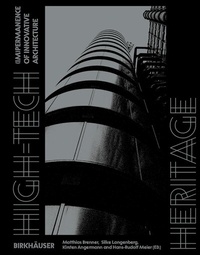
High-Tech Heritage
Description

High-tech Architecture - Preserving the Heritage of Innovative Construction
The high-tech architecture of the 1970s-1990s is typically characterized by the use and exhibition of advanced technologies. In terms of appearance, these buildings often have innovative façades, supporting structures accentuated in color, and expressively displayed technology systems. Unfortunately, however, the rapid obsolescence of technology has often led to the complete replacement of the very systems that defined the architectural form. In 2023, an international conference at ETH Zurich in collaboration with Bauhaus-Universität Weimar explored the question of how best to deal with the structural legacy of technologically innovative architecture. This book summarizes the results and provides an overview of the current state of research.
- Current state of research on high-tech architecture and its conservation
- Overview of the opportunities and challenges of high-tech buildings
- New findings on the topic of building within existing structures
- Also available as a set with the congress volume Denkmal Postmoderne 978-3-0356-2783-1
More details
Other editions
Additional editions
Persons
Matthias Brenner , ETH Zürich
Silke Langenberg , ETH Zürich
Kirsten Angermann , Bauhaus-Universität Weimar
Hans-Rudolf Meier , Bauhaus-Universität Weimar
