

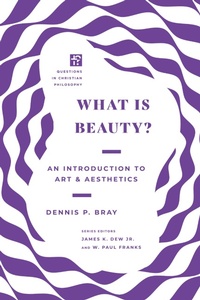
What Is Beauty?
Description

Does beauty really exist? What is the nature and value of art? What makes someone an artist? What is the artist's place in the church?
Dennis Bray explores these questions and more in What Is Beauty?, an introductory textbook on art and aesthetics from a Christian perspective. This volume of the Questions in Christian Philosophy series provides one of the only inviting and accessible introductions to the basic questions surrounding aesthetics and philosophy of art without sacrificing academic rigor.
What you'll find in What Is Beauty?:
- an introductory-level textbook perfect for undergraduates or anyone new to aesthetics and Christian philosophy
- examination centered around three major questions: How is God beautiful? What is art? Who is the artist?
- additional resources for readers who want to go deeper into aesthetics and philosophy
- tools to evaluate and cultivate your aesthetic taste from a Christian perspective
Written with clarity and accessibility, What Is Beauty? offers students and educators a thought-provoking exploration of key themes in the philosophy of art. Perfect forclassrooms and Christian artists alike, this book invites readers to reflect deeply on the relationship between beauty, art, and faith.
This book offers invaluable insights for undergraduate philosophy students, professors, and those exploring the intersection of faith and the arts. Readers will gain a deep understanding of how beauty reflects God's character, why art holds significance, and how artists are called to serve both the church and the world.
About the Series
The Questions in Christian Philosophy series features introductory textbooks that offer students a Christian perspective on the various branches of philosophy, enabling them as they seek to understand all facets of life including existence, knowledge, ethics, art, and more.
More details
Other editions
Additional editions
Person
Dennis Bray (PhD, University of St Andrews) is a philosophical theologian who integrates insights from philosophy, biblical and systematic theology, history, and the empirical sciences. He is assistant professor of theology at Taylor University.
James K. Dew Jr. (PhD, Southeastern Baptist Theological Seminary; PhD, University of Birmingham) is president and professor of Christian philosophy at New Orleans Baptist Theological Seminary. He is the coauthor of Philosophy: A Christian Introduction and Understanding Postmodernism: A Christian Perspective and the coeditor of God and Evil: The Case for God in a World Filled with Pain and God and the Problem of Evil: Five Views.
Content
Series Introduction: Questions in Christian Philosophy Introduction: Justin's Story 1. What Is Beauty? Beauty's Existence and Objective Reality 2. How Is God Beautiful? The Sharing of Trinitarian Beauty 3. What Is Art? The Nature and Definition of Art 4. Why Is Art Valuable? The Value and Evaluation of Art 5. What Art Does: The Artwork's Power and Effects 6. Who Is the Artist?: The Artist's Nature and Call 7. Artistic Excellence: The Artist's Vocation as Shalom Bringer 8. Taste in Art, Beauty, and God: Cultivating Perception and Enjoyment Conclusion Acknowledgments Questions for Further Discussion Reading for Further Reflection Figure Credits General Index Scripture Index
