

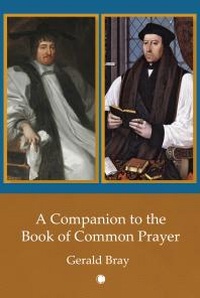
A Companion to the Book of Common Prayer
Published on 30. November 2023
523 pages
978-0-227-17932-1 (ISBN)
Description

The Book of Common Prayer stands as one of the greatest achievements of the English Reformation. Although increasingly replaced by more modern forms, it remains the foundation of Anglican worship and a succinct expression of Anglican doctrine as received by its sixteenth and seventeenth-century authors. It is therefore a text to be treasured and used, both for its historical insight into the Church of England's theological origins, and for its continued value as an enriching liturgical resource.
In this Companion, Gerald Bray provides a practical guide to the 1662 text and its underlying doctrinal basis. Outlining its development from the first version of the prayer book in 1549, through the Elizabethan settlement and the upheaval of the civil war and protectorate, he shows that many of the liturgical controversies and debates we see today are nothing new. With the inclusion of a summary of the history of the text, and an extensive bibliography for further reading, A Companion to the Book of Common Prayer will unlock this seminal text for a fresh generation of worshippers.
In this Companion, Gerald Bray provides a practical guide to the 1662 text and its underlying doctrinal basis. Outlining its development from the first version of the prayer book in 1549, through the Elizabethan settlement and the upheaval of the civil war and protectorate, he shows that many of the liturgical controversies and debates we see today are nothing new. With the inclusion of a summary of the history of the text, and an extensive bibliography for further reading, A Companion to the Book of Common Prayer will unlock this seminal text for a fresh generation of worshippers.
Reviews / Votes
The 1662 Book of Common Prayer has had a massive influence on corporate worship inside and outside the Anglican world ever since it was published. The principles which guided the production of this book take us beyond our contemporary superficial approaches to what we do when we gather as the church of God, allowing the great truths of the gospel to shape our response to that gospel as God\rquote s redeemed people. Gerald Bray is uniquely placed to reacquaint us with those principles. His encyclopaedic knowledge of Anglican history and theology enables us to understand why the various services of the book have the shape they do and so enable us to make better use of them. This is a richly edifying companion to the Book of Common Prayer which I highly recommend.' - Dr Mark D Thompson, Principal, Moore Theological College'Learned, pastoral, and unafraid to show his theological cards, Gerald Bray has breathed new life into a genre that has nurtured the devotion of millions of Anglicans through the centuries: the prayer book commentary. This Companion emphasises the theological themes of the Book of Common Prayer, treating it not as a historical artifact, nor as a monument of great literature, but as a liturgical embodiment of the good news of Jesus Christ.' - Samuel L. Bray, John N. Matthews Professor of Law at the University of Notre Dame and coeditor of The 1662 Book of Common Prayer: International Edition
'Gerald Bray has studied, written on, and taught the Anglican formularies for decades. Amidst rising interest in the 1662 Book of Common Prayer (including the recent International Edition), this timely Companion comes as an eminently readable and informative guide, and will be profitable to prayer-book newcomers and veterans alike.' - Jake Griesel, Lecturer in Church History and Anglican Studies, George Whitefield College, Cape Townr
'One of the major drivers for the theological renewal of global Anglicanism in the twenty-first century is a rediscovery of the Book of Common Prayer by a new generation. Gerald Bray's overview, building on the classic Tutorial Prayer Book, is a valuable guide for Anglicans worldwide who want to embrace their rich heritage.' - Andrew Atherstone, Wycliffe Hall, Oxford.
'The formation of the Ordinariates for former Anglicans in the Catholic Church in 2011 allowed the use of liturgical texts \lquote proper to the Anglican tradition which have been approved by the Holy See\rquote . The commission set up by the Vatican to oversee liturgy looked to the Prayer Book tradition in Anglicanism for suitable texts for liturgical use. The Ordinariates now have a complete set of liturgical texts using much Prayer Book Material including, Morning and Evening Prayer, the marriage and burial services and material from the Holy Communion Service including the collects. This has a profound ecumenical significance.
For some of us this has meant rediscovering the beauty of the Book of Common Prayer. Dr Bray has done us an invaluable service helping us to appreciate the sources of many of the prayers which are now incorporated into liturgy in the Catholic Church.' - The Right Revd Monsignor Keith Newton, Ordinary of the Personal Ordinariate of Our Lady of Walsingham
THIS Companion is a substantial book, written by an acknowledged scholar of primary Anglican sources, and it will be especially welcomed by those who want to discover more about the 1662 Book of Common Prayer and its antecedents. The material is arranged in ten chapters, and each chapter heading gives a clear steer to the reader of the focus of its attention. The Revd Christopher Irvine In Church Times, Professor at St Augustine's College of Theology and the Liturgical Institute, Mirfield.
More details
Language
English
Place of publication
Cambridge
United Kingdom
Target group
Professional and scholarly
File size
6,24 MB
ISBN-13
978-0-227-17932-1 (9780227179321)
Copyright in bibliographic data and cover images is held by Nielsen Book Services Limited or by the publishers or by their respective licensors: all rights reserved.
Schweitzer Classification
Other editions
Additional editions
Gerald Bray
A Companion to the Book of Common Prayer
Book
02/2024
James Clarke & Co Ltd
€45.00
Shipment within 10-20 days
Gerald Bray
A Companion to the Book of Common Prayer
Book
11/2023
James Clarke & Co Ltd
€112.50
Shipment within 10-20 days
Person
Reverend Dr Gerald Bray gained his doctorate from Paris-Sorbonne. He worked as Anglican Professor of Divinity at Beeson Divinity School, and is now a Research Professor at the same institution. He is also Director of Research at the Latimer Trust. His previous publications with James Clarke & Co. include The Books of Homilies: A Critical Edition (2016), The Institution of a Christian Man (2018), and Documents of the English Reformation (third edition 2020).
Content
Preface and Acknowledgements ix
1. History of the Book of Common Prayer 1
Before the Reformation 4
The Reformation Era 23
Since the Reformation 75
2. Introductory Material 103
The Preface 103
Concerning the Service of the Church 112
Of Ceremonies 117
The Order How the Psalter Is Appointed to Be Read 122
The Order How the Rest of Holy Scripture
Is Appointed to Be Read 126
Rules Governing the Moveable and
Immoveable Feasts 131
The Calendar 138
3. The Daily Offices 148
Morning and Evening Prayer 148
Appendices to the Daily Offices 182
4. Collects, Epistles and Gospels 198
Collects 199
Epistles and Gospels 244
5. The Lord's Supper 255
What's in a Name? 255
Basic Principles 257
Historical Developments 260
The Reformation 269
The Ante-Communion 274
The Communion 301
The Post-Communion 322
Excursus: From the 1637 Scottish BCP to the 1789
American BCP 326
The Appended Collects 329
The Closing Rubrics 330
6. Christian Initiation336
Introduction 336
The Forgotten History 338
The Reformation 344
The Reformed Baptismal Rites 348
English Baptismal Rites 350
Public Baptism of Infants (1552/1662) 361
Private Baptism of Infants (1552/1662) 376
Adult Baptism (1662) 378
The Catechism 382
Confirmation 388
7. Matrimony 393
Historical Introduction 393
The Reformation 398
The Preliminaries to the Marriage Service 398
The Marriage Service 403
The Post-Matrimonial Service 407
8. Other Services and Rites410
The Visitation and Communion of the Sick 410
The Burial of the Dead 416
The Thanksgiving of Women after Childbirth 424
A Commination 426
Forms of Prayer to Be Used at Sea 431
The State Services 434
9. The Ordinal 438
Introduction 438
Theological Questions 439
The Reformed Church of England 443
The Nomenclature 447
The Title and Preface 451
The Making of Deacons 456
The Ordering of Priests 459
The Consecration of an Archbishop or Bishop 465
10. The Articles of Religion 471
Bibliography 477
Index 485
Holy Scripture and Early Christian Writings 485
Names and Places 493
Subjects 498
Liturgies and Rites 504
Church Councils 505
Parliamentary Statutes and Measures 506
1. History of the Book of Common Prayer 1
Before the Reformation 4
The Reformation Era 23
Since the Reformation 75
2. Introductory Material 103
The Preface 103
Concerning the Service of the Church 112
Of Ceremonies 117
The Order How the Psalter Is Appointed to Be Read 122
The Order How the Rest of Holy Scripture
Is Appointed to Be Read 126
Rules Governing the Moveable and
Immoveable Feasts 131
The Calendar 138
3. The Daily Offices 148
Morning and Evening Prayer 148
Appendices to the Daily Offices 182
4. Collects, Epistles and Gospels 198
Collects 199
Epistles and Gospels 244
5. The Lord's Supper 255
What's in a Name? 255
Basic Principles 257
Historical Developments 260
The Reformation 269
The Ante-Communion 274
The Communion 301
The Post-Communion 322
Excursus: From the 1637 Scottish BCP to the 1789
American BCP 326
The Appended Collects 329
The Closing Rubrics 330
6. Christian Initiation336
Introduction 336
The Forgotten History 338
The Reformation 344
The Reformed Baptismal Rites 348
English Baptismal Rites 350
Public Baptism of Infants (1552/1662) 361
Private Baptism of Infants (1552/1662) 376
Adult Baptism (1662) 378
The Catechism 382
Confirmation 388
7. Matrimony 393
Historical Introduction 393
The Reformation 398
The Preliminaries to the Marriage Service 398
The Marriage Service 403
The Post-Matrimonial Service 407
8. Other Services and Rites410
The Visitation and Communion of the Sick 410
The Burial of the Dead 416
The Thanksgiving of Women after Childbirth 424
A Commination 426
Forms of Prayer to Be Used at Sea 431
The State Services 434
9. The Ordinal 438
Introduction 438
Theological Questions 439
The Reformed Church of England 443
The Nomenclature 447
The Title and Preface 451
The Making of Deacons 456
The Ordering of Priests 459
The Consecration of an Archbishop or Bishop 465
10. The Articles of Religion 471
Bibliography 477
Index 485
Holy Scripture and Early Christian Writings 485
Names and Places 493
Subjects 498
Liturgies and Rites 504
Church Councils 505
Parliamentary Statutes and Measures 506
