

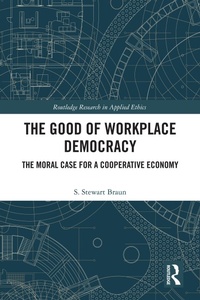
The Good of Workplace Democracy
The Moral Case for a Cooperative Economy
Will be published approx. on 17. July 2026
192 pages
978-1-040-55683-2 (ISBN)
Description

This book argues for workplace democracy on the grounds that it supports the development of fundamental human goods such as personal autonomy, self-development, and communal solidarity.
Workplace democracy is an old, but reinvigorated, idea that business firms should be organized democratically. Many proponents of workplace democracy contend that the organization of business firms should be consistent with the liberal/republican value of equal freedom that animates Western democracies. However, these arguments undersell the idea of workplace democracy by ignoring its significant moral, social, and psychological benefits. This book advances a novel, goods-based argument for workplace democracy. It engages with a wide range of psychological, sociological, and health-related data that point out the importance of the fundamental goods of personal autonomy, communal solidarity, and self-development to the flourishing or well-being of individuals, along with workplace democracy's ability to provide access to those goods. This is an important justification for workplace democracy that has been largely ignored.
The Good of Workplace Democracy is a philosophically rigorous, but empirically informed, book that approaches workplace democracy from the perspective of a normative commitment to promote goods fundamental to human well-being or flourishing. It will appeal to researchers and graduate students working in social and political philosophy, business ethics, sociology, organizational psychology, management studies, and economics.
Workplace democracy is an old, but reinvigorated, idea that business firms should be organized democratically. Many proponents of workplace democracy contend that the organization of business firms should be consistent with the liberal/republican value of equal freedom that animates Western democracies. However, these arguments undersell the idea of workplace democracy by ignoring its significant moral, social, and psychological benefits. This book advances a novel, goods-based argument for workplace democracy. It engages with a wide range of psychological, sociological, and health-related data that point out the importance of the fundamental goods of personal autonomy, communal solidarity, and self-development to the flourishing or well-being of individuals, along with workplace democracy's ability to provide access to those goods. This is an important justification for workplace democracy that has been largely ignored.
The Good of Workplace Democracy is a philosophically rigorous, but empirically informed, book that approaches workplace democracy from the perspective of a normative commitment to promote goods fundamental to human well-being or flourishing. It will appeal to researchers and graduate students working in social and political philosophy, business ethics, sociology, organizational psychology, management studies, and economics.
More details
Series
Language
English
Place of publication
London
United Kingdom
Publishing group
Taylor & Francis Ltd
Target group
College/higher education
Professional and scholarly
File size
1,75 MB
ISBN-13
978-1-040-55683-2 (9781040556832)
Copyright in bibliographic data and cover images is held by Nielsen Book Services Limited or by the publishers or by their respective licensors: all rights reserved.
Schweitzer Classification
Other editions
Additional editions
Book
approx. 07/2026
1st Edition
Routledge
€167.50
Not yet published
Person
S. Stewart Braun is Senior Lecturer in Social and Political Philosophy at Australian Catholic University. He works primarily on topics related to social ethics, political economy, and distributive justice. He is the coeditor of Virtue's Reasons: New Essays on Virtue, Character and Reasons (Routledge 2017).
Content
Preface and Acknowledgements
1. Introduction: What is Workplace Democracy?
1.1. Outline of the work
1.2 What is a Democratic Firm and a Cooperative Economy?
a. Democratic Firms and Socialism
1.3 Ownership, Authority, and the Nature of the Firm
a. Ownership and Control Rights
b. Risk and Control
1.4 Structure of the Moral Argument
2. Establishing the Fundamental Goods
2.1 Introduction
2.2 Flourishing, Well-Being, and Aristotle
2.3 The Nature of the Fundamental Goods
2.4 The Fundamental Goods and their Justification
a. The Good of Autonomy
b. The Good of Self-Development
c. The Good of Communal Solidarity
d. Self-Determination Theory
2.5 Promoting the Fundamental Goods
a. Is it Too Costly to Promote the Fundamental Goods
b. Our Moral Obligation to Promote the Fundamental Goods
2.6 Conclusion
3. Beyond the Political: The Need for a New Approach to Workplace Democracy
3.1 Introduction
3.2 The Political Theory of the Firm
a. Versions of the Political Theory of the Firm
b. Learning from the Political Theory of the Firm
3.3 Moving Beyond the Political Theory of the Firm
3.4 The Worry About Freedom
3.5 Other Arguments for Workplace Democracy
3.6 Conclusion
4. Efficiency and Democratic Firms: Challenging the Economic Arguments Against
Democratic Firms
4.1 Introduction
4.2 The Three Main Versions of the Efficiency Criticism
a. Economic Modeling and Empirical Observations
4.3 The Ward, Domar, Vanek (WDV) Objection
4.4 The Work Incentives Criticism
4.5 The Transaction Cost Objection
a. TCE: A Primer
b. Rejecting TCE 's Analysis of Workplace Democracy
c. Rejecting the Evolutionary Hypothesis
4.6 The Establishment Problem
a. The Path Dependency Thesis
b. The Appropriation Thesis
c. Financial Constraints
4.7 Conclusion
5. Personal Autonomy and Workplace Democracy
5.1 Introduction
5.2 Defining Autonomy
5.3 Autonomy and Control in Democratic Firms
a. Democratic Autonomy through Joint Control
b. Autonomy in Democratic Firms
5.4 Democratic Firms and the 'Disposition to Autonomy'
a. Undermining the Authority Narrative
b. Creating the Disposition to Autonomy
5.5 Conclusion
6. Self-Development and Workplace Democracy
6.1 Introduction
6.2 Self-Development as Practical and Active
6.3 Elements of Self-Development
6.4 Self-Development in Democratic Firms
a. Autonomy in Democratic Firms
b. Opportunity for Education and Diverse Experiences
c. Moral Development
6.5 Addressing Worries and Objections Regarding Self-Development in Democratic Firms
a. Why are Democratic Firms best for Self-Development?
b. Is Self-Development Illiberal?
6.6 Conclusion
7. Communal Solidarity and Democratic Firms
7.1 Introduction
7.2 Communal Solidarity as Mutual Concern
a. No Exploitation
b. Mutual Concern
7.3 Evidence for Communal Solidarity in Democratic Firms
7.4 Answering Objections: Explaining Why Communal Solidarity is Present in Democratic Firms.
a. Empirical Objections
b. Theoretical Objection
7.5 Conclusion
8. Moving Toward a Cooperative Economy
8.1 The Moral Argument for a Cooperative Economy
8.2 Transitioning to a Cooperative Economy
8.3 Democratic Firms in an Age of Democratic Deterioration
Index
1. Introduction: What is Workplace Democracy?
1.1. Outline of the work
1.2 What is a Democratic Firm and a Cooperative Economy?
a. Democratic Firms and Socialism
1.3 Ownership, Authority, and the Nature of the Firm
a. Ownership and Control Rights
b. Risk and Control
1.4 Structure of the Moral Argument
2. Establishing the Fundamental Goods
2.1 Introduction
2.2 Flourishing, Well-Being, and Aristotle
2.3 The Nature of the Fundamental Goods
2.4 The Fundamental Goods and their Justification
a. The Good of Autonomy
b. The Good of Self-Development
c. The Good of Communal Solidarity
d. Self-Determination Theory
2.5 Promoting the Fundamental Goods
a. Is it Too Costly to Promote the Fundamental Goods
b. Our Moral Obligation to Promote the Fundamental Goods
2.6 Conclusion
3. Beyond the Political: The Need for a New Approach to Workplace Democracy
3.1 Introduction
3.2 The Political Theory of the Firm
a. Versions of the Political Theory of the Firm
b. Learning from the Political Theory of the Firm
3.3 Moving Beyond the Political Theory of the Firm
3.4 The Worry About Freedom
3.5 Other Arguments for Workplace Democracy
3.6 Conclusion
4. Efficiency and Democratic Firms: Challenging the Economic Arguments Against
Democratic Firms
4.1 Introduction
4.2 The Three Main Versions of the Efficiency Criticism
a. Economic Modeling and Empirical Observations
4.3 The Ward, Domar, Vanek (WDV) Objection
4.4 The Work Incentives Criticism
4.5 The Transaction Cost Objection
a. TCE: A Primer
b. Rejecting TCE 's Analysis of Workplace Democracy
c. Rejecting the Evolutionary Hypothesis
4.6 The Establishment Problem
a. The Path Dependency Thesis
b. The Appropriation Thesis
c. Financial Constraints
4.7 Conclusion
5. Personal Autonomy and Workplace Democracy
5.1 Introduction
5.2 Defining Autonomy
5.3 Autonomy and Control in Democratic Firms
a. Democratic Autonomy through Joint Control
b. Autonomy in Democratic Firms
5.4 Democratic Firms and the 'Disposition to Autonomy'
a. Undermining the Authority Narrative
b. Creating the Disposition to Autonomy
5.5 Conclusion
6. Self-Development and Workplace Democracy
6.1 Introduction
6.2 Self-Development as Practical and Active
6.3 Elements of Self-Development
6.4 Self-Development in Democratic Firms
a. Autonomy in Democratic Firms
b. Opportunity for Education and Diverse Experiences
c. Moral Development
6.5 Addressing Worries and Objections Regarding Self-Development in Democratic Firms
a. Why are Democratic Firms best for Self-Development?
b. Is Self-Development Illiberal?
6.6 Conclusion
7. Communal Solidarity and Democratic Firms
7.1 Introduction
7.2 Communal Solidarity as Mutual Concern
a. No Exploitation
b. Mutual Concern
7.3 Evidence for Communal Solidarity in Democratic Firms
7.4 Answering Objections: Explaining Why Communal Solidarity is Present in Democratic Firms.
a. Empirical Objections
b. Theoretical Objection
7.5 Conclusion
8. Moving Toward a Cooperative Economy
8.1 The Moral Argument for a Cooperative Economy
8.2 Transitioning to a Cooperative Economy
8.3 Democratic Firms in an Age of Democratic Deterioration
Index
