

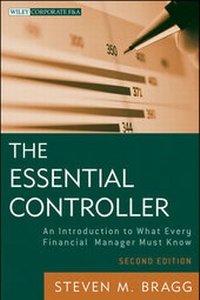
The Essential Controller
An Introduction to What Every Financial Manager Must Know
2nd Edition
Published on 23. February 2012
320 pages
978-1-118-22685-8 (ISBN)
Description

Quick-reference guidance showing new controllers how to enhanceperformance while avoiding pitfalls
Designed to give new controllers a firm foundation in theconcepts of managing the accounting department, locating GAAPinformation, and analyzing and knowing what to do with keyaccounting information, The Essential Controller, SecondEdition is the invaluable primer you can turn to for thefoundation you need to succeed. Whether your business is large,small, or medium-sized, this volume provides a complete overview ofthe controller's responsibilities and the role that today'scontrollers should be playing.
* Offers new coverage of finance strategy
* Updates taxation strategy
* Includes a new controller checklist
* Quick reference guide that controllers can turn to
* Also by Steven M. Bragg: The Controller's Function: The Workof the Managerial Accountant, Fourth Edition
The Essential Controller, Second Edition is the go-tohandbook that you will use every day for dealing with the everydayissues facing today's controllers.
More details
Other editions
Additional editions
Book
04/2012
2nd Edition
Wiley
€56.00
Shipment within 15-20 days
Person
Steven M. Bragg, CPA, has been the chief financial officeor controller of four companies, as well as a consulting manager atErnst & Young and auditor at Deloitte. He is the author of overthirty books primarily targeted toward controllers and their needs.Bragg received a master's degree in finance from BentleyCollege, an MBA from Babson College, and a bachelor's degreein economics from the University of Maine.
Content
- Intro
- The Essential Controller
- Contents
- Preface
- Chapter 1 Accounting in the Corporation
- Importance of This Chapter
- Tasks of the Accounting Function
- Role of the Accounting Function
- Role of the Controller
- Impact of Ethics on the Accounting Role
- Evolving Role of Accounting
- Chapter 2 Controller's Responsibilities
- Importance of This Chapter
- Variations on the Title
- Planning Function
- Control Function
- Reporting Function
- Accounting Function
- Additional Controller Functions in Smaller Companies
- Controller's Job Description
- Relationship of the Controller to the Chief Financial Of cer
- Future Changes in the Controller's Origins and Responsibilities
- Managing Rapid Growth
- Chapter 3 Chief Financial Of cer: From Controller to Facilitator of Change
- Importance of This Chapter
- Understanding What Chief Executive Of cers Want
- Task of the CFO
- Develop and Communicate a Compelling Finance Agenda
- Build a Commitment to Change within Finance
- Change Executive Management Practices
- Enlist the Support of the Chief Executive offcer
- Mobilize the Organization
- Institutionalize Continuous Improvement
- Chapter 4 Operational Accounting
- Importance of This Chapter
- Create Departmental Job Descriptions
- Create a Departmental Training Program
- Clear Out Excess Documentation
- Streamline the Accounting Workflow
- Document All Major Processes
- Correct the Underlying Causes of Errors
- Use Best Practices
- Outsource Selected Accounting Functions
- Chapter 5 Cost Accounting and Costing Systems
- Importance of This Chapter
- Purpose of Cost Accounting Information
- Input: Data Collection Systems
- Processing: Data Summarization Systems
- Processing: Job Costing
- Processing: Process Costing
- Processing: Standard Costing
- Processing: Direct Costing
- Processing: Throughput Costing
- Processing: Activity-based costing
- Processing: Target Costing
- Outputs: Cost Variances
- Chapter 6 Ratio and Trend Analysis
- Importance of This Chapter
- How to Use Ratios and Trends
- A Caveat
- Measures for Profitability
- Measures for the Balance Sheet
- Measures for Growth
- Measures for Cash Flow
- Measures for Nonfinancial Performance
- Interrelationship of Ratios
- Setting Up a System of Ratios and Trend Analyses
- Chapter 7 Internal Control Systems
- Importance of This Chapter
- Objectives
- Responsibility for Internal Controls
- Examples of Internal Controls
- When to Eliminate Controls
- Types of Fraud
- Preventing Fraud
- How to Deal with a Fraud Situation
- Foreign Corrupt Practices Act
- Chapter 8 The Fast Close
- Importance of This Chapter
- Different Types of Fast Close
- How to Achieve a Fast Close
- Enhanced Closing Process
- Chapter 9 Internal Audit Function
- Importance of This Chapter
- Reporting Relationships
- Composition of the Audit Committee
- Role of the Audit Committee
- Internal Audit Objectives
- Internal Audit Activities
- Managing the Internal Audit Function
- Chapter 10 Recruiting, Training, and Supervision
- Importance of This Chapter
- Recruiting Sources
- Factors to Consider When Recruiting
- Factors to Consider When Promoting
- Importance of Reduced Turnover
- Importance of Developing Career Plans for Employees
- Importance of Communications with Employees
- How to Motivate Employees
- Chapter 11 Controller's Role in Investor Relations
- Importance of This Chapter
- Objectives of the Investor Relations Function
- Evolving Nature of the Function
- Communication Vehicles for Investor Relations
- Investor Relations Message Recipients
- Information Needs of the Financial Analyst
- Information Needs of Other Groups
- Disclosure Policy
- Organization Structure for Investor Relations
- Role of the Controller and Other Principals
- Some Suggested Financial Market Objectives
- Some Suggested Methods
- Chapter 12 Taxation Strategy
- Importance of This Chapter
- Accumulated Earnings Tax
- Cash Method of Accounting
- Inventory Valuation
- Mergers and Acquisitions
- Net Operating Loss Carryforwards
- Nexus
- Project Costing
- Property Taxes
- S Corporation
- Sales and Use Taxes
- Transfer Pricing
- Unemployment Taxes
- About the Author
- Index
