

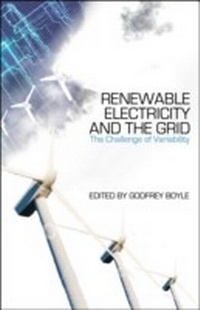
Renewable Electricity and the Grid
The Challenge of Variability
1st Edition
Published on 4. May 2012
244 pages
978-1-136-55875-7 (ISBN)
Description

?Integrating intermittent renewable energy sources like wind into electricity systems must be one of the most misunderstood issues in energy policy. This edited volume brings together a unique series of authoritative articles on the topic. There should be no excuse for misunderstanding from now on.?
JIM SKEA, RESEARCH DIRECTOR, UK ENERGY RESEARCH CENTRE
?The future design and operation of electric power systems with large injections of renewable energy generation is the subject of much debate, and some misunderstanding. This timely book, from a number of authors with expertise in the area, makes an important contribution to our understanding of this topic.?
NICK JENKINS, PROFESSOR OF ENERGY SYSTEMS, UNIVERSITY OF MANCHESTER
?We know the future will be different from the past. This book predicts how large proportions of renewable energy can be incorporated into electricity grids, without harm from the natural variability of these supplies. The chapter authors have different approaches and vision, yet the overall message is positive. Not only can we move to dominant use of renewable electricity, but we can do so utilizing many technological and efficiency improvements, with consumers benefiting from clean electricity at acceptable cost.?
PROFESSOR JOHN TWIDELL, GENERAL EDITOR, WIND ENGINEERING
'Anyone interested in renewable electricity will find this book an important reference. It answers many of teh questions so often raised in public debates'
Sherkin Comment
Can renewable energy provide reliable power? Will it need extensive backup?
The energy available from wind, waves, tides and the sun varies in ways that may not match variations in energy demand. Assimilating these fluctuations can affect the operation and economics of electricity networks, markets and the output of other forms of generation. Is this a significant problem, or can these new sources be integrated into the grid system without the need for extensive backup or energy storage capacity?
This book examines the significance of the issue of variability of renewable electricity supplies, and presents technical and operational solutions to the problem of reconciling the differing patterns of supply and demand. Its chapters are authored by leading experts in the field, who aim to explain and quantify the impacts of variability in renewable energy, and in doing so, dispel many of the myths and misunderstandings surrounding the topic.
JIM SKEA, RESEARCH DIRECTOR, UK ENERGY RESEARCH CENTRE
?The future design and operation of electric power systems with large injections of renewable energy generation is the subject of much debate, and some misunderstanding. This timely book, from a number of authors with expertise in the area, makes an important contribution to our understanding of this topic.?
NICK JENKINS, PROFESSOR OF ENERGY SYSTEMS, UNIVERSITY OF MANCHESTER
?We know the future will be different from the past. This book predicts how large proportions of renewable energy can be incorporated into electricity grids, without harm from the natural variability of these supplies. The chapter authors have different approaches and vision, yet the overall message is positive. Not only can we move to dominant use of renewable electricity, but we can do so utilizing many technological and efficiency improvements, with consumers benefiting from clean electricity at acceptable cost.?
PROFESSOR JOHN TWIDELL, GENERAL EDITOR, WIND ENGINEERING
'Anyone interested in renewable electricity will find this book an important reference. It answers many of teh questions so often raised in public debates'
Sherkin Comment
Can renewable energy provide reliable power? Will it need extensive backup?
The energy available from wind, waves, tides and the sun varies in ways that may not match variations in energy demand. Assimilating these fluctuations can affect the operation and economics of electricity networks, markets and the output of other forms of generation. Is this a significant problem, or can these new sources be integrated into the grid system without the need for extensive backup or energy storage capacity?
This book examines the significance of the issue of variability of renewable electricity supplies, and presents technical and operational solutions to the problem of reconciling the differing patterns of supply and demand. Its chapters are authored by leading experts in the field, who aim to explain and quantify the impacts of variability in renewable energy, and in doing so, dispel many of the myths and misunderstandings surrounding the topic.
Reviews / Votes
'Very timely.'Sherkin Comment
'Integrating intermittent renewable energy sources like wind into electricity systems must be one of the most misunderstood issues in energy policy. This edited volume brings together a unique series of authoritative articles on the topic. There should be no excuse for misunderstanding from now on.'
Jim Skea, Research Director, UK Energy Research Centre
'The future design and operation of electric power systems with large injections of renewable energy generation is the subject of much debate, and some misunderstanding. This timely book, from a number of authors with expertise in the area, makes an important contribution to our understanding of this topic.'
Nick Jenkins, Professor of Energy Systems, University of Manchester
'We know the future will be different from the past. This book predicts how large proportions of renewable energy can be incorporated into electricity grids, without harm from the natural variability of these supplies. The chapter authors have different approaches and vision, yet the overall message is positive. Not only can we move to dominant use of renewable electricity, but we can do so utilizing many technological and efficiency improvements, with consumers benefiting from clean electricity at acceptable cost.'
Professor John Twidell, General Editor, Wind Engineering
'Anyone interested in renewable electricity will find this book an important reference. It answers many of the questions so often raised in public debates'
Sherkin Comment
More details
Language
English
Place of publication
London
United Kingdom
Publishing group
Taylor & Francis Ltd
Target group
College/higher education
File size
9,64 MB
ISBN-13
978-1-136-55875-7 (9781136558757)
Copyright in bibliographic data and cover images is held by Nielsen Book Services Limited or by the publishers or by their respective licensors: all rights reserved.
Schweitzer Classification
Other editions
Additional editions
Book
04/2009
1st Edition
Earthscan Ltd
€83.50
Shipment within 3-4 weeks
Book
09/2007
1st Edition
Earthscan Ltd
€282.26
Article not available at the moment
Persons
Godfrey Boyle is Director of the Energy and Environment Research Unit at the UK Open University, where has chaired several renewable and sustainable energy course teams. He has published widely on these subjects, including the textbooks Energy Systems and Sustainability (2003) and Renewable Energy: Power for a Sustainable Future (2004). He is a Fellow of the Institution of Engineering and Technology (formerly the Institution of Electrical Engineers) and a Trustee of the National Energy Foundation.
Content
Preface * Variable Renewables and the Grid: An Overview * Wind Power on the Grid * Renewable Resource Characteristics and Network Integration * The UK Energy Research Centre Review of the Costs and Impacts of Intermittency * Wind Power Forecasting * Flexibility of Fossil Fuel Plant in a Renewable Energy Scenario: Possible Implications for the UK *The Potential Contribution of Emergency Diesel Standby Generators in Dealing with the Variability of Renewable Energy Sources * Demand Flexibility, Micro-Combined Heat and Power and the 'Informated' Grid * A Renewable Electricity System for the UK * Reliable Power, Wind Variability and Offshore Grids in Europe * Planning for Variability in the Longer Term: The Challenge of a Truly Sustainable Energy System * Index
