

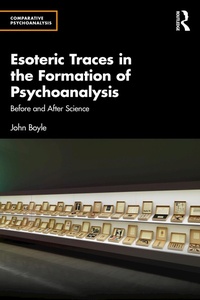
Esoteric Traces in the Formation of Psychoanalysis
Before and After Science
1st Edition
Published on 13. February 2026
178 pages
978-1-040-63504-9 (ISBN)
Description

In this fascinating new book, John Boyle provides an in-depth account of the neglected contributions made by Western esotericism in the formation of an occluded 'psychoanalytic parapsychology' active within psychoanalysis since its inception, the distinguishing features of which he argues have continued to persist within psychoanalysis to this day.
The book provides a conceptual framework for understanding how the debates between Sigmund Freud, Sandor Ferenczi and Carl Gustav Jung on the role of the 'occult' in psychoanalysis contributed to the formation of an 'Orphic fragmentation' within psychoanalysis. It argues that the ensuing consequences of these discussions were covertly transmitted to later generations of psychoanalysts in the form of an 'Orphic trajectory' encrypted within the main body of psychoanalytic theory and practice.
This book offers new and original insights into the role played by heterodox forms of spirituality in the development of psychoanalysis. It will interest scholars of psychoanalysis and religion as well as those with a general interest in the role of the spiritual in contemporary psychoanalysis and psychology.
The book provides a conceptual framework for understanding how the debates between Sigmund Freud, Sandor Ferenczi and Carl Gustav Jung on the role of the 'occult' in psychoanalysis contributed to the formation of an 'Orphic fragmentation' within psychoanalysis. It argues that the ensuing consequences of these discussions were covertly transmitted to later generations of psychoanalysts in the form of an 'Orphic trajectory' encrypted within the main body of psychoanalytic theory and practice.
This book offers new and original insights into the role played by heterodox forms of spirituality in the development of psychoanalysis. It will interest scholars of psychoanalysis and religion as well as those with a general interest in the role of the spiritual in contemporary psychoanalysis and psychology.
Reviews / Votes
'This is a stunning expression of what I have called the superhumanities-a profound fusion (because they are already fused) of critical theory, reflexivity, and altered states toward (or from) the future, here as a deep history of an esoteric psychoanalysis and a vastly expanded human subject that will shock and wow.'Jeffrey J. Kripal, author of How to Think Impossibly: About Souls, UFOs, Time, Belief, and Everything Else
"In a work combining encyclopedic erudition with an inspired vision, John Boyle provides 'a theoretical exposition of how esoteric "traces" came to be "encrypted" within psychoanalysis during the course of its formation, resulting in the development of an Orphic trajectory whose effects have persisted within psychoanalysis to this day.' Boyle's range of reference extends from the ancient and modern prehistory of psychoanalysis, through the 'occult milieu of the Budapest School,' exemplified by Ferenczi, Severn, and Nandor Fodor, to the 'beams of intense darkness' emitted by the later Bion, Matte-Blanco, and James Grotstein. Esoteric Traces in the Formation of Psychoanalysis is both a grand tour through the history of ideas and a tour de force."
Peter L. Rudnytsky, Head, Department of Academic and Professional Affairs, American Psychoanalytic Association, and author of Mutual Analysis: Ferenczi, Severn, and the Origins of Trauma Theory and Psychoanalysis and the Patriarchal Tradition: Augustine to Milton
'Esoteric Traces in the Formation of Psychoanalysis: Before and After Science is a profoundly important and thought-provoking work that draws attention to crucial yet often overlooked chapters in the history of psychoanalysis. No reconstruction of the history of psychoanalysis can be considered complete without engaging with the insights this book brings to light. John Boyle presents his argument with clarity and conviction, offering a compelling invitation to reconsider the foundations and formation of psychoanalysis.'
Professor Julia Gyimesi, Vice President of the European Society for the Study of Western Esotericism
More details
Series
Edition
1. Auflage
Language
English
Place of publication
London
United Kingdom
Publishing group
Taylor & Francis Ltd
Target group
Professional and scholarly
Product notice
Reflowable
File size
0,70 MB
ISBN-13
978-1-040-63504-9 (9781040635049)
Copyright in bibliographic data and cover images is held by Nielsen Book Services Limited or by the publishers or by their respective licensors: all rights reserved.
Schweitzer Classification
Other editions
Additional editions
Book
approx. 02/2026
1st Edition
Routledge
€211.20
Not yet published
Book
approx. 02/2026
1st Edition
Routledge
€54.40
Not yet published
Person
John Boyle is a UKCP registered integrative psychotherapist, psychoanalytic psychotherapist and clinical supervisor. He has a Ph. D in Psychoanalytic Studies from the University of Essex and an M.A. in Western Esotericism from the University of Exeter. He lives in Northern Ireland.
Content
1. Methodological Considerations 2. Dark Precursors to an Esoteric Psychoanalysis 3. Before and After Science 4. From Metapsychology to Magnetic Gnosis 5. From Mystical Gnosis to Esoteric Techne 6. Conclusion-Who Is the Dreamer Who Dreams the Dream?
