

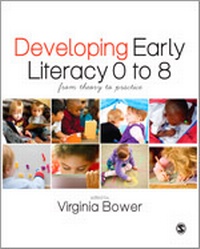
Developing Early Literacy 0-8
From Theory to Practice
Published on 13. February 2014
224 pages
978-1-4462-9761-2 (ISBN)
Description

'Developing Early Literacy presents an interesting range of literacy-related topics which address issues of current importance to early years practice and, in places, question current thinking. There is an excellent balance of theoretical background and case study examples which would make this a relevant and practical text for both students and early years professionals.' - Mary-Louise Maynes, Lecturer in Early Childhood Studies, Bishop Grosseteste University
Providing clear guidance on how to develop early literacy, this book offers support with the planning and teaching of this vital aspect of the curriculum using innovative and exciting methods.
Linking theory with practice, topics covered include:
babies and very early communication
the importance of role play corners
outdoor learning and literacy
how rhyme and repetition help to develop literacy
teaching literacy to children who have English as an Additional Language (EAL)
literacy and diversity
using picture books to develop literacy
supporting transitions
different approaches to the teaching of phonics and early reading.
Each chapter has learning objectives, case studies featuring younger and older children from the Birth to 8 age range, a summary and suggested Further Reading. This text is essential reading for those on Early Childhood Studies, Early Years, Primary PGCE and Early Years teacher education courses.
Virginia Bower is Senior Lecturer at Canterbury Christ Church University.
Providing clear guidance on how to develop early literacy, this book offers support with the planning and teaching of this vital aspect of the curriculum using innovative and exciting methods.
Linking theory with practice, topics covered include:
babies and very early communication
the importance of role play corners
outdoor learning and literacy
how rhyme and repetition help to develop literacy
teaching literacy to children who have English as an Additional Language (EAL)
literacy and diversity
using picture books to develop literacy
supporting transitions
different approaches to the teaching of phonics and early reading.
Each chapter has learning objectives, case studies featuring younger and older children from the Birth to 8 age range, a summary and suggested Further Reading. This text is essential reading for those on Early Childhood Studies, Early Years, Primary PGCE and Early Years teacher education courses.
Virginia Bower is Senior Lecturer at Canterbury Christ Church University.
Reviews / Votes
Topics in this helpful book include: Babies and very early communication; the importance of role-play corners; outdoor learning and literacy; how rhyme and repetition helps to develop literacy; teaching literacy to children who have English as an additional language; literacy and diversity; using picture books to develop literacy; supporting transitions and different approaches to the teaching of phonics and early reading. -- Martine Horvath The chapters in this book present a combination of evidence-based discussions which are then illuminated by practice-based case studies and research. This carefully balanced approach allows for some of the current issues which surround literacy to be explored from diverse perspectives. The chapters are organised within four main themes: 'Environment', 'Provision for all', Promoting language' and 'Inspiring readers and writers'. This thoughtfully considered construction allows for the chapters to be read in any order, depending on the reader's needs, or interests... Opportunities to reflect on the case studies are encouraged throughout the book, thus inviting constructive dialogues which would not only support students' development and understanding, but could also be of interest to all primary teaching professionals. -- Tracy ParvinMore details
Edition
First
Language
English
Place of publication
London
United Kingdom
Target group
College/higher education
ISBN-13
978-1-4462-9761-2 (9781446297612)
Copyright in bibliographic data and cover images is held by Nielsen Book Services Limited or by the publishers or by their respective licensors: all rights reserved.
Schweitzer Classification
Other editions
Additional editions
Book
02/2014
1st Edition
SAGE Publications Ltd
€82.00
Shipment within 15-20 days
Book
02/2014
1st Edition
SAGE Publications Ltd
€172.61
Shipment within 15-20 days
Person
Virginia Bower is a Senior Lecturer in Primary Education at Canterbury Christ Church University. She teaches on both the undergraduate programme and on the full time PGCE English course and is also part of the team who teach the Masters in Language and Literacy. Virginia is very keen to promote a love of literature in both children and university students and convenes a reading group for undergraduate trainee teachers where children's literature is shared, studied and enjoyed. She is currently undertaking a doctoral study focusing on supporting children with English as an additional language.
Content
Baby Rooms - Kathy Goouch
Role Play Areas EYFS (ages zero to five), Key Stage 1 (ages five to seven) and beyond - Joanne Palmer
Getting Outside - Michael Green
Seamless transitions from Foundation Stage to Year 1 (ages 3 to 6) - Karen Vincent
Supporting learners with English as an additional language - Virginia Bower
Literacy and Diversity - Virginia Bower and Verity Hill
Diverse Approaches to Language Development - Tracy Parvin
Rhythm, Rhyme and Repetition - Susan Barrett and Virginia Bower
Tales and the Oral Tradition - Caroline Tancock
Picture Books - Roger McDonald
'This is How We Teach Reading in Our School' - Tracy Parvin
Empowering Young Writers - Susan Barrett
Role Play Areas EYFS (ages zero to five), Key Stage 1 (ages five to seven) and beyond - Joanne Palmer
Getting Outside - Michael Green
Seamless transitions from Foundation Stage to Year 1 (ages 3 to 6) - Karen Vincent
Supporting learners with English as an additional language - Virginia Bower
Literacy and Diversity - Virginia Bower and Verity Hill
Diverse Approaches to Language Development - Tracy Parvin
Rhythm, Rhyme and Repetition - Susan Barrett and Virginia Bower
Tales and the Oral Tradition - Caroline Tancock
Picture Books - Roger McDonald
'This is How We Teach Reading in Our School' - Tracy Parvin
Empowering Young Writers - Susan Barrett
