

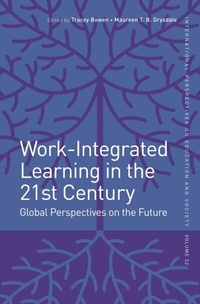
Work-Integrated Learning in the 21st Century
Global Perspectives on the Future
1st Edition
Published on 11. September 2017
248 pages
978-1-78714-859-8 (ISBN)
Description

Work-Integrated Learning in the 21st century: Global perspectives on the future, explores new questions about the state of work for new university and college graduates in the context of Work-Integrated Learning (WIL). As these 'Millennials' graduate, they are entering a precarious labour market that is filled with ambiguity and uncertainty, creating a great deal of anxiety for those trying to develop skills for highly competitive jobs or jobs that do not yet exist. In their pursuit of skill acquisition, many are participating in WIL programs (e.g., cooperative education, internships) which allow them to gain practical experience while pursuing their education. With a focus on WIL, this book examines issues involved in developing work ready graduates. Topics include mental health and well-being - an urgent matter on many campuses; remote working - an aspect of the information and social media age that is becoming more prevalent as the precarity of work increases; issues of diversity and discrimination; ethics and professionalism; global citizenship and competency; and the role that higher education institutions need to play to prepare students for the challenges of economic shifts. These topics are timely and relevant to the situations faced by new graduates and those who prepare them for the world beyond school. The chapters provide a close examination of the issues from a global perspective, particularly as experiential education and work-integrated learning programs are becoming more prevalent in higher education and viewed as essential for preparing millennials for the 21st century competitive labour market.
Reviews / Votes
Education researchers and administrators explain the principles and survey examples of work-integrated learning, in which students have the opportunity to apply and to expand their learning in real-world working situations. They cover learning, work, and experience: new challenges and projections for work-integrated learning; affordances, impacts, and challenges of new technologies; work-readiness for a diverse world; and health, well-being, and pathways to success. Among the topics are navigating continuous change: a focus on self-direction and skills knowledge transfer, workplace learning in higher education: two examples from a Swedish context, learning in hybrid spaces: designing a mobile-technology capacity-building framework for workplace learning, repositioning work-integrated learning in diverse communities, professional identities and ethics: the role of work-integrated learning in developing agentic professionals, and driving change: students shaping and reshaping work-integrated learning spaces. -- Annotation (c)2017 * (protoview.com) *More details
Series
Language
English
Place of publication
Bingley
United Kingdom
Target group
Professional and scholarly
File size
2,18 MB
ISBN-13
978-1-78714-859-8 (9781787148598)
Copyright in bibliographic data and cover images is held by Nielsen Book Services Limited or by the publishers or by their respective licensors: all rights reserved.
Schweitzer Classification
Other editions
Additional editions
Tracey Bowen | Maureen Drysdale
Work-Integrated Learning in the 21st Century
Global Perspectives on the Future
Book
09/2017
Emerald Publishing Limited
€153.50
Shipment within 10-20 days
Persons
Dr. Tracey Bowen is Assistant Professor, Teaching Stream in the Institute of Communication, Culture, Information, and Technology at the University of Toronto Mississauga, Canada. Her research focuses on examining students' transition between academic life and industry contexts in terms of the personal, professional, and intellectual shifts they experience, and how they articulate the challenges of that transition through critical reflective writing. This research also probes students' perceptions of what it means to be a professional and how they self-manage their behaviours in order to be seen and accepted as a new professional when entering the workforce. This work has been published in Studies in Higher Education and Higher Education Research and Development. She is also a member of the World Association for Cooperative and Work-Integrated Education-International Research Group (WACE-IRG).
Dr. Maureen Drysdale is an Associate Professor of Psychology, St. Jerome's University, and Cross-Appointed Professor, Applied Health Studies - School of Public Health and Health Systems, University of Waterloo, Canada. Her research examines how learner differences, psychological constructs, peer support, sense of belonging, mental health, and overall wellbeing impact school-to-work transitions and success in the labour market. Her work has been presented at numerous conferences and published in several academic journals and books. She is the Executive Chair for the World Association for Cooperative and Work-Integrated Education-International Research Group (WACE-IRG), a member of the WACE Board of Governors, and the recipient of three prominent research awards for outstanding and distinguished research in CWIE (CEIA - Ralph Tyler Award, CEIA - James Wilson Award, CAFCE - Graham Branton Award).
Dr. Maureen Drysdale is an Associate Professor of Psychology, St. Jerome's University, and Cross-Appointed Professor, Applied Health Studies - School of Public Health and Health Systems, University of Waterloo, Canada. Her research examines how learner differences, psychological constructs, peer support, sense of belonging, mental health, and overall wellbeing impact school-to-work transitions and success in the labour market. Her work has been presented at numerous conferences and published in several academic journals and books. She is the Executive Chair for the World Association for Cooperative and Work-Integrated Education-International Research Group (WACE-IRG), a member of the WACE Board of Governors, and the recipient of three prominent research awards for outstanding and distinguished research in CWIE (CEIA - Ralph Tyler Award, CEIA - James Wilson Award, CAFCE - Graham Branton Award).
Content
Introduction; Tracey Bowen and Maureen Drysdale
Part 1: Learning, Work, and Experience: New Challenges and Projections for WIL
1. Towards a Model of Work Experience in Work-Integrated Learning; Patricia Rowe
2. Navigating Continuous Change: A Focus on Self-Direction and Skills and Knowledge Transfer; Nancy Johnston
3. Workplace Learning in Higher Education: Two Examples from a Swedish Context; Jan Gustafsson and Per-Olof Thang
4. WIL in Liberal Arts Programs: New Approaches; Deanne Gannaway and Karen Sheppard
Part 2: Affordances, Impacts, and Challenges of New Technologies
5. Flourishing in the Face of Constant Disruption: Cultivating the T-Professional or Adaptive Innovator Through WIL; Phil Gardner
6. Learning in Hybrid Spaces: Designing a Mobile Technology Capacity Building Framework for Workplace Learning; Franziska Trede, Peter Goodyear, Susie Macfarlane, Lina Markauskaite, Celina McEwen, and Freny Tayebjee
7. The Impact of Digital Communication Technologies and New Remote-Working Cultures on the Socialization and Work-Readiness of Individuals in WIL Programs; Tracey Bowen and Antoine Pennaforte
Part 3: Work-Readiness for a Diverse World
8. Repositioning Work-Integrated Learning in Diverse Communities; Carva Pop and Roelien Brink
9. Intercultural Competency Development Curriculum: A Strategy for Internationalizing Work-Integrated Learning for the 21st Century Global Village; Norah McRae and Karima Ramji
10. Professional Identity and Ethics: The Role of Work-Integrated Learning in Developing Agentic Professionals; Karsten E. Zegwaard, Matthew Campbell, and T. Judene Pretti
Part 4: Health, Wellbeing, and Pathways to Success
11. Driving Change: Students Shaping and Reshaping Work-Integrated Learning Spaces; Narelle Patton
12. Pathways to Mental Health and Wellbeing: Understanding and Supporting Students on Campus and During Critical School-To-Work Transitions; Margaret McBeath, Maureen Drysdale, and Nicholas Bohn
Conclusion - Moving forward: The future of WIL in the 21st Century
Part 1: Learning, Work, and Experience: New Challenges and Projections for WIL
1. Towards a Model of Work Experience in Work-Integrated Learning; Patricia Rowe
2. Navigating Continuous Change: A Focus on Self-Direction and Skills and Knowledge Transfer; Nancy Johnston
3. Workplace Learning in Higher Education: Two Examples from a Swedish Context; Jan Gustafsson and Per-Olof Thang
4. WIL in Liberal Arts Programs: New Approaches; Deanne Gannaway and Karen Sheppard
Part 2: Affordances, Impacts, and Challenges of New Technologies
5. Flourishing in the Face of Constant Disruption: Cultivating the T-Professional or Adaptive Innovator Through WIL; Phil Gardner
6. Learning in Hybrid Spaces: Designing a Mobile Technology Capacity Building Framework for Workplace Learning; Franziska Trede, Peter Goodyear, Susie Macfarlane, Lina Markauskaite, Celina McEwen, and Freny Tayebjee
7. The Impact of Digital Communication Technologies and New Remote-Working Cultures on the Socialization and Work-Readiness of Individuals in WIL Programs; Tracey Bowen and Antoine Pennaforte
Part 3: Work-Readiness for a Diverse World
8. Repositioning Work-Integrated Learning in Diverse Communities; Carva Pop and Roelien Brink
9. Intercultural Competency Development Curriculum: A Strategy for Internationalizing Work-Integrated Learning for the 21st Century Global Village; Norah McRae and Karima Ramji
10. Professional Identity and Ethics: The Role of Work-Integrated Learning in Developing Agentic Professionals; Karsten E. Zegwaard, Matthew Campbell, and T. Judene Pretti
Part 4: Health, Wellbeing, and Pathways to Success
11. Driving Change: Students Shaping and Reshaping Work-Integrated Learning Spaces; Narelle Patton
12. Pathways to Mental Health and Wellbeing: Understanding and Supporting Students on Campus and During Critical School-To-Work Transitions; Margaret McBeath, Maureen Drysdale, and Nicholas Bohn
Conclusion - Moving forward: The future of WIL in the 21st Century
