


Conspiracy and Contingency
How to Deal with Fake Necessities
1st Edition
Published on 13. May 2025
242 pages
978-1-83999-314-5 (ISBN)
Description

What do conspiracy theories, algorithms and meritocracy have in common? All three avoid contingency and frantically look for necessities. The COVID-19 crisis has brought about a proliferation of conspiracy theories that reject, among other things, official accounts of the virus's origins and remedies, and sometimes even the existence of the virus itself. Conspiratorial thinking usually links events to secret plots concocted by powerful conspirators, whether it be Bill Gates or Big Pharma. In this book, I point to another dominant driving force: the desire to find simple and apparently reasonable explanations for phenomena that are actually purely random and contingent. Often, unfounded conspiracy theories emerge because contingency is not accepted, and necessities are looked for at all costs. Nothing happens by chance, and there must be a plan or an intelligent design behind everything.
This book deals with 'contingency phobia'. This special phobia is not only manifest in most unwarranted conspiracy theories, but it also appears, in Western culture, as a recurrent psychological, cognitive and scientific pattern. It is the cause of a variety of other phenomena that have become emblematic for liberal democracies, such as the contemporary algorithm culture or the obsession with merit and ranking. Not only the conspiratorial mindset rejects a world of contingency and strives to create a universe structured by a necessary order; life coaches, algorithm engineers and neoliberal meritocrats all do the same. This book analyses these phenomena by using the same criteria: how do humans deal with contingency and how do they try to establish necessities?
Some philosophies, such as Daoism and Zen Buddhism, make unwarranted conspiracy theories quasi-impossible because they find original ways of combining contingency with ontological, theological or cosmological premises. I identify sources that other disciplines examining conspiracy theories, for example, political science, anthropology, psychology or sociology, have rarely seen as primary. Political scientists focus on the macro level and construe conspiracy theories mostly as national or regional phenomena whereas anthropologists, psychologists and sociologists tend to focus on the micro level. The present study is an example of practical philosophy depicting conspiratorial thinking as an organic or a dynamic phenomenon by crystallising cognitive and cultural 'necessity-contingency patterns' that can be found in politics, culture, religion and science.
This book deals with 'contingency phobia'. This special phobia is not only manifest in most unwarranted conspiracy theories, but it also appears, in Western culture, as a recurrent psychological, cognitive and scientific pattern. It is the cause of a variety of other phenomena that have become emblematic for liberal democracies, such as the contemporary algorithm culture or the obsession with merit and ranking. Not only the conspiratorial mindset rejects a world of contingency and strives to create a universe structured by a necessary order; life coaches, algorithm engineers and neoliberal meritocrats all do the same. This book analyses these phenomena by using the same criteria: how do humans deal with contingency and how do they try to establish necessities?
Some philosophies, such as Daoism and Zen Buddhism, make unwarranted conspiracy theories quasi-impossible because they find original ways of combining contingency with ontological, theological or cosmological premises. I identify sources that other disciplines examining conspiracy theories, for example, political science, anthropology, psychology or sociology, have rarely seen as primary. Political scientists focus on the macro level and construe conspiracy theories mostly as national or regional phenomena whereas anthropologists, psychologists and sociologists tend to focus on the micro level. The present study is an example of practical philosophy depicting conspiratorial thinking as an organic or a dynamic phenomenon by crystallising cognitive and cultural 'necessity-contingency patterns' that can be found in politics, culture, religion and science.
Reviews / Votes
Robert F. Kennedy (RFK): Conspiracy, Contingency, and Religion "Conspiracy and Contingency is a most timely book: an elegantly written affirmation of the unpredictability, openness, and playfulness of the contingencies of life. While sympathetically embracing the aesthetic, existential, and political benefits of contingency, it fairly depicts-in an always intelligent and enjoyable manner-the age-old struggle between contingency and necessity in both Western and Eastern intellectual history from ancient philosophers to contemporary debates about conspiracy theories." - Dr. Hans-Georg Moeller, Professor, Department of Philosophy and Religious Studies, University of Macau, China"Botz-Bornstein cogently explains the widespread appeal of conspiracy theories by our general aversion to contingency. He convinces me that there is no greater threat to peace and security than conspiracy thinking in our ultra-mediatized world. He productively shows how to deal with contingency philosophically in a spirit of play and gaming." - William Franke, Professor of Comparative Literature, Vanderbilt University, USA
"This fascinating book offers a philosophical perspective on the nature, origins, and functions of conspiratorial thinking, a growing problem in our increasingly fragmented and impersonal mass societies. The book examines the cultural and philosophical history of our all-too-human attempts to make sense of apparently coincidental and often-threatening events, drawing on evidence from psychology, anthropology, and sociology, and should be welcomed by both academics and an educated lay audience interested in one of the most intriguing aspects of human consciousness." - Joseph Paul Forgas, DPhil, DSc (Oxford), AM, Scientia Professor, UNSW, Sydney
More details
Language
English
Place of publication
London
United Kingdom
Target group
College/higher education
US School Grade: College Graduate Student
Edition type
Digital original
ISBN-13
978-1-83999-314-5 (9781839993145)
Copyright in bibliographic data and cover images is held by Nielsen Book Services Limited or by the publishers or by their respective licensors: all rights reserved.
Schweitzer Classification
Other editions
Additional editions
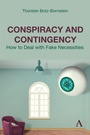
Book
05/2025
Anthem Press
€126.70
Shipment within 3-4 weeks
Person
Thorsten Botz-Bornstein is professor of philosophy at the Gulf University for Science and Technology in Kuwait and the director of the Global Studies Center. His latest book is Daoism, Dandyism, and Political Correctness (2023).
Content
Introduction: Conspiracy as Pharmakon; 1 The Conspiracy Theory as a Work of Art; 2 Alternative Modernities; 3 Coincidence; Accident; Virus; 4 Animism and the Sense of Order; 5 Ressentiment; Kitsch; and "Absolute Contingency"; 6 Contingency through the Ages: Determination and Mystification; 7 Evolution; Meritocracy; and Fake Science; 8 The Loss of Unity; 9 French Philosophy of Contingency; 10 The Aesthetics of Contingency; 11 Contingency in Eastern Philosophies; Conclusion; Bibliography; Index
