

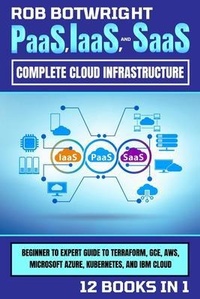
PaaS, IaaS, And SaaS
Description

Introducing the Ultimate Cloud Infrastructure Mastery Bundle: PaaS, IaaS, and SaaS - Your Complete Guide from Beginner to Expert!
¿¿¿¿ Are you ready to skyrocket your cloud expertise? ¿¿¿¿
Unlock the power of Terraform, GCE, AWS, Microsoft Azure, Kubernetes, and IBM Cloud with this all-encompassing 12-in-1 book bundle!
¿¿¿¿ What's Inside: 1¿¿ "Terraform Essentials": Master infrastructure as code. 2¿¿ "Google Cloud Engine Mastery": Harness Google's cloud power. 3¿¿ "AWS Unleashed": Dominate Amazon Web Services. 4¿¿ "Azure Mastery": Excel with Microsoft's cloud. 5¿¿ "Kubernetes Simplified": Conquer container orchestration. 6¿¿ "IBM Cloud Mastery": Navigate IBM's cloud solutions. 7¿¿ Plus, 5 more essential guides!
¿¿¿¿ Why Choose Our Bundle? ¿ Comprehensive Learning: From beginner to expert, this bundle covers it all. ¿ Real-World Application: Practical insights for real-world cloud projects. ¿ Step-by-Step Guidance: Clear and concise instructions for every skill level. ¿ Time-Saving: Get all the knowledge you need in one place. ¿ Stay Current: Up-to-date content for the latest cloud technologies. ¿ Affordable: Save big compared to buying individual books!
¿¿¿¿ Unlock Limitless Possibilities: Whether you're an aspiring cloud architect, a seasoned developer, or a tech enthusiast, this bundle empowers you to: ¿¿¿¿ Build scalable and efficient cloud infrastructures. ¿¿¿¿ Deploy and manage applications effortlessly. ¿¿¿¿ Optimize cloud costs and resources. ¿¿¿¿ Automate repetitive tasks with Terraform. ¿¿¿¿ Orchestrate containers with Kubernetes. ¿¿¿¿¿ Master multiple cloud platforms. ¿¿¿¿ Ensure security and compliance.
¿¿¿¿ What Our Readers Say: ¿¿¿¿ "This bundle is a game-changer! I went from cloud novice to cloud expert in no time." ¿¿¿¿ "The step-by-step guides make complex topics easy to understand." ¿¿¿¿ "The knowledge in these books is worth every penny. I recommend it to all my colleagues."
¿¿¿¿ BONUS: Exclusive access to resources, updates, and a community of fellow learners!
¿¿¿¿ Embark on your cloud journey today! Don't miss out on this limited-time opportunity to become a cloud infrastructure expert.
¿¿¿¿ Click "Add to Cart" now and elevate your cloud skills with the PaaS, IaaS, and SaaS: Complete Cloud Infrastructure bundle! ¿¿¿¿
More details
Content
- Intro
- Introduction
- Chapter 1: Introduction to Infrastructure as Code (IaC)
- Chapter 2: Understanding the Basics of Terraform
- Chapter 3: Setting Up Your Development Environment
- Chapter 4: Terraform Configuration and Syntax
- Chapter 5: Managing Infrastructure with Terraform
- Chapter 6: Terraform State and Data Sources
- Chapter 7: Variables, Outputs, and Modules
- Chapter 8: Best Practices for Terraform Projects
- Chapter 9: Version Control and Collaboration
- Chapter 10: Deploying Your First Terraform Project
- Chapter 1: Introduction to AWS and Infrastructure as Code (IaC)
- Chapter 2: Setting Up Your AWS Environment for IaC
- Chapter 3: AWS Cloud Resources and Services Overview
- Chapter 4: Building AWS Infrastructure with IaC
- Chapter 5: Advanced IaC Techniques for AWS
- Chapter 6: AWS Security and Compliance in IaC
- Chapter 7: Infrastructure Testing and Validation
- Chapter 8: Scaling and Optimization Strategies
- Chapter 9: Continuous Integration and Deployment (CI/CD) with AWS
- Chapter 10: Real-world AWS IaC Case Studies
- Chapter 1: Azure Infrastructure as Code (IaC) Fundamentals
- Chapter 2: Setting Up Your Azure Environment for IaC
- Chapter 3: Azure Resource Management Overview
- Chapter 4: Advanced IaC Techniques for Azure
- Chapter 5: Azure IaC Security and Compliance
- Chapter 6: Advanced Azure Networking with IaC
- Chapter 7: Infrastructure Testing and Validation in Azure
- Chapter 8: Scaling and Optimization Strategies for Azure
- Chapter 9: Implementing Continuous Integration and Deployment (CI/CD) in Azure
- Chapter 10: Real-world Azure IaC Best Practices and Case Studies
- Chapter 1: Introduction to Kubernetes and Infrastructure as Code (IaC)
- Chapter 2: Setting Up Your Kubernetes Cluster for IaC
- Chapter 3: Kubernetes Architecture and Components Overview
- Chapter 4: Managing Kubernetes Resources with IaC
- Chapter 5: Advanced Kubernetes IaC Techniques
- Chapter 6: Kubernetes Security and Compliance with IaC
- Chapter 7: Infrastructure Testing and Validation in Kubernetes
- Chapter 8: Scaling and Optimization Strategies for Kubernetes
- Chapter 9: CI/CD Pipelines for Kubernetes IaC
- Chapter 10: Real-world Kubernetes IaC Expert Strategies and Case Studies
- Chapter 1: Understanding Cloud Computing Basics
- Chapter 2: Introduction to Infrastructure as a Service (IaaS)
- Chapter 3: Benefits and Use Cases of IaaS
- Chapter 4: Key Players in the IaaS Market
- Chapter 5: Getting Started with AWS: Amazon Web Services
- Chapter 6: Exploring GCE: Google Cloud Engine
- Chapter 7: Microsoft Azure: Your Path to the Cloud
- Chapter 8: IBM Cloud: A Comprehensive IaaS Solution
- Chapter 9: Managing IaaS Resources Effectively
- Chapter 10: Best Practices and Future Trends in IaaS
- Chapter 1: The Evolution of Cloud Infrastructure
- Chapter 2: Deep Dive into AWS: Amazon Web Services
- Chapter 3: GCE in Depth: Google Cloud Engine
- Chapter 4: Networking and Connectivity in the Cloud
- Chapter 5: Data Storage Solutions for Scalability
- Chapter 6: Scalable Compute Resources and Virtual Machines
- Chapter 7: Security and Compliance in Cloud Infrastructure
- Chapter 8: Deploying and Managing Applications
- Chapter 9: High Availability and Disaster Recovery Strategies
- Chapter 10: Optimization and Cost Management Techniques
- Chapter 1: The Role of Azure IaaS in Enterprise Solutions
- Chapter 2: Azure Infrastructure Components and Services
- Chapter 3: Designing High-Performance Networks in Azure
- Chapter 4: Scalable Compute Solutions with Azure Virtual Machines
- Chapter 5: Storage and Data Management Strategies
- Chapter 6: Advanced Azure Security and Compliance
- Chapter 7: Orchestrating Workloads with Azure Automation
- Chapter 8: Enterprise Application Deployment and Integration
- Chapter 9: Optimizing Cost and Resource Management in Azure
- Chapter 10: Enterprise Case Studies: Real-World Architectures
- Chapter 1: The Significance of IBM Cloud in Enterprise IaaS
- Chapter 2: Navigating the IBM Cloud Infrastructure Landscape
- Chapter 3: Networking Strategies for Enterprise Cloud Solution
- Chapter 4: Leveraging IBM Cloud Virtual Servers for Scalability
- Chapter 5: Data Storage and Management in IBM Cloud
- Chapter 6: Enterprise Security and Compliance in IBM Cloud
- Chapter 7: Advanced Automation with IBM Cloud Services
- Chapter 8: Enterprise Application Deployment and Integration in IBM Cloud
- Chapter 9: Cost Optimization and Resource Governance
- Chapter 10: Real-World Enterprise Success Stories with IBM Cloud
- Chapter 1: Introduction to Platform as a Service (PaaS)
- Chapter 2: Getting Started with Azure Pipelines
- Chapter 3: Understanding Google Cloud Platform (GCP)
- Chapter 4: Mastering Microsoft Azure PaaS Offerings
- Chapter 5: Exploring IBM Cloud PaaS Solutions
- Chapter 6: Best Practices for PaaS Deployment
- Chapter 7: Integrating DevOps into PaaS Environments
- Chapter 8: Scaling and Managing PaaS Applications
- Chapter 9: Security and Compliance in PaaS
- Chapter 10: Future Trends in PaaS and Cloud Computing
- Chapter 1: The Evolution of Cloud Computing and PaaS
- Chapter 2: A Deep Dive into Google Cloud Platform (GCP)
- Chapter 3: Microsoft Azure: Unleashing PaaS Potential
- Chapter 4: Navigating IBM Cloud's PaaS Ecosystem
- Chapter 5: Selecting the Right PaaS Solution for Your Needs
- Chapter 6: Building and Deploying PaaS Applications
- Chapter 7: Advanced PaaS Development Techniques
- Chapter 8: PaaS and Hybrid Cloud Strategies
- Chapter 9: Ensuring Security and Compliance in PaaS Environments
- Chapter 10: Future Horizons: PaaS Innovations and Trends
- Chapter 1: Introduction to Platform as a Service (PaaS)
- Chapter 2: PaaS Fundamentals and Advantages
- Chapter 3: Exploring Google Cloud Platform's PaaS Offerings
- Chapter 4: Mastering PaaS in Microsoft Azure
- Chapter 5: Harnessing the Power of IBM Cloud PaaS Solutions
- Chapter 6: Selecting the Right PaaS for Your Projects
- Chapter 7: Building and Deploying Applications on PaaS
- Chapter 8: Best Practices for Scaling PaaS Environments
- Chapter 9: Ensuring Security and Compliance in PaaS
- Chapter 10: The Future of PaaS and Cloud Computing: Trends and Innovations
- Chapter 1: Introduction to Platform as a Service (PaaS)
- Chapter 2: Getting Started with Azure Pipelines
- Chapter 3: Mastering Google Cloud Platform (GCP) PaaS Services
- Chapter 4: Deep Dive into Microsoft Azure PaaS Offerings
- Chapter 5: Navigating IBM Cloud's PaaS Ecosystem
- Chapter 6: Picking the Right PaaS Tools for Your Journey
- Chapter 7: Building and Deploying PaaS Applications Like a Pro
- Chapter 8: Advanced PaaS Development Techniques
- Chapter 9: Scaling and Managing PaaS Environments Effectively
- Chapter 10: Ensuring Security, Compliance, and Future-Proofing Your PaaS Mastery
- Conclusion
