

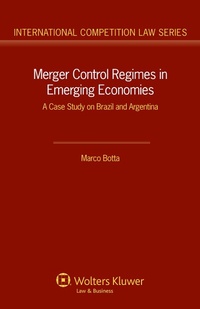
Merger Control Regimes in Emerging Economies
A Case Study on Brazil and Argentina
Published on 17. January 2011
440 pages
978-90-411-5754-6 (ISBN)
Description

Now for the first time a thoroughly researched book provides an in-depth empirical analysis of the legal problems raised for competition, and especially for merger control and its enforcement, in emerging economies, using a case study approach in the Brazilian and Argentinian contexts to reveal paradigmatic trends. Brazil and Argentina are chosen not only because they are among the major trading jurisdictions in the developing world, but also because they have each established a track record of over a decade in formulating and enforcing a system of merger control. The author describes and analyses all Brazilian and Argentinian legislation in the field of competition law, as well as the main merger decisions adopted by the competition authorities and the judgements held by the courts of these countries. The book thoroughly covers the system of competition law currently enforced in each country, as well as the main innovations of proposed new competition law currently pending in Brazil. In addition, the author draws on field interviews with competition lawyers and officers of competition authorities conducted between April and July 2008 in Buenos Aires, Brasilia, and São Paulo. The analysis considers such issues as the following:;
impact of M&As on the level of competition in the markets of developing countries;
enforcement of competition law and the judiciary;
criteria for notification of economic concentrations;
application of econometric tests to define the relevant market and the degree of market concentration in the emerging economies;
structural and behavioural remedies in merger control;
extraterritorial application of competition law;
foreign direct investments and political pressures on the competition authorities of the developing countries;
the effect of cross-border concentrations in the developing countries;
ongoing negotiations between the EU and Mercosur to conclude a free trade area agreement; and
impetus toward regional competition law rules within Mercosur.
Although the presentation is based essentially on a legal analysis, an overarching interdisciplinary methodology takes into consideration the economic and political aspects which may favour or hamper the development of competition law in an emerging economy. The author offers a number of policy proposals for improving the enforcement record of a formal institution like the national competition authority, in order to increase its credibility vis-à-vis public opinion, the business community, and the state administration. The core subjects discussed in the book - institutional factors undermining enforcement of competition law in emerging economies, the features of an effective merger control system, and the problems faced by national competition authorities when they review multijurisdictional concentrations - are of central importance in the work of corporate lawyers and government officials charged with regulating and enforcing competition law in emerging economies. For this reason, this book will be highly valuable to such practitioners and policymakers, both for its systematic analysis and for the practical utility generated by its empirical data.
impact of M&As on the level of competition in the markets of developing countries;
enforcement of competition law and the judiciary;
criteria for notification of economic concentrations;
application of econometric tests to define the relevant market and the degree of market concentration in the emerging economies;
structural and behavioural remedies in merger control;
extraterritorial application of competition law;
foreign direct investments and political pressures on the competition authorities of the developing countries;
the effect of cross-border concentrations in the developing countries;
ongoing negotiations between the EU and Mercosur to conclude a free trade area agreement; and
impetus toward regional competition law rules within Mercosur.
Although the presentation is based essentially on a legal analysis, an overarching interdisciplinary methodology takes into consideration the economic and political aspects which may favour or hamper the development of competition law in an emerging economy. The author offers a number of policy proposals for improving the enforcement record of a formal institution like the national competition authority, in order to increase its credibility vis-à-vis public opinion, the business community, and the state administration. The core subjects discussed in the book - institutional factors undermining enforcement of competition law in emerging economies, the features of an effective merger control system, and the problems faced by national competition authorities when they review multijurisdictional concentrations - are of central importance in the work of corporate lawyers and government officials charged with regulating and enforcing competition law in emerging economies. For this reason, this book will be highly valuable to such practitioners and policymakers, both for its systematic analysis and for the practical utility generated by its empirical data.
More details
Other editions
Additional editions
Book
01/2011
1st Edition
Kluwer Law International
€257.00
Shipment within 10-20 days
Content
- Cover
- Half Title Page
- Editorial Board
- Title Page
- Copyright Page
- Dedication
- Summary of Contents
- Table of Contents
- About the Author
- Preface
- Acknowledgements
- List of Abbreviations
- Part I Introduction
- Chapter 1 Research Questions and an Introduction to Brazil and Argentina
- 1.1. CROSS-BORDER M&AS AND MERGER CONTROL JURISDICTIONS IN DEVELOPING COUNTRIES
- 1.1.1. FDIS IN DEVELOPING COUNTRIES
- 1.1.2. IMPACT OF M&AS ON THE LEVEL OF COMPETITION IN THE MARKETS OF DEVELOPING COUNTRIES
- 1.1.3. THE SPREAD OF MERGER CONTROL JURISDICTIONS IN THE WORLD
- 1.2. STRUCTURE OF THE BOOK
- 1.2.1. THE MAIN HYPOTHESES DISCUSSED IN THE BOOK
- 1.2.2. INTRODUCTION TO THE CASE STUDIES
- 1.2.3. THE CHAPTERS OF THE BOOK
- 1.3. INTRODUCTION TO BRAZIL AND ARGENTINA
- 1.3.1. IMPORT-SUBSTITUTION MODEL VERSUS FREE MARKET ECONOMY IN BRAZIL AND ARGENTINA
- 1.3.2. FROM ANTI-MONOPOLY TO COMPETITION LAW IN ARGENTINA AND BRAZIL
- 1.3.2.1. Brazil: From Sanctioning the Abuse of Economic Power to the Protection of Free Competition
- 1.3.2.2. Argentina: From a Judicial to an Administrative System of Enforcement of Competition Law
- 1.3.2.3. The History of Brazilian and Argentinian Competition Law Compared
- 1.3.3. THE BRAZILIAN AND THE ARGENTINIAN ECONOMIES
- 1.3.3.1. The Theory of Small Concentrated Economies
- 1.3.3.2. Brazil: The Giant of Latin America
- 1.3.3.3. Argentina: A Vast Under-populated Country
- 1.3.3.4. Are Brazil and Argentina Two Small Concentrated Economies?
- Part II Case Study
- Chapter 2 Institutional Issues Undermining the Enforcement of Competition Law
- 2.1. ISSUES DISCUSSED IN THIS CHAPTER
- 2.2. THE FIRST INSTITUTIONAL PROBLEM: LACK OF RESOURCES
- 2.2.1. THE STUDIES CONDUCTED SO FAR
- 2.2.2. BRAZILIAN COMPETITION AUTHORITIES' RESOURCES
- 2.2.2.1. CADE's resources during the 1990s
- 2.2.2.2. The Increase in CADE's Resources in Recent Years
- 2.2.2.3. SDE and SEAE's Resources
- 2.2.3. THE ARGENTINIAN COMPETITION AUTHORITY'S RESOURCES
- 2.2.3.1. The Lack of Staff at the CNDC
- 2.2.3.2. The Lack of Budgetary Autonomy for the CNDC
- 2.3. INDEPENDENCE FROM THE GOVERNMENT
- 2.3.1. THE MEANING OF INDEPENDENCE
- 2.3.2. INDEPENDENCE OF THE BRAZILIAN COMPETITION AUTHORITIES
- 2.3.2.1. CADE's Independence
- 2.3.2.2. The De Facto Independence of SDE and SEAE
- 2.3.3. THE UNSUCCESSFUL ESTABLISHMENT OF THE ARGENTINIAN COMPETITION TRIBUNAL
- 2.3.3.1. The Institutional System Contained in the Law 25.156/99
- 2.3.3.2. The Decreto 89/2001
- 2.3.3.3. The Role of the Secretary for Internal Trade
- 2.3.3.4. Consequences of the Lack of Establishment of the Competition Tribunal
- 2.4. THE LACK OF COMPETITION CULTURE AND THE NEED FOR COMPETITION ADVOCACY
- 2.4.1. THE CONCEPTS OF COMPETITION CULTURE ANDC OMPETITION ADVOCACY
- 2.4.2. COMPETITION ADVOCACY ACTIVITIES PERFORMED BY CADE, SDE AND SEAE
- 2.4.2.1. Competition Advocacy vis-a-vis the State's authorities
- 2.4.2.2. Competition Advocacy vis-a-vis the Public Opinion
- 2.4.3. THE LACK OF COMPETITION CULTURE IN ARGENTINA
- 2.4.3.1. Competition Advocacy under the Law 25.156/99
- 2.4.3.2. The Lack of Competition Advocacy Activities by the CNDC
- 2.4.3.3. Alternative Fora for Discussion of Competition Law in Argentina
- 2.5. COMPETITION LAW AND THE JUDICIARY
- 2.5.1. JUDGES AND COMPETITION LAW IN DEVELOPING COUNTRIES
- 2.5.2. THE JUDICIARY AND THE ENFORCEMENT OF THE BRAZILIAN COMPETITION LAW
- 2.5.2.1. Overview of the Brazilian Judicial System
- 2.5.2.2. The Standard of Judicial Review in Competition Law
- 2.5.2.3. The Main Problems Relating to Judicial Review of CADE's Decisions
- 2.5.2.4. Initiatives Undertaken to Solve the Problems Relating to the Judicial Review of CADE's Decisions
- 2.5.3. THE JUDICIARY AND ARGENTINIAN COMPETITION LAW
- 2.5.3.1. Judicial Review under the Law 22.262/80 and 25.156/99
- 2.5.3.2. The Decreto 1019/99
- 2.5.3.3. The Lack of Legitimacy of the CNDC and the Secretary for Internal Trade's Decisions
- 2.5.3.4. The Conflict of Jurisdiction between the Cámara en lo Civil y Comercial and the Cámara en lo Penal Económico
- 2.5.3.5. The Conflict of Jurisdiction between the Cámaras de Apelaciones and the Other Federal Courts
- 2.5.3.6. The Standard of Judicial Review in Competition Law
- 2.6. NEW INSTITUTIONAL ARRANGEMENTS IN BRAZIL AND ARGENTINA
- 2.6.1. THE UNIFICATION OF THE BRAZILIAN COMPETITION AUTHORITIES
- 2.6.1.1. The Project of Reform of the Law 8884/94
- 2.6.1.2. The Approval of the Draft Bill by the Chamber of Representatives, and its Pending Approval by the Brazilian Senate
- 2.6.2. THE FAILED INSTITUTIONAL REFORM OF ARGENTINIAN COMPETITION LAW
- Chapter 3 Merger Control Regimes in Emerging Economies
- 3.1. ISSUES DISCUSSED IN THE CHAPTER
- 3.2. THE LEGISLATIVE FRAMEWORK
- 3.2.1. THE IMPRECISE LANGUAGE OF ARTICLE 54 OF THE BRAZILIAN LAW 8884/94
- 3.2.1.1. The Agreements which Are To Be Notified
- 3.2.1.2. The Ambiguous Thresholds for Merger Notification
- 3.2.1.3. The Moment of Notification of the Transaction
- 3.2.1.4. The Standard of Merger Review
- 3.2.1.5. The Remedies Provided by Article 58 of the Law 8884/94
- 3.2.2. UNCLEAR POINTS IN THE ARGENTINIAN LAW 25.156/99
- 3.2.2.1. The Concept of Economic Concentration under Article 6 of the Law 25.156/99
- 3.2.2.2. The Thresholds for Merger Notification
- 3.2.2.3. The Unclear Moment of Merger Notification in the Law 25.156/99
- 3.2.2.4. The Time for Merger Review Provided by the Law 25.156/99
- 3.2.2.5. The Standard of Merger Review Provided by the Law 25.156/99
- 3.3. CRITERIA FOR NOTIFICATION AND NUMBER OF NOTIFIED CONCENTRATIONS
- 3.3.1. CHANGE OF CONTROL AND THRESHOLDS FOR MERGER NOTIFICATION
- 3.3.2. CADE'S INTERPRETATION OF THE THRESHOLDS FOR MERGER NOTIFICATION AND THE CATEGORIES OF AGREEMENTS TO BE NOTIFIED
- 3.3.2.1. CADE's Interpretation of the Concept of Economic Concentration
- 3.3.2.2. CADE's Interpretation of the Thresholds for Merger Notification
- 3.3.3. THE MODIFICATIONS OF THE ARGENTINIAN THRESHOLDS FOR NOTIFICATION
- 3.3.3.1. CNDC's Opiniones Consultivas
- 3.3.3.2. The Thresholds for Notification as Modified by the Decreto 396/2001
- 3.4. TIME OF NOTIFICATION AND TIME FORMERGER REVIEW
- 3.4.1. MERGER NOTIFICATION AND MERGER REVIEW IN THE EU AND IN THE US
- 3.4.2. TIME OF MERGER NOTIFICATION AND THE TIME FOR MERGER REVIEW IN BRAZIL
- 3.4.2.1. The Fines Imposed by CADE against the Late Notification of Mergers
- 3.4.2.2. Factors Which Slowed Down the Time for Merger Review in Brazil in the 1990s
- 3.4.2.3. Reducing the Time for Merger Review in Brazil
- 3.4.3. THE UNCLEAR MOMENT OF NOTIFICATION AND TIME FOR MERGER REVIEW IN ARGENTINA
- 3.4.3.1. The Time of Notification under the Decreto 89/2001
- 3.4.3.2. The Decrees Extending the Time for Merger Review in Argentina
- 3.5. ECONOMETRIC TOOLS TO DEFINE RELEVANT MARKET AND DEGREE OF MARKET CONCENTRATION
- 3.5.1. THE CONCEPTS OF RELEVANT MARKET AND MARKET CONCENTRATION IN EU AND USA
- 3.5.2. THE APPLICATION OF ECONOMETRIC TESTS IN BRAZIL
- 3.5.2.1. The Application of the SSNIP Test in Brazil
- 3.5.2.2. The Definition of the Geographic Market in Brazil
- 3.5.2.3. Evaluation of the Degree of Market Concentration in Brazil
- 3.5.3. THE APPLICATION OF THE ECONOMETRIC TESTS IN ARGENTINA
- 3.5.3.1. The Application of the SSNIP Test in Argentina
- 3.5.3.2. The Definition of the Geographic Market in Argentina
- 3.5.3.3. The Application of the HHI Test in Argentina
- 3.6. STANDARD OF MERGER ANALYSIS FOR HORIZONTAL AND NON-HORIZONTAL MERGERS
- 3.6.1. HORIZONTAL AND NON-HORIZONTAL MERGERS
- 3.6.2. THE REVIEW OF HORIZONTAL AND NON-HORIZONTAL MERGERS IN BRAZIL
- 3.6.2.1. The Steps of the Merger Analysis under the SDE/SEAE Merger Guidelines of 2001
- 3.6.2.2. The Analysis of Horizontal Mergers in Brazil
- 3.6.2.3. The Analysis of Vertical Mergers in Brazil
- 3.6.3. THE REVIEW OF HORIZONTAL AND NON-HORIZONTAL MERGERS IN ARGENTINA
- 3.6.3.1. The Standard of Review in the 2001 Merger Guidelines
- 3.6.3.2. The Analysis of Horizontal Mergers in Argentina
- 3.6.3.3. Non-horizontal Mergers in the 2001 Merger Guidelines
- 3.6.3.4. The Analysis of Non-horizontal Mergers in Argentina
- 3.7. EFFICIENCY DEFENCES
- 3.7.1. INTRODUCTION TO THE EFFICIENCY DEFENCES IN MERGER CONTROL
- 3.7.2. EFFICIENCY DEFENCES IN BRAZIL
- 3.7.2.1. Efficiency Defences under the SDE/SEAE Merger Guidelines
- 3.7.2.2. The Evolution of CADE's Case Law on Efficiency Defences
- 3.7.3. EFFICIENCY DEFENCES IN ARGENTINA
- 3.7.3.1. Efficiency Defences in the 2001 Merger Guidelines
- 3.7.3.2. The CNDC's Traditional Sceptical Approach vis-a-vis Efficiency Defences
- 3.7.3.3. Efficiency Defences as a Tool to Achieve Industrial Policy Objectives
- 3.8. REMEDIES IN MERGER CONTROL
- 3.8.1. STRUCTURAL AND BEHAVIOURAL REMEDIES IN MERGER CONTROL
- 3.8.2. REMEDIES IN THE BRAZILIAN SYSTEM OF MERGER CONTROL
- 3.8.2.1. The Preference for Behavioural Remedies in Brazil
- 3.8.2.2. The Reluctance of Merging Parties to Accept Structural Remedies in Brazil
- 3.8.2.3. CADE's Reluctance to Negotiate Remedies with Merging Parties
- 3.8.2.4. CADE's Attempts to Stop the Practice of Gun-Jumping in Brazil
- 3.8.2.5. Non-economic Objectives in the Design of Remedies in Brazil
- 3.8.3. REMEDIES IMPOSED BY THE ARGENTINIAN COMPETITION AUTHORITY
- 3.8.3.1. Full Divestiture as the De Facto Prohibition of a Concentration in Argentina
- 3.8.3.2. The Unilateral Imposition of Remedies by the Argentinian NCA
- 3.8.3.3. Non-economic Concerns in the Design of Remedies in Argentina
- 3.9. REFORMS OF THE SYSTEM OF MERGER CONTROL
- 3.9.1. THE SYSTEM OF MERGER CONTROL IN THE NEW BRAZILIAN COMPETITION ACT
- 3.9.1.1. The Main Reforms to the Brazilian System of Merger Control
- 3.9.1.2. The Approach of the Brazilian Business Community vis-a-vis the New System of Merger Control
- 3.9.2. INDUSTRIAL POLICY CONSIDERATIONS WITHIN THE ARGENTINIAN SYSTEM OF MERGER CONTROL
- 3.9.2.1. The Project of Reform Presented by Minister Lavagna
- Chapter 4 Cross-Border M&As and the Systems of Merger Control of the Emerging Economies
- 4.1. ISSUES DISCUSSED IN THIS CHAPTER
- 4.2. BRAZIL AND ARGENTINA: TWO INTEGRATED ECONOMIES
- 4.2.1. TRADE RELATIONS BETWEEN BRAZIL AND ARGENTINA FROM THE PERIOD OF THE IMPORT-SUBSTITUTION MODEL TO THE ESTABLISHMENT OF MERCOSUR
- 4.2.2. THE CURRENT STRONG ECONOMIC LINKS BETWEEN BRAZIL AND ARGENTINA
- 4.3. THE EXTRA-TERRITORIAL APPLICATION OF COMPETITION LAW
- 4.3.1. THE ORIGINS OF THE EFFECTS/IMPLEMENTATION DOCTRINE IN THE US AND THE EU
- 4.3.1.1. The US Effects Doctrine
- 4.3.1.2. The EU Implementation Doctrine
- 4.3.1.3. The Effects and Implementation Doctrines in Merger Control
- 4.3.2. THE EFFECTS AND IMPLEMENTATION DOCTRINES IN EMERGING ECONOMIES
- 4.3.2.1. The Spread of the Effects and Implementation Doctrines throughout the World
- 4.3.2.2. The Effects and Implementation Doctrines under the Brazilian and Argentinian Competition Acts
- 4.4. MULTI-JURISDICTIONAL CONCENTRATIONS AFFECTING BRAZIL AND ARGENTINA
- 4.4.1. GUN-JUMPING IN MULTI-JURISDICTIONAL CONCENTRATIONS
- 4.4.1.1. Delays in the Notification of Multi-Jurisdictional Mergers to the Brazilian and Argentinian NCAs
- 4.4.1.2. The Implementation of a Multi-Jurisdictional Concentration before the Completion of the Merger Review in Argentina and Brazil
- 4.4.2. THE LACK OF EXCHANGE OF INFORMATION BETWEEN THE NCAS OF DEVELOPED AND DEVELOPING COUNTRIES
- 4.4.2.1. The Lack of Exchange of Information between the European Commission and CNDC in the Telecom Italia-Telefónica Case
- 4.4.2.2. The 'Reference' Made by the Brazilian NCA to the FTC'sPrior Decision in the Owens Corning-Saint Gobain Case
- 4.4.3. THE LACK OF COORDINATION IN THE IMPOSITION OF REMEDIES
- 4.4.3.1. Challenges Faced by the Brazilian and Argentinian NCAs in Imposing Structural Remedies in Multi-Jurisdictional Concentrations
- 4.4.3.2. Challenges Faced by the Brazilian and Argentinian NCAs in the Imposition of Behavioural Remedies in Multi-Jurisdictional Mergers
- 4.4.3.3. Challenges Faced by the Brazilian and Argentinian NCAs when They Decide to Block a Multi-Jurisdictional Merger
- 4.5. MERGER CONTROL AND FDIS IN BRAZIL AND ARGENTINA
- 4.5.1. FDIS WITH A MULTI-JURISDICTIONAL DIMENSION
- 4.5.2. FDIS AND POLITICAL PRESSURES
- 4.6. ATTEMPTS AND FAILURES IN THE COOPERATION BETWEEN ARGENTINA AND BRAZIL
- 4.6.1. THE INSTITUTIONAL FRAMEWORK OF COOPERATION
- 4.6.1.1. Attempts to Introduce Rules in the Area of Competition Law at the Mercosur Level
- the Fortaleza Protocol
- 4.6.1.2. The 2003 Bilateral Cooperation Agreement between Brazil and Argentina
- 4.6.1.3. The Mercosur Decisions 04/04 and 15/06
- 4.6.2. EXAMPLES OF COOPERATION BETWEEN THE ARGENTINIAN AND THE BRAZILIAN COMPETITION AUTHORITIES
- 4.6.2.1. Few Examples of Mutual Notification of Multi-Jurisdictional Concentrations between the Brazilian and Argentinian NCAs
- 4.6.2.2. The Lack of Cooperation between the Argentinian and Brazilian NCAs During the Merger Review of the Telecom Italia-Telefónica Case
- 4.6.2.3. Cooperation at the Political Level between Brazil and Argentina in the Field of Competition Law
- 4.6.3. REASONS BEHIND THE FAILURES: THE NEED FOR A DE MINIMIS AGENDA
- 4.6.3.1. Reasons Expressed in the Academic Literature Concerning the Failure to Introduce Competition Law Rules within Mercosur
- 4.6.3.2. Views Expressed by the NCAs' Officials in Brasília and Buenos Aires
- Part III Conclusions
- Chapter 5 Lessons from the Case Studies
- 5.1. THEORETICAL MODELS OF COMPETITION LAW IN DEVELOPING COUNTRIES
- 5.1.1. EMERGING ECONOMIES DO NOT NEED A COMPETITION LAW SYSTEM
- NIE, CHICAGO SCHOOL, HAYEK AND TRADE ECONOMISTS
- 5.1.2. A LENIENT ENFORCEMENT OF A SYSTEM OF MERGER CONTROL
- SINGH, SCHUMPETER AND GAL
- 5.1.3. AN ENFORCEMENT OF COMPETITION LAW FOR EMERGING ECONOMIES NOT RADICALLY DIFFERENT FROM THAT ONE IN DEVELOPED COUNTRIES
- FOX
- 5.2. ANALYSIS OF THE EMPIRICAL DATA ON BRAZIL AND ARGENTINA
- 5.2.1. DE JURE VERSUS DE FACTO ENFORCEMENT OF COMPETITION LAW IN EMERGING ECONOMIES
- 5.2.1.1. The Time Gap between De Jure and De Facto Enforcement of the Competition Law
- 5.2.1.2. The Appropriate Link between the NCA and the Executive
- 5.2.1.3. The Judiciary and the Enforcement of Competition Law in an Emerging Economy
- 5.2.2. RULES VERSUS STANDARDS IN THE MERGER CONTROL REGIMES OF EMERGING ECONOMIES
- 5.2.2.1. Alternative versus Predetermined Models of Competition Law for the Emerging Economies
- 5.2.2.2. The Need for Flexible Thresholds for Merger Notification
- 5.2.2.3. Standards versus Rules in the Application of the Econometric Tests to Define the Size of the Relevant Market and the Degree of Market Concentration
- 5.2.2.4. The Role of Non-economic Considerations in the Systems of Merger Control of the Emerging Economies
- 5.2.2.5. Remedies and the Practice of Gun-Jumping in Emerging Economies
- 5.2.2.6. Flexibility versus Legal Certainty in the Enforcement of a System of Merger Control
- 5.2.3. COOPERATION VERSUS EXTRA-TERRITORIAL ENFORCEMENT OF THE COMPETITION LAW
- 5.2.3.1. Gun-Jumping and Multi-Jurisdictional Concentrations
- 5.2.3.2. Remedies in Multi-Jurisdictional Mergers
- 5.2.3.3. Lack of Cooperation between the NCAs of Developed and Developing Countries
- 5.2.3.4. Fostering the Cooperation among the NCAs of Emerging Economies
- 5.3. 'LESSONS' VERSUS 'GRAND THEORIES'
- Bibliography
- Index
- Back Cover
