

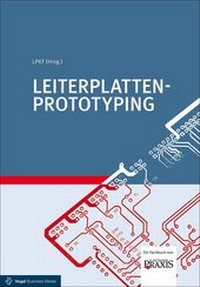
Leiterplatten-Prototyping
1st Edition
Published in August 2015
160 pages
978-3-8343-6201-8 (ISBN)
Description

Inhalt des Buches ist die komplette Produktion von Leiterplatten-Protoypen aus unterschiedlichen Materialien mit allen Teilprozessen und einer Darstellung der gängigen Verfahren. Dieses komplexe Thema ist hier strukturiert und verständlich aufbereitet. Es richtet sich an Lernende in der gewerblichen und wissenschaftlichen Ausbildung sowie an Elektronik-Fachkräfte in Laboren und Entwicklungsabteilungen.
- Von der idee zur Leiterplatte
- Allgemeine Leiterplattentechnologie
- Strukturierung des Leiterbildes
- Zwei- und mehrlagige Leiterplatten
- Durchkontaktierungen
- Lötstopplack und Bestückungsdruck
- Bestücken einer Leiterplatte
- Lötverfahren
- Erweiterte Prototyping-Verfahren
All prices
More details
Other editions
Additional editions
Malte Borges | Lars Führmann | Arnold Wiemers
Leiterplatten-Prototyping
Book
08/2015
1st Edition
Vogel Communications Group GmbH & Co. KG
€19.80
Shipment within 5-7 days
Persons
Content
1 - Titel [Seite 3]
2 - Copyright / Impressum [Seite 4]
3 - Vorwort [Seite 5]
4 - Inhaltsverzeichnis [Seite 7]
5 - 1 Von der Idee zur Leiterplatte [Seite 9]
5.1 - 1.1 Was ist Elektronik? [Seite 9]
5.2 - 1.2 Das Schaltungslayout [Seite 10]
5.3 - 1.3 Vorteile des Leiterplatten-Prototyping [Seite 11]
5.4 - 1.4 Von der Idee zum Prototyp [Seite 12]
6 - 2 Allgemeine Leiterplattentechnologie [Seite 19]
6.1 - 2.1 Aufbereitung der Layoutdaten [Seite 19]
6.2 - 2.2 Fertigungstechnologien [Seite 22]
6.3 - 2.3 Basismaterialien [Seite 25]
6.4 - 2.4 Leiterplattenklassen [Seite 29]
6.5 - 2.5 Oberflächen auf Leiterplatten [Seite 35]
6.6 - 2.6 Drucke auf Leiterplatten [Seite 39]
7 - 3 Strukturierung des Leiterbildes [Seite 41]
7.1 - 3.1 Prototypen auf Experimentalleiterplatten [Seite 41]
7.2 - 3.2 Ausgabe der Layoutdaten [Seite 43]
7.3 - 3.3 Leiterbildstrukturierung im Ätzverfahren [Seite 44]
7.4 - 3.4 Leiterplattenstrukturierung durch Isolationsfräsen [Seite 49]
7.5 - 3.5 Leiterplattenstrukturierung durch Laser [Seite 53]
7.6 - 3.6 Bohrungen [Seite 55]
7.7 - 3.7 Fertigungsabläufe für einseitige Leiterplatten [Seite 58]
8 - 4 Zwei- und mehrlagige Leiterplatten [Seite 61]
8.1 - 4.1 Zweilagige Leiterplatten [Seite 61]
8.2 - 4.2 Mehrlagige Leiterplatten [Seite 63]
8.3 - 4.3 Flexible Leiterplatten [Seite 66]
8.4 - 4.4 HF-Leiterplatten [Seite 67]
8.5 - 4.5 IMS-Leiterplatten [Seite 67]
8.6 - 4.6 Registrier- und Passermarken [Seite 67]
8.7 - 4.7 Schematischer Fertigungsablauf für doppelseitige und kontaktierte Leiterplatten [Seite 68]
9 - 5 Durchkontaktierungen [Seite 71]
9.1 - 5.1 Drahtkontaktierung [Seite 71]
9.2 - 5.2 Durchkontaktierung im Nietverfahren [Seite 73]
9.3 - 5.3 Durchkontaktierung mit Kontaktpaste [Seite 74]
9.4 - 5.4 Galvanische Durchkontaktierung [Seite 76]
9.5 - 5.5 Arten von Vias [Seite 78]
10 - 6 Lötstopplack und Bestückungsdruck [Seite 81]
10.1 - 6.1 Lötstopplack [Seite 81]
10.2 - 6.2 Bestückungsdruck [Seite 84]
10.3 - 6.3 Abziehlack [Seite 85]
10.4 - 6.4 Viadruck [Seite 86]
10.5 - 6.5 Heatsinkdruck [Seite 87]
10.6 - 6.6 Carbondruck [Seite 88]
10.7 - 6.7 Verarbeitung von Leiterplatten-Lacken [Seite 89]
10.8 - 6.8 Gießverfahren [Seite 90]
10.9 - 6.9 Siebdruck [Seite 90]
10.10 - 6.10 Sprühverfahren [Seite 91]
10.11 - 6.11 Ink Jet [Seite 91]
11 - 7 Lotpastenauftrag [Seite 93]
11.1 - 7.1 Materialien zum Löten [Seite 93]
11.2 - 7.2 Lotpastendruck [Seite 94]
12 - 8 Bestücken einer Leiterplatte [Seite 99]
12.1 - 8.1 Manuelle Bestückung [Seite 101]
12.2 - 8.2 Industrielle Verfahren [Seite 106]
13 - 9 Lötverfahren [Seite 109]
13.1 - 9.1 Lötstrategien [Seite 109]
13.2 - 9.2 Lötkolbenlöten [Seite 113]
13.3 - 9.3 Reflowlöten [Seite 116]
13.4 - 9.4 Wellen-/ Schwalllöten [Seite 117]
13.5 - 9.5 Laserlöten [Seite 119]
13.6 - 9.6 Dampfphasenlöten [Seite 120]
13.7 - 9.7 Tauchlöten [Seite 120]
13.8 - 9.8 Heißluftlöten [Seite 121]
13.9 - 9.9 Bügellöten [Seite 122]
13.10 - 9.10 Entlöten [Seite 122]
14 - 10 Erweiterte Prototyping-Verfahren [Seite 125]
14.1 - 10.1 Prototyping-Lösungen aus der Elektronikwelt [Seite 126]
14.2 - 10.2 Metallkomplexe und Keramiksubstrate [Seite 129]
14.3 - 10.3 Feinstleiter durch Resiststrukturierung [Seite 132]
14.4 - 10.4 3D MID - Räumliche Schaltungsträger [Seite 134]
15 - Anhang [Seite 139]
15.1 - A.1 Gerber-Format - die universelle Layoutsprache zur Herstellung von Leiterplatten [Seite 139]
15.2 - A.2 Videos zum Thema [Seite 146]
16 - Abkürzungen und Begriffserläuterungen [Seite 153]
17 - Stichwortverzeichnis [Seite 157]
2 - Copyright / Impressum [Seite 4]
3 - Vorwort [Seite 5]
4 - Inhaltsverzeichnis [Seite 7]
5 - 1 Von der Idee zur Leiterplatte [Seite 9]
5.1 - 1.1 Was ist Elektronik? [Seite 9]
5.2 - 1.2 Das Schaltungslayout [Seite 10]
5.3 - 1.3 Vorteile des Leiterplatten-Prototyping [Seite 11]
5.4 - 1.4 Von der Idee zum Prototyp [Seite 12]
6 - 2 Allgemeine Leiterplattentechnologie [Seite 19]
6.1 - 2.1 Aufbereitung der Layoutdaten [Seite 19]
6.2 - 2.2 Fertigungstechnologien [Seite 22]
6.3 - 2.3 Basismaterialien [Seite 25]
6.4 - 2.4 Leiterplattenklassen [Seite 29]
6.5 - 2.5 Oberflächen auf Leiterplatten [Seite 35]
6.6 - 2.6 Drucke auf Leiterplatten [Seite 39]
7 - 3 Strukturierung des Leiterbildes [Seite 41]
7.1 - 3.1 Prototypen auf Experimentalleiterplatten [Seite 41]
7.2 - 3.2 Ausgabe der Layoutdaten [Seite 43]
7.3 - 3.3 Leiterbildstrukturierung im Ätzverfahren [Seite 44]
7.4 - 3.4 Leiterplattenstrukturierung durch Isolationsfräsen [Seite 49]
7.5 - 3.5 Leiterplattenstrukturierung durch Laser [Seite 53]
7.6 - 3.6 Bohrungen [Seite 55]
7.7 - 3.7 Fertigungsabläufe für einseitige Leiterplatten [Seite 58]
8 - 4 Zwei- und mehrlagige Leiterplatten [Seite 61]
8.1 - 4.1 Zweilagige Leiterplatten [Seite 61]
8.2 - 4.2 Mehrlagige Leiterplatten [Seite 63]
8.3 - 4.3 Flexible Leiterplatten [Seite 66]
8.4 - 4.4 HF-Leiterplatten [Seite 67]
8.5 - 4.5 IMS-Leiterplatten [Seite 67]
8.6 - 4.6 Registrier- und Passermarken [Seite 67]
8.7 - 4.7 Schematischer Fertigungsablauf für doppelseitige und kontaktierte Leiterplatten [Seite 68]
9 - 5 Durchkontaktierungen [Seite 71]
9.1 - 5.1 Drahtkontaktierung [Seite 71]
9.2 - 5.2 Durchkontaktierung im Nietverfahren [Seite 73]
9.3 - 5.3 Durchkontaktierung mit Kontaktpaste [Seite 74]
9.4 - 5.4 Galvanische Durchkontaktierung [Seite 76]
9.5 - 5.5 Arten von Vias [Seite 78]
10 - 6 Lötstopplack und Bestückungsdruck [Seite 81]
10.1 - 6.1 Lötstopplack [Seite 81]
10.2 - 6.2 Bestückungsdruck [Seite 84]
10.3 - 6.3 Abziehlack [Seite 85]
10.4 - 6.4 Viadruck [Seite 86]
10.5 - 6.5 Heatsinkdruck [Seite 87]
10.6 - 6.6 Carbondruck [Seite 88]
10.7 - 6.7 Verarbeitung von Leiterplatten-Lacken [Seite 89]
10.8 - 6.8 Gießverfahren [Seite 90]
10.9 - 6.9 Siebdruck [Seite 90]
10.10 - 6.10 Sprühverfahren [Seite 91]
10.11 - 6.11 Ink Jet [Seite 91]
11 - 7 Lotpastenauftrag [Seite 93]
11.1 - 7.1 Materialien zum Löten [Seite 93]
11.2 - 7.2 Lotpastendruck [Seite 94]
12 - 8 Bestücken einer Leiterplatte [Seite 99]
12.1 - 8.1 Manuelle Bestückung [Seite 101]
12.2 - 8.2 Industrielle Verfahren [Seite 106]
13 - 9 Lötverfahren [Seite 109]
13.1 - 9.1 Lötstrategien [Seite 109]
13.2 - 9.2 Lötkolbenlöten [Seite 113]
13.3 - 9.3 Reflowlöten [Seite 116]
13.4 - 9.4 Wellen-/ Schwalllöten [Seite 117]
13.5 - 9.5 Laserlöten [Seite 119]
13.6 - 9.6 Dampfphasenlöten [Seite 120]
13.7 - 9.7 Tauchlöten [Seite 120]
13.8 - 9.8 Heißluftlöten [Seite 121]
13.9 - 9.9 Bügellöten [Seite 122]
13.10 - 9.10 Entlöten [Seite 122]
14 - 10 Erweiterte Prototyping-Verfahren [Seite 125]
14.1 - 10.1 Prototyping-Lösungen aus der Elektronikwelt [Seite 126]
14.2 - 10.2 Metallkomplexe und Keramiksubstrate [Seite 129]
14.3 - 10.3 Feinstleiter durch Resiststrukturierung [Seite 132]
14.4 - 10.4 3D MID - Räumliche Schaltungsträger [Seite 134]
15 - Anhang [Seite 139]
15.1 - A.1 Gerber-Format - die universelle Layoutsprache zur Herstellung von Leiterplatten [Seite 139]
15.2 - A.2 Videos zum Thema [Seite 146]
16 - Abkürzungen und Begriffserläuterungen [Seite 153]
17 - Stichwortverzeichnis [Seite 157]
