

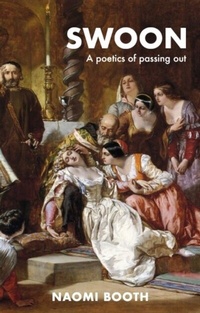
Swoon
A Poetics of Passing out
1st Edition
Published on 30. November 2021
248 pages
978-1-5261-0125-9 (ISBN)
Description

Swoon is the first extensive study of literary swooning, homing in on swooning's rich history as well as its potential to provide new insights into the contemporary.
This study demonstrates that passing-out has had a pivotal place in English literature. Beginning with an introduction to the swoon as a marker of aesthetic sensitivity, it includes chapters on swooning and generic transformation in Chaucer and Shakespeare; morbid, femininised swoons and excessive affect in romantic, gothic, and modernist works; irony, cliche and bathos in the swoons of contemporary romance fiction. This book revisits key texts to show that passing-out has been intimately connected to explorations of emotionality, ecstasy and transformation; to depictions of sickness and dying; and to performances of gender and gendering. Swoon offers an exciting new approach the history of the body alongside the history of literary response. -- .
This study demonstrates that passing-out has had a pivotal place in English literature. Beginning with an introduction to the swoon as a marker of aesthetic sensitivity, it includes chapters on swooning and generic transformation in Chaucer and Shakespeare; morbid, femininised swoons and excessive affect in romantic, gothic, and modernist works; irony, cliche and bathos in the swoons of contemporary romance fiction. This book revisits key texts to show that passing-out has been intimately connected to explorations of emotionality, ecstasy and transformation; to depictions of sickness and dying; and to performances of gender and gendering. Swoon offers an exciting new approach the history of the body alongside the history of literary response. -- .
Reviews / Votes
"Booth's dizzyingly wide scope enables her to track how contemporary swoons reimagine, develop, or fall back on what has come before and to draw compelling arguments about the cultural, artistic and scientific contexts of each time period she considers; as she explains, 'a literary history of swooning is also a history of crux points for how we have imagined the body' (10). .. this work greatly advances our understanding of swoons in literature and their significance ... uncover[ing] new and surprising perspectives on what it means to pass out.As a whole, Swoon might appeal most to researchers working on the medical humanities or the history of the emotions, but individual chapters would also reward those interested in a particular topic, text, or period. A fiction writer as well as an academic, Booth crafts prose which is pleasure to read, demonstrating a deftness with language and syntax which is thoughtful, lucid, and often playful. ... Swoon frequently illuminates ways that bodily and emotional vulnerability is understood differently for men and women; her exploration of falling unconscious thus makes us conscious not only of the perils and pleasures of dizzying aesthetic, affective and erotic experiences, but also of the received narratives that might diagnose us as sentimental, sensitive, or just sick."
The Spenser Review
'Naomi Booth's Swoon: A Poetics of Passing Out is a comprehensive and wide-ranging account of the literary history of swooning. ... Booth's excellent introduction explains why the wide perspective is necessary... the readings of the primary sources build upon each other in expert ways, illuminating similarities and defining differences... The evocative and nuanced readings of the swoon as "creative stimulus to dark imagining" ... lead the reader on a journey from bodily fainting to the soul's swoon... Booth's reading of the [Fifty Shades of Grey] trilogy is inspired and convincing, showing us exactly why it is important to include a work that revolves around "received ideas of gender submission" in a scholarly work.'
Women's Writing
'There are a number of strengths in this book, including the breadth of the texts examined, the depth of the analysis, and the astonishing variety of connections across genres and periods made in each chapter... Swoon is a readable, engaging, and enjoyable book, regardless of one's area of focus... Booth's Swoon is one of those monographs that is as enjoyable as it is useful because it is well written, has a thematic focus that allows for
the refraction of that theme across time, and can be read in whole or usefully assigned in single chapters to students, even advanced undergraduates.'
Restoration and Eighteenth-Century Theatre Research -- .
More details
Language
English
Place of publication
Manchester
United Kingdom
Edition type
Digital original
Illustrations
4 black & white illustrations
4 black & white illustrations
ISBN-13
978-1-5261-0125-9 (9781526101259)
Copyright in bibliographic data and cover images is held by Nielsen Book Services Limited or by the publishers or by their respective licensors: all rights reserved.
Schweitzer Classification
Other editions
Person
Naomi Booth is Assistant Professor in Creative Writing and English Studies at Durham University -- .
Content
Introduction
1 Heart-stopped transformations: Swooning in late Medieval literature
2 Bodily proofs: Shakespearean swoons and unreadable body-texts
3 Feeling too much: The swoon and the (in)sensible woman
4 Dead born: Shadow resurrections and artistic transformation
5 Vampiric swoons and other dark ecologies
6 Lovesick, lesbian swoons and the romantic art of sinking
Passing out
Index -- .
1 Heart-stopped transformations: Swooning in late Medieval literature
2 Bodily proofs: Shakespearean swoons and unreadable body-texts
3 Feeling too much: The swoon and the (in)sensible woman
4 Dead born: Shadow resurrections and artistic transformation
5 Vampiric swoons and other dark ecologies
6 Lovesick, lesbian swoons and the romantic art of sinking
Passing out
Index -- .
