

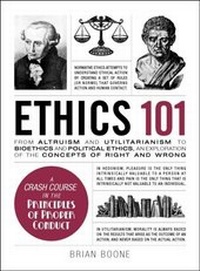
Ethics 101
From Altruism and Utilitarianism to Bioethics and Political Ethics, an Exploration of the Concepts of Right and Wrong
1st Edition
Published on 7. November 2017
256 pages
978-1-5072-0494-8 (ISBN)
Description

Explore the mysteries of morality and the concept of right and wrong with this accessible, engaging guide featuring basic facts along with an overview of modern-day issues ranging from business ethics and bioethics to political and social ethics.
Ethics 101 offers an exciting look into the history of moral principles that dictate human behavior. Unlike traditional textbooks that overwhelm, this easy-to-read guide presents the key concepts of ethics in fun, straightforward lessons and exercises featuring only the most important facts, theories, and ideas. Ethics 101 includes unique, accessible elements such as:
-Explanations of the major moral philosophies including utilitarianism, deontology, virtue ethics, and eastern philosophers including Avicenna, Buddha, and Confucius.
-Classic thought exercises including the trolley problem, the sorites paradox, and agency theory
-Unique profiles of the greatest characters in moral philosophy
-An explanation of modern applied ethics in bioethics, business ethics, political ethics, professional ethics, organizational ethics, and social ethics
From Plato to Jean-Paul Sartre and utilitarianism to antirealism, Ethics 101 is jam-packed with enlightening information that you can't get anywhere else!
Ethics 101 offers an exciting look into the history of moral principles that dictate human behavior. Unlike traditional textbooks that overwhelm, this easy-to-read guide presents the key concepts of ethics in fun, straightforward lessons and exercises featuring only the most important facts, theories, and ideas. Ethics 101 includes unique, accessible elements such as:
-Explanations of the major moral philosophies including utilitarianism, deontology, virtue ethics, and eastern philosophers including Avicenna, Buddha, and Confucius.
-Classic thought exercises including the trolley problem, the sorites paradox, and agency theory
-Unique profiles of the greatest characters in moral philosophy
-An explanation of modern applied ethics in bioethics, business ethics, political ethics, professional ethics, organizational ethics, and social ethics
From Plato to Jean-Paul Sartre and utilitarianism to antirealism, Ethics 101 is jam-packed with enlightening information that you can't get anywhere else!
More details
Other editions
Additional editions
Brian Boone
Ethics 101
From Altruism and Utilitarianism to Bioethics and Political Ethics, an Exploration of the Concepts of Right and Wrong
Book
11/2017
Adams Media Corporation
€16.50
No shipping information available
Person
Brian Boone is an editor and writer for the bestselling Uncle John's Bathroom Reader line of trivia and humor books. He wrote I Love Rock n' Roll (Except When I Hate It) and coauthored American Inventions: Big Ideas That Changed Modern Life and How to Make Paper Airplanes. He has contributed to How Stuff Works, Barnes & Noble Reads, McSweeney's, Splitsider, Someecards, The Onion, Adult Swim, and Funny or Die. He lives in Oregon with his family.
Content
- Intro
- Introduction
- Chapter 1: Ethics and The Ancient Greek Philosophers
- Philosophy Versus Moral Philosophy
- The Importance of Ethics
- The Sophists
- The Socratic Method
- Plato's Ethics
- The Moral Philosophy of Aristotle
- Chapter 2: The Divergent Greek Schools
- The Philosophy of the Cynics
- The Skeptics of Ancient Greece
- The Epicureans
- The Stoics
- Plotinus and Neoplatonism
- Chapter 3: Consequentialist Ethics
- Normative Ethics and Descriptive Ethics
- Jeremy Bentham and Measuring Utility
- John Stuart Mill and Utilitarianism
- Ethical Altruism
- Rule Consequentialism
- Act Consequentialism
- Criticisms of Consequentialist Ethics
- Chapter 4: Deontological Ethics
- Immanuel Kant and Kantianism
- Kant and the Categorical Imperative
- Alternate Formulations of Kant's Categorical Imperative
- John Rawls and the Ethics of Egalitarianism
- Criticisms of Kantian Ethics
- Chapter 5: Virtue Ethics
- Virtue Ethics
- Criticisms of Virtue Ethics
- Divine Command Theory
- Thomas Aquinas and Natural Law Ethics
- Ethical Relativism
- Moral Realism and Antirealism
- Chapter 6: Eastern Moral Philosophies
- Buddhist Ethics
- Confucianism and Ethics
- Ibn Sina's Reconciliation
- Ibn Miskawayh and Al-Ghazali
- Taoist Ethics
- Chapter 7: Negative Views on Ethics
- Niccolò Machiavelli
- Jean-Paul Sartre and Existentialism
- The Ethics of Friedrich Nietzsche
- The Philosophies of Arthur Schopenhauer
- Ludwig Wittgenstein and the Language of Ethics
- Chapter 8: Other Moral Philosophers
- Peter Abelard and Nominalism
- Voltaire and Hedonism
- John Locke and the Just Government
- Lord Shaftesbury and Moral Sense Theory
- The Philosophies of Baruch Spinoza
- Chapter 9: Classic Ethics Exercises
- The Trolley Dilemma
- The Prisoner's Dilemma
- Eubulides of Miletus and the Sorites Paradox
- The Spider in the Urinal
- The Cow in the Field Problem
- The Liar Paradox
- The Ship of Theseus Problem
- Chapter 10: Applied Ethics
- Business and Professional Ethics
- Ethics in Politics
- Medical Ethics
- Challenges in Bioethics
- Social Ethics
- Photographs
- About the Author
- Index
- Copyright
