

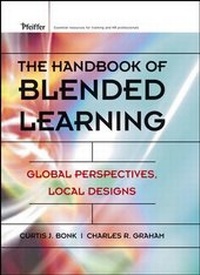
The Handbook of Blended Learning
Description

Reviews / Votes
"...the most thorough book on blended learning on the market today." (Educational Pathways, June 13, 2006)"Learn from successful blended applications that deal with a broadrange of educational and training contexts through innovativemethods." --Michael W. Allen, author, Michael Allen's Guide toe-Learning, and CEO, Allen Interactions Inc. "The landscape of blended learning is intriguing, exciting, andperilous. Thank you, Curt and Charles, for assembling thiswonderful group of thought leaders and pioneers, organizing theirprovocative outputs, providing a functional prologue and epilogue,and developing this comprehensive handbook." --Sivasailam "Thiagi" Thiagarajan, president, ThiagiGroup, and author, Design Your Own Games and TrainingActivities "Invaluable for any educator seeking to understand the design,implementation, and study of next-generation learningexperiences." --Chris Dede, Wirth Professor in Learning Technologies, HarvardGraduate School of Education "Filled with insight and lessons learned from some of the mostexperienced online and in-person educators in the workplace andhigher education!" --Zane L. Berge, associate professor, University of MichiganBusiness CollegeMore details
Other editions
Additional editions
Persons
Content
- Intro
- Contents
- Title
- Copyright
- Forewords
- Dedication
- Preface and Acknowledgments
- Part One: Introduction to Blended Learning
- Chapter One: Blended Learning Systems
- Background and Definitions
- Current Trends and Issues
- Directions for the Future
- Chapter Two: The Blended Learning Imperative
- Reasons for Creating Blended Learning
- Conclusion
- Chapter Three: Why Blended Learning Hasn't (Yet) Fulfilled Its Promises
- Why is Blended Learning the Current Trend?
- A Chronology of Learning Delivery Technologies
- Where We Are Today?
- So What's the Problem, Really?
- Designing Blended Learning Experiences
- How Do We Design the Blend?
- What is the Role of Community in Designing Blended Learning Experiences
- How Do We Know if the Blend Works?
- Facilitating Blended Learning Experiences
- How Do We Get it All Done?
- How Do We Teach Our Team?
- How Do We Prepare the Organization?
- Conclusion
- Chapter Four: On Designing Interaction Experiences for the Next Generation of Blended Learning
- The Next Wave of Blended Learning: Education Unplugged
- Why Interaction Matters
- Schools of Thought on Interaction
- In Support of Interaction Strategies for the Future of Blended Learning
- Summary Thoughts
- Part Two: Corporate Blended Learning Models and Perspectives
- Chapter Five: Blending Learning for Business Impact
- Basic Blue for Managers: IBM's New Manager Program
- Evaluation Strategy
- The Results
- Impact of this Learning Practice on the Organization
- Lessons Learned
- Chapter Six: A Learning Ecology Model for Blended Learning From Sun Microsystems
- Why a Learning Ecology?
- Background to the Learning Ecology Framework
- Learning Ecology Framework
- From Learning Ecology to Knowledge Ecology
- Conclusion
- Chapter Seven: Putting Customers First at Microsoft
- Global Perspective on Technology Training
- Customer Needs
- A New Framework for Empowering Partners and Creating More Successful Customers
- Case Histories
- State of Wisconsin
- Integrated Solutions Technology, Philippines
- Microsoft de Argentina
- Conclusion
- Chapter Eight: Transformation of Sales Skills Through Knowledge Management and Blended Learning
- Knowledge Management
- CRM Portal
- Avaya Solutions Knowledge Center
- Executive Solutions Selling Business Acumen
- Conclusion
- Chapter Nine: The Cisco Networking Academy
- Literature Review
- The Cisco Networking Academy as a Blended Learning Environment
- Approaches to Blended Learning in the Cisco Networking Academy
- Conclusion
- Chapter Ten: To Blend or not to Blend
- The Background on Blended Learning
- Community Building in Blended Contexts
- Oracle's Leader Track
- Studying Blended Outcomes at Oracle
- Is Community Worth It?
- The Future of Blended Learning at Oracle
- Part Three: Higher Education Blended Learning Models and Perspectives
- Chapter Eleven: Global Perspectives On Blending Learning
- Blended Learning-In the Beginning
- The Blended Learning Spectrum: From a Single Course to a Degree Program
- Institutional Strategies for Blended Learning
- When Blended Learning Becomes "Learning"
- Chapter Twelve: New Zealand Examples of Blended Learning
- The University of Waikato: A Tertiary Institution Case Study of Blended Learning
- Examples of Blended Learning at UOW
- Technological and Pedagogical Support
- Chapter Thirteen: E-College Wales, a Case Study of Blended Learning
- Trends
- U.K. Developments
- Definitional Complexities
- Local Designs
- Conclusions
- Chapter Fourteen: Blended Learning Enters the Mainstream
- Blended Courses at the University of Central Florida
- Some Demographics for Blended Learning
- Outcomes for Blended Learning
- Learning Effectiveness
- Student Satisfaction
- Blended Learning as a Transformative Construct in Higher Education
- Chapter Fifteen: Integrated Field Experiences in Online Teacher Education
- Context
- Principles
- Challenges
- Conclusion
- Part Four: For-Profit and Online University Perspectives
- Chapter Sixteen: Blended Learning at the University of Phoenix
- Global Perspectives
- Local Designs
- Conclusion
- Chapter Seventeen: A Different Perspective on Blended Learning
- Perspectives from the Literature
- Blended Learning at Capella University
- Chapter Eighteen: Blended Learning Goes Totally Virtual by Design
- Growth Factors for the For-Profit Universities
- Blended Learning Models for For-Profit Universities
- Jones International University: A Virtual-Only Model
- Significant Issues and Questions
- Opportunities
- Conclusion
- Part Five: Cases of Blended Learning in Higher Education From Around the World
- Chapter Nineteen: Blended Learning in Japan and Its Application in Liberal Arts Education
- World Economy Not Leading E-Learning
- Trends in Higher Education in Japan
- Definitions and Development of Blended Learning in Japan
- Blended Learning in a Liberal Arts College
- Conclusion
- Chapter Twenty: The Emergence of the Cyber-University and Blended Learning in Korea
- The Cyber-University
- Trends of Online Learning
- Discussion and Conclusions
- Chapter Twenty-One: Designing Blended Learning Focused on Knowledge Category and Learning Activities
- Needs of Blended Learning
- Challenges Faced in Implementing Blended Learning
- Designing Blended Learning
- Case One: "Introduction to Educational Technology," an Online Course
- Case Two: "Multimedia Technology," On-Campus Curriculum
- Conclusions
- Chapter Twenty-Two: Open Distance Pedagogy
- Research on Blended Learning
- An Overview of Blended and E-Learning in Malaysia
- Open University Malaysia's Blended Learning Model
- Face-to-Face Learning
- Online Learning
- Blended Learning Challenges at Open University Malaysia
- Future Plans
- Conclusion
- Chapter Twenty-Three: Blending on and Off Campus
- Background to Each Context
- Blended Learning in Wollongong
- Singaporean Blended Learning Contrasts
- Learning from the Tale of Two Cities
- Conclusion
- Chapter Twenty-Four: Blended Learning At Canadian Universities
- Blended Learning Rationale
- Blended Learning Practices at COHERE Universities
- Online Pedagogy
- Conclusions
- Chapter Twenty-Five: Tecnológico De Monterrey in México
- Brief History of the Intensive Use of Technologies in Formal Education in Mexico
- Growth of the Internet in Mexico
- La Red Escolar: Internet Tools for Children
- Fifteen Years of Teaching with Technology in ITESM
- Learning Management Systems to Support a Blended Approach
- Student and Faculty Roles in Blended Learning
- Conclusion
- Chapter Twenty-Six: From Analog to Weblog
- Blended Learning: Simple Socialization
- Crude Forms of Blended Learning
- The Shift to Web-Based Blended Methodology
- Instructor Variation
- Final Note
- Chapter Twenty-Seven: Virtual Tau
- Background and Rationale of Virtual TAU
- Diffusion of Web-Supported Academic Instruction
- Pedagogical Configuration of Course Web Sites
- Use of Content Included in the Course Web Sites
- Implementation and Use of Asynchronous Forums
- Conclusion
- Chapter Twenty-Eight: Management Education for the Twenty-First Century
- The Open University's Approach to Blended Learning
- Business Schools and Learning Innovations
- Mass Management Education
- Rethinking Approaches for the Twenty-First Century
- Choices for Certificate in Management Students
- The Role of the Tutor Online
- Authentic Blend for Tutor Development
- Conclusions
- Chapter Twenty-Nine: Blended Learning in Undergraduate Mathematics at the University of Pretoria
- Online Teaching and Learning in Undergraduate Mathematics
- Scope of Blended Learning in Mathematics
- Conclusion
- Part Six: Multinational Blended Learning Perspectives
- Chapter Thirty: The Integration of Learning Technologies Into Europe's Education and Training Systems
- Current Status
- Education and Training Systems
- Self-Learning
- eEurope
- Education and Training and Technology Policies
- From Distance to Blended Learning
- E-Learning for Some or All?
- The E-Learning Initiative (2002-2004)
- E-Learning Program (2004-2006)
- Some Reflections
- Conclusion
- Chapter Thirty-One: Developing an Understanding of Blended Learning
- Technology for Teacher Training in Rwanda
- From Academic to Industry Education Adviser at Cisco
- Developing Jordanian Teachers Through Blended Learning
- Blending Can Remove the Technology Dissonance in E-Learning
- Chapter Thirty-Two: Blended E-Learning in the Context of International Development
- The Information and Communication Technologies Revolution
- The Track Record
- The Challenge: Bridging the Knowledge Divide
- Blended Learning in Developing Country Environments
- Trends in Learning Design
- The Global Distance Learning Network Experience with Blended Learning
- Lessons Learned
- Conclusion
- Part Seven: Workplace, on-Demand, and Authentic Learning
- Chapter Thirty-Three: Putting Blended Learning to Work
- Global Perspectives
- Putting Blended Learning to Work in Shell EP
- Key Issues
- Chapter Thirty-Four: Blending Learning and Work
- First-Generation Learning Systems
- Evolution of Blended Learning
- Real-Time Work Flow Learning: Blending Learning and Work
- Building a Real-Time Work Flow Learning Architecture
- Real-Time Work Flow-Based Learning Example
- Benefits of Real-Time Work Flow-Based Learning
- Conclusion
- Chapter Thirty-Five: On-Demand Learning
- The Ever-Changing Global Marketplace
- Defining Embedded Learning
- Expanding Learning Beyond the Individual
- IBM's E-Coach: The Next Generation of Personalized Learning
- Conclusion
- Chapter Thirty-Six: Creating Authentic Learning Environments Through Blended Learning Approaches
- Authentic Activities in Learning Environments
- Authenticity in Learning Environments
- Authenticity and Blended Learning
- Conclusion
- Part Eight: Future Trends in Blended Learning
- Chapter Thirty-Seven: Blended Learning in Military Training
- Creating Training Requirements
- Closing Comments
- Chapter Thirty-Eight: Expanding the Boundaries of Blended Learning
- Expanding Boundaries of Learning
- Applications of Mixed and Virtual Reality to Support Training and Performance
- Challenges of Using Mixed Reality for Training
- Designing Blended Learning Environments Using Mixed and Virtual Reality
- Next Steps and Technological Evolution
- Chapter Thirty-Nine: Future Directions of Blended Learning in Higher Education and Workplace Learning Settings
- Studies on the Future of Online Teaching and Learning
- Future Growth of Blended Learning
- Pedagogical Techniques in E-Learning
- Emerging Technologies
- Future Trends in Blended Learning
- Final Reflections
- Name Index
- Subject Index
- Advertisement
FOREWORDS
One unique feature of this handbook is that it contains two forewords. The foreword by Jay Cross, a thought leader in learning technology, performance improvement, and organizational culture, who coined the terms e-learning and work flow learning, reflects the corporate training aspects of this handbook. The second foreword, by Michael G. Moore, a pioneer in distance education and founder and editor of the American Journal of Distance Education among other accomplishments, is written from a higher education perspective.
Foreword
Jay Cross
When Curt Bonk asked me to contribute a chapter to this book, I flat out refused. As you might guess from the quantity of top-notch authors who appear here, Curt is persistent. He asked me again, and again I turned him down, this time with an explanation.
I told him I considered blended learning a useless concept. To my way of thinking, blending is new only to people who were foolish enough to think that delegating the entire training role to the computer was going to work. I could not imagine unblended learning. My first-grade teacher used a blend of storytelling, song, recitation, reading aloud, flash cards, puppetry, and corporal punishment.
Is it not nutty for a learning strategist to ask, "Why blend?" The more appropriate question is, "Why not blend?" Imagine an episode of This Old House asking, "Why should we use power tools? Hand tools can get the job done." For both carpenters and learning professionals, the default behavior is using the right tools for the job.
My perspective is corporate, not academic. My bottom line is organizational performance, not individual enlightenment. Not that I am dismissive of research. In nearly thirty years in what we used to call the training business, I have read my share of Dewey, Kolb, Bransford, Gagné, Schank, and John Seely Brown, but as a businessman, I also pay allegiance to Peter Drucker, Stan Davis, and the Harvard Business Review. And I hobnob with least a dozen of the authors whose work you are about to read.
Here are a few issues for you to consider as you ponder this fine collection of observations and advice from learning pioneers around the globe.
What's a Blend?
First of all, these are not useful blends:
40 percent online, 60 percent classroom 80 percent online, 20 percent face-to-face 80 percent workshop, 20 percent online reinforcementAfter reading a few chapters of this book, you will see these for what they are: oversimplifications.
Four or five years ago, it was commonplace to hear, "We've tried e-learning. People didn't like it. It didn't work very well." This is akin to saying, "I once read a book. It was difficult to understand. I'm not going to do that again." The book in your hands describes rich variations and applications of e-learning. After reading it, you'll find that you can no more generalize about e-learning than you can generalize about books. Consider this description of a blend from Macromedia's Ellen Wagner (see Chapter Four, this volume):
Evolving blended learning models provide the essential methodological scaffolding needed to effectively combine face-to-face instruction, online instruction, and arrays of content objects and assets of all form factors. For example, in such a blended learning scenario, a student may find him or herself participating in a face-to-face class discussion; he or she may then log in and complete an online mastery exercise or two, then copy some practice exercises to a PDA to take advantage of what David Metcalf calls "stolen moments for learning"-those times between classes or meetings, while on the train, or waiting for an appointment. Think about sending a text message with results of your practice sessions to someone in your virtual study group using your mobile phone-and getting a voice mail with feedback on your results when you arrive at the end of your flight.
People do not know what they like; they like what they know. For example, many assume that face-to-face instruction is the one best way to teach and that online learning is inherently inferior. They seek ways for online initiatives to support the high-grade face-to-face experience. Capella University turns this view on its head, asking what face-to-face support is required to supplement online learning. Having found online learning universally effective, Capella uses face-to-face only to further social goals such as building a support network or creating informal affinity groups. From its perspective, a blend may contain no face-to-face element at all.
Blended learning can take place while waiting in line at the grocery store or taking the bus home. Its ingredients may be courses, content chunks, instant messaging pings, blog feedback, or many other things. Interaction is the glue that holds all these pieces together. Interaction comes in many forms, not just learner and instructor, but also learner-to-content, learner-to-learner, and learner-to-infrastructure. Interaction can create an experience so compelling that it makes workers hungry to learn and drives otherwise sane people to pay four dollars for a cup of coffee at Starbucks.
What Goes into the Blend?
Great recipes are the product of generations of experimentation, tasting, and refinement. E-learning is at the same embryonic stage as American cuisine when home chefs rarely started a sauce without a can of condensed mushroom soup, and garlic was reserved for scaring away vampires.
First-generation e-learning initiated, delivered, and completed online; its consumers lost their appetites. Today's tastier recipes include organizational skills assessments, books, content objects, workshops, clinics, seminars, simulations, collaboration, technical references, learning games, and links to communities of practice.
At the University of Phoenix, I developed a classroom-based business curriculum in 1976. A dozen years later, an online program debuted. More recently, the university introduced blended programs that combine some classroom and some online. Add more classroom, and the result is the "local model" blend; add more online and the result is the "distance model." Some blends are like "vibration cooking": a pinch of this, a handful of that, and however much wine is left in the bottle. C'est bricolage.
IBM's four-tier model shows how the ingredients of the blend must be matched to the nature of the outcomes sought. Web pages work fine for performance support. Simulations are good for developing understanding. Groups learn from community interaction and live virtual programs. Higher-order skills require coaching, role play, and perhaps face-to-face sessions. Each dish requires its own recipe.
Blends are more than a learning stew, for as the authors here amply demonstrate, blends fall along many dimensions (Figure F.1).
FIGURE F.1. DIMENSIONS OF THE BLENDED LEARNING STEW.
A Blend of Blends
The ideal blend is a blend of blends. Take the last dimension in Figure F.1: formal to informal learning. Studies find that most corporate learning is informal. It's unscheduled. It's learning on the job. It's trial-and-error. It's asking someone who knows.
If informal learning is so important, dare we leave it to chance? If we seek an optimal result, we cannot. Instead of a single blend that calls for x percent of this and y percent of that, I propose we take the blends of many of the authors here into account. We must replace one-dimensional thinking with simultaneous consideration of dozens of pie charts.
The many cooks of The Handbook of Blended Learning do not spoil the broth. On the contrary, their diversity of opinion and method enriches the book. Editors Curt Bonk and Charles Graham are to be congratulated for preserving the unique flavor contributed by each author.
Mike Wenger and Chuck Ferguson of Sun Microsystems make a strong argument for thinking in terms of a learning ecology instead of a blend of classroom and e-learning. "Classroom" deprives the concept of the rich, multifaceted experiences that take place there (see Chapter Six, this volume). Similarly, "e-learning" covers over the multiple possibilities born of the marriage of the learner and the Internet. There's simply a lot more to it than that.
School's Out
Corporations seek self-reliant workers they can trust to do the right thing without supervision. Every manager wants self-starters on her team. Yet when it comes to learning, many workers wait for others to tell them what to do. Why don't they take matters into their own hands? I think it's a vestige of schooling.
Several hundred years ago, compulsory schools were set up as a separate reality. Students were seedlings, while schools were the greenhouses to protect them from outside elements. The mission of schools was transmitting values and teaching a body of knowledge. The noise of the real world might taint the righteousness and clarity of the lessons.
Many of us equate learning with schooling. That is why we think of learning as something a person does in isolation and that its ideal delivery takes place in the classroom or the library, cloistered from the outside. Group work is by and large discouraged (it's called "cheating"). Authorities choose the curriculum....
