

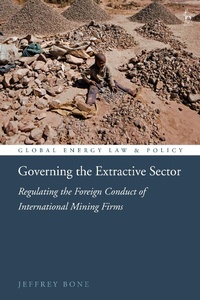
Governing the Extractive Sector
Regulating the Foreign Conduct of International Mining Firms
1st Edition
Published on 25. February 2021
288 pages
978-1-5099-4189-6 (ISBN)
Description

This book considers, and offers solutions to, the problems faced by local communities and the environment with respect to global mining.
The author explores the idea of grievance mechanisms in the home states of the major mining conglomerates. These grievance mechanisms should be functional, pragmatic and effective at resolving disputes between mining enterprises and impacted communities. The key to this provocative solution is twofold: the proposal harnesses the power of industry-sponsored dispute mechanisms to reduce the costs and other burdens on home state governments and judicial systems. Critically, civil society actors will be given a role as both advocates and mediators in order to achieve a fair result for those impacted abroad by extractive enterprises.
Compelling, engaging and timely, this book presents an innovative approach for regulating the foreign conduct of the extractive sector.
The author explores the idea of grievance mechanisms in the home states of the major mining conglomerates. These grievance mechanisms should be functional, pragmatic and effective at resolving disputes between mining enterprises and impacted communities. The key to this provocative solution is twofold: the proposal harnesses the power of industry-sponsored dispute mechanisms to reduce the costs and other burdens on home state governments and judicial systems. Critically, civil society actors will be given a role as both advocates and mediators in order to achieve a fair result for those impacted abroad by extractive enterprises.
Compelling, engaging and timely, this book presents an innovative approach for regulating the foreign conduct of the extractive sector.
More details
Series
Edition
1. Auflage
Language
English
Place of publication
London
United Kingdom
Publishing group
Bloomsbury Publishing PLC
Target group
College/higher education
ISBN-13
978-1-5099-4189-6 (9781509941896)
Copyright in bibliographic data and cover images is held by Nielsen Book Services Limited or by the publishers or by their respective licensors: all rights reserved.
Schweitzer Classification
Other editions
Additional editions
Jeffrey Bone
Governing the Extractive Sector
Regulating the Foreign Conduct of International Mining Firms
Book
10/2022
Hart Publishing
€65.87
Shipment within 15-20 days
Person
Jeffrey Bone is Assistant Professor of Business Law at the Erivan K. Haub School of Business, Saint Joseph's University, USA.
Content
PART I
THE PROBLEM PERSISTS
1. Dark History
I. Germs of Empires
II. The Extractive Sector at the Gates
A. Yanacocha
B. Bhopal
2. The Case for Civil Society and Corporate Actors
I. Civil Society: Origins and Impact
A. A Potential New Form of Medievalism
B. Social Licence for Business: Bestowed by Civil Society
II. Corporate Accountability, Responsibilities and Self-Governance
PART II
THE JUDICIAL AND NON-JUDICIAL APPROACH
3. Obstacles in Holding Corporations to Account
I. Justification for Home State Regulation
A. Limitations of International Regulation
B. Concerns with Host State Judicial Systems
II. Substantive and Procedural Hurdles
A. Limited Liability of Corporations
4. The United States
I. The Alien Tort Statute
A. Elusive History
B. Sosa
C. Kiobel
D. Involvement of Civil Society
5. Canada, the UK and Australia
I. Canada
II. United Kingdom
III. Australia
IV. Assessment of the Case Law
6. Utilising State-based and Civil Society Sponsored Mechanisms
I. Failing Solutions
II. Canada: Office of the CSR Counsellor
A. World Bank Group's Performance Standards
B. Voluntary Principles on Security and Human Rights
C. Global Reporting Initiative
D. OECD Guidelines for Multinational Enterprises
III. History of Failure
IV. The Canadian Ombudsperson for Responsible Enterprise
V. Oxfam Australia's Mining Ombudsman
A. Achievement of Limited Success
PART III
PROPOSAL
7. A New Policy Direction
I. Key Terms
II. Canada's Approach
III. Proposal: Framework for Reforming the Office of the CORE
A. Implementation of the Performance Guidelines
B. The Development of a Bounty Programme
C. Untapped Potential: Site-Level Grievance Mechanisms
D. Civil Society within the Regulatory Regimes of the Global Extractive Sector
E. Enforcement, Accountability and Compliance
F. Procedural Fairness and Judicial Review
G. Critique of the Proposal
8. Accountability, Effectiveness and Contrast
I. Testing Effectiveness of the Proposal under UN Guiding Principle 31
A. Legitimate
B. Accessible
C. Predictable
D. Equitable
E. Transparent
F. Rights-compatible
G. A Source of Continuous Learning
H. Based on Engagement and Dialogue
II. Role for Civil Society Actors and Corporate Self-Governance
III. Contrast and Approach
IV. Simons and Macklin's Proposal to Correct the 'Governance Gap'
V. Torrance's Proposal
VI. Proposal Set Out by the Canadian Network on Corporate Accountability
VII. Other Proposals
VIII. Contrast of the Various Proposals
IX. Concluding Thoughts
Appendix: Draft Operating Procedures for the Canadian Ombudsperson for Responsible Enterprise
THE PROBLEM PERSISTS
1. Dark History
I. Germs of Empires
II. The Extractive Sector at the Gates
A. Yanacocha
B. Bhopal
2. The Case for Civil Society and Corporate Actors
I. Civil Society: Origins and Impact
A. A Potential New Form of Medievalism
B. Social Licence for Business: Bestowed by Civil Society
II. Corporate Accountability, Responsibilities and Self-Governance
PART II
THE JUDICIAL AND NON-JUDICIAL APPROACH
3. Obstacles in Holding Corporations to Account
I. Justification for Home State Regulation
A. Limitations of International Regulation
B. Concerns with Host State Judicial Systems
II. Substantive and Procedural Hurdles
A. Limited Liability of Corporations
4. The United States
I. The Alien Tort Statute
A. Elusive History
B. Sosa
C. Kiobel
D. Involvement of Civil Society
5. Canada, the UK and Australia
I. Canada
II. United Kingdom
III. Australia
IV. Assessment of the Case Law
6. Utilising State-based and Civil Society Sponsored Mechanisms
I. Failing Solutions
II. Canada: Office of the CSR Counsellor
A. World Bank Group's Performance Standards
B. Voluntary Principles on Security and Human Rights
C. Global Reporting Initiative
D. OECD Guidelines for Multinational Enterprises
III. History of Failure
IV. The Canadian Ombudsperson for Responsible Enterprise
V. Oxfam Australia's Mining Ombudsman
A. Achievement of Limited Success
PART III
PROPOSAL
7. A New Policy Direction
I. Key Terms
II. Canada's Approach
III. Proposal: Framework for Reforming the Office of the CORE
A. Implementation of the Performance Guidelines
B. The Development of a Bounty Programme
C. Untapped Potential: Site-Level Grievance Mechanisms
D. Civil Society within the Regulatory Regimes of the Global Extractive Sector
E. Enforcement, Accountability and Compliance
F. Procedural Fairness and Judicial Review
G. Critique of the Proposal
8. Accountability, Effectiveness and Contrast
I. Testing Effectiveness of the Proposal under UN Guiding Principle 31
A. Legitimate
B. Accessible
C. Predictable
D. Equitable
E. Transparent
F. Rights-compatible
G. A Source of Continuous Learning
H. Based on Engagement and Dialogue
II. Role for Civil Society Actors and Corporate Self-Governance
III. Contrast and Approach
IV. Simons and Macklin's Proposal to Correct the 'Governance Gap'
V. Torrance's Proposal
VI. Proposal Set Out by the Canadian Network on Corporate Accountability
VII. Other Proposals
VIII. Contrast of the Various Proposals
IX. Concluding Thoughts
Appendix: Draft Operating Procedures for the Canadian Ombudsperson for Responsible Enterprise
