

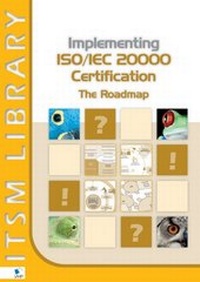
Implementing ISO/IEC 20000 Certification: The Roadmap
1st Edition
Published on 3. March 2008
214 pages
978-90-8753-196-6 (ISBN)
Description

ISO/IEC 20000 is the corporate standard for achieving quality within IT Service Management. As individuals achieve success in Service Management frameworks such as ITIL®, many organizations have identified the benefits of making the jump to full corporate accreditation. But, having made the decision to invest in this standard, what is the best way to implement adoption in an efficient and successful way?
This thorough, practical guide has been put together by real experts with real experience of how ISO/IEC 20000 works in the workplace and in the real world.
Part A of this title covers the step by step description of the ISO 20000 implementation process.
Part B contains real case studies from organizations who have successfully achieved ISO/IEC accreditation.
This Official itSMF guide is unique in that it not only describes the implementation process. It also suggests solutions to common problems and set-backs. An understanding of the many business pressures means that practical guidance on the business case, measuring success (or not), or the need for quick wins are all included in this book, making it an invaluable companion for all those working on an implementation project.
A sister guide to the hugely successful Official itSMF 'Introduction to ISO/IEC 20000' book, readers will find that this book becomes a key asset in delivering a practical, down to earth implementation program. Foreword by John Stewart of OGC.
More details
Other editions
Additional editions
E-Book
03/2008
Van Haren Publishing
€47.99
Available for download
Jan van Bon | David Clifford
Implementing ISO/IEC 20000 Certification: The Roadmap
Book
02/2008
Van Haren Publishing BV
€65.79
Shipment within 10-15 days
Content
1 - Foreword [Seite 6]
2 - Acknowledgements and project layout [Seite 8]
3 - Part I: General guidelines on ISO 20000 implementation and certification [Seite 16]
3.1 - Chapter 1 Introduction to ISO 20000 [Seite 18]
3.1.1 - 1.1Why is this subject relevant? [Seite 18]
3.1.2 - 1.2What is ISO 20000's history? [Seite 20]
3.1.3 - 1.3What is ISO 20000? [Seite 22]
3.1.4 - 1.4Benefits and costs [Seite 42]
3.1.5 - 1.5Perspectives on ISO 20000 Implementation [Seite 44]
3.2 - Chapter 2 The road to certification: planning and preparation [Seite 50]
3.2.1 - 2.1Commitment of the service provider [Seite 50]
3.2.2 - 2.2Commitment from other parties [Seite 54]
3.2.3 - 2.3Determine goals [Seite 55]
3.2.4 - 2.4Determine scope [Seite 56]
3.2.5 - 2.5Assessment: how 'certifiable' is the organization? [Seite 60]
3.2.6 - 2.6Set up business case [Seite 67]
3.2.7 - 2.7Decision-making (start) [Seite 69]
3.2.8 - 2.8Planning [Seite 70]
3.2.9 - 2.9Selecting a certification body [Seite 73]
3.3 - Chapter 3 The certification step-by-step [Seite 76]
3.3.1 - 3.1Finalize scope [Seite 76]
3.3.2 - 3.2Inventory of the management system [Seite 77]
3.3.3 - 3.3Re-adjust business case [Seite 86]
3.3.4 - 3.4Make service improvement plan with help of assessment [Seite 86]
3.3.5 - 3.5 Realize improvements [Seite 87]
3.3.6 - 3.6Internal auditing [Seite 88]
3.3.7 - 3.7External auditing [Seite 89]
3.3.8 - 3.8Celebrate the result [Seite 91]
3.3.9 - 3.9Pitfalls and problems [Seite 92]
3.4 - Chapter 4 Retaining the certificate [Seite 98]
3.4.1 - 4.1Operational management [Seite 98]
3.4.2 - 4.2Metrics and reports [Seite 101]
3.4.3 - 4.3Surveillance audits [Seite 104]
3.5 - Chapter 5 Evaluate business case [Seite 106]
3.5.1 - 5.1Period of experience [Seite 106]
3.5.2 - 5.2Interests [Seite 106]
3.5.3 - 5.3Operational benefits [Seite 107]
3.5.4 - 5.4Management benefits [Seite 107]
3.5.5 - 5.5Business benefits [Seite 107]
3.5.6 - 5.6Costs of implementation ISO 20000 [Seite 107]
4 - Part II: ISO 20000 Certification Case Studies [Seite 108]
4.1 - Case1: Electronic Data Systems IT Outsourcing [Seite 110]
4.1.1 - 1.1Organization type [Seite 111]
4.1.2 - 1.2Drivers for certification [Seite 112]
4.1.3 - 1.3Quality management at the start of the project [Seite 113]
4.1.4 - 1.4Parties involved [Seite 114]
4.1.5 - 1.5Initial assessment [Seite 116]
4.1.6 - 1.6Decision to go for certification [Seite 116]
4.1.7 - 1.7Preparation for certification [Seite 118]
4.1.8 - 1.8Internal audit [Seite 124]
4.1.9 - 1.9External certification audit [Seite 126]
4.1.10 - 1.10Preserving the certificate [Seite 127]
4.1.11 - 1.11Evaluation of the business case [Seite 128]
4.1.12 - 1.12Project evaluation [Seite 129]
4.2 - Case2: Fujitsu FIP Corporation [Seite 130]
4.2.1 - 2.1Organization type [Seite 131]
4.2.2 - 2.2Drivers for certification [Seite 133]
4.2.3 - 2.3Quality management at the start of the project [Seite 135]
4.2.4 - 2.4Parties involved [Seite 136]
4.2.5 - 2.5Initial assessment [Seite 137]
4.2.6 - 2.6Decision to go for certification [Seite 138]
4.2.7 - 2.7Preparation for certification [Seite 141]
4.2.8 - 2.8Internal audit [Seite 145]
4.2.9 - 2.9External audit [Seite 145]
4.2.10 - 2.10Preserving the certificate [Seite 147]
4.2.11 - 2.11Evaluation of the business case [Seite 148]
4.2.12 - 2.12Project evaluation [Seite 148]
4.3 - Case3: ING Service Centre Budapest (SCB) [Seite 152]
4.3.1 - 3.1Organization type [Seite 153]
4.3.2 - 3.2Drivers for certification [Seite 154]
4.3.3 - 3.3Quality management at the start of the project [Seite 154]
4.3.4 - 3.4Parties involved [Seite 154]
4.3.5 - 3.5Initial assessment [Seite 155]
4.3.6 - 3.6Decision to go for certification [Seite 156]
4.3.7 - 3.7Preparation for certification [Seite 157]
4.3.8 - 3.8Internal audit [Seite 158]
4.3.9 - 3.9External audit [Seite 159]
4.3.10 - 3.10Preserving the certificate [Seite 160]
4.3.11 - 3.11Project evaluation [Seite 160]
4.4 - Case4: Marval [Seite 162]
4.4.1 - 4.1Organization type [Seite 163]
4.4.2 - 4.2Drivers for certification [Seite 163]
4.4.3 - 4.3Quality management at the start of the project [Seite 164]
4.4.4 - 4.4Parties involved [Seite 165]
4.4.5 - 4.5Initial assessment [Seite 166]
4.4.6 - 4.6Decision to go for certification [Seite 166]
4.4.7 - 4.7Preparation for certification [Seite 168]
4.4.8 - 4.8Formal audit [Seite 169]
4.4.9 - 4.9Preserving the certificate [Seite 169]
4.4.10 - 4.10Evaluation of the business case [Seite 171]
4.4.11 - 4.11Project evaluation [Seite 171]
4.5 - Case5: NCS Pte Ltd, Singapore [Seite 174]
4.5.1 - 5.1Organization type [Seite 175]
4.5.2 - 5.2Drivers for certification [Seite 177]
4.5.3 - 5.3Quality management at the start of the project [Seite 179]
4.5.4 - 5.4Parties involved [Seite 180]
4.5.5 - 5.5Initial assessment [Seite 183]
4.5.6 - 5.6Decision to go for certification [Seite 184]
4.5.7 - 5.7Preparation for certification [Seite 186]
4.5.8 - 5.8Internal audit [Seite 187]
4.5.9 - 5.9External audit [Seite 187]
4.5.10 - 5.10Preserving the certificate [Seite 189]
4.5.11 - 5.11Evaluation of the business case [Seite 189]
4.5.12 - 5.12Project evaluation [Seite 190]
4.6 - Case6: Nippon Securities Technology Co., Ltd, Japan [Seite 192]
4.6.1 - 6.1 Organization type [Seite 193]
4.6.2 - 6.2Drivers for certification [Seite 194]
4.6.3 - 6.3Quality management at the start of the project [Seite 196]
4.6.4 - 6.4Parties involved [Seite 197]
4.6.5 - 6.5Initial assessment [Seite 197]
4.6.6 - 6.6Decision to go for certification [Seite 198]
4.6.7 - 6.7Preparation for certification [Seite 200]
4.6.8 - 6.8Internal audit [Seite 201]
4.6.9 - 6.9External audit [Seite 201]
4.6.10 - 6.10Preserving the certificate [Seite 202]
4.6.11 - 6.11Evaluation of the business case [Seite 202]
4.6.12 - 6.12Project evaluation [Seite 202]
5 - List of acronyms [Seite 206]
6 - Sources [Seite 208]
7 - Index [Seite 212]
2 - Acknowledgements and project layout [Seite 8]
3 - Part I: General guidelines on ISO 20000 implementation and certification [Seite 16]
3.1 - Chapter 1 Introduction to ISO 20000 [Seite 18]
3.1.1 - 1.1Why is this subject relevant? [Seite 18]
3.1.2 - 1.2What is ISO 20000's history? [Seite 20]
3.1.3 - 1.3What is ISO 20000? [Seite 22]
3.1.4 - 1.4Benefits and costs [Seite 42]
3.1.5 - 1.5Perspectives on ISO 20000 Implementation [Seite 44]
3.2 - Chapter 2 The road to certification: planning and preparation [Seite 50]
3.2.1 - 2.1Commitment of the service provider [Seite 50]
3.2.2 - 2.2Commitment from other parties [Seite 54]
3.2.3 - 2.3Determine goals [Seite 55]
3.2.4 - 2.4Determine scope [Seite 56]
3.2.5 - 2.5Assessment: how 'certifiable' is the organization? [Seite 60]
3.2.6 - 2.6Set up business case [Seite 67]
3.2.7 - 2.7Decision-making (start) [Seite 69]
3.2.8 - 2.8Planning [Seite 70]
3.2.9 - 2.9Selecting a certification body [Seite 73]
3.3 - Chapter 3 The certification step-by-step [Seite 76]
3.3.1 - 3.1Finalize scope [Seite 76]
3.3.2 - 3.2Inventory of the management system [Seite 77]
3.3.3 - 3.3Re-adjust business case [Seite 86]
3.3.4 - 3.4Make service improvement plan with help of assessment [Seite 86]
3.3.5 - 3.5 Realize improvements [Seite 87]
3.3.6 - 3.6Internal auditing [Seite 88]
3.3.7 - 3.7External auditing [Seite 89]
3.3.8 - 3.8Celebrate the result [Seite 91]
3.3.9 - 3.9Pitfalls and problems [Seite 92]
3.4 - Chapter 4 Retaining the certificate [Seite 98]
3.4.1 - 4.1Operational management [Seite 98]
3.4.2 - 4.2Metrics and reports [Seite 101]
3.4.3 - 4.3Surveillance audits [Seite 104]
3.5 - Chapter 5 Evaluate business case [Seite 106]
3.5.1 - 5.1Period of experience [Seite 106]
3.5.2 - 5.2Interests [Seite 106]
3.5.3 - 5.3Operational benefits [Seite 107]
3.5.4 - 5.4Management benefits [Seite 107]
3.5.5 - 5.5Business benefits [Seite 107]
3.5.6 - 5.6Costs of implementation ISO 20000 [Seite 107]
4 - Part II: ISO 20000 Certification Case Studies [Seite 108]
4.1 - Case1: Electronic Data Systems IT Outsourcing [Seite 110]
4.1.1 - 1.1Organization type [Seite 111]
4.1.2 - 1.2Drivers for certification [Seite 112]
4.1.3 - 1.3Quality management at the start of the project [Seite 113]
4.1.4 - 1.4Parties involved [Seite 114]
4.1.5 - 1.5Initial assessment [Seite 116]
4.1.6 - 1.6Decision to go for certification [Seite 116]
4.1.7 - 1.7Preparation for certification [Seite 118]
4.1.8 - 1.8Internal audit [Seite 124]
4.1.9 - 1.9External certification audit [Seite 126]
4.1.10 - 1.10Preserving the certificate [Seite 127]
4.1.11 - 1.11Evaluation of the business case [Seite 128]
4.1.12 - 1.12Project evaluation [Seite 129]
4.2 - Case2: Fujitsu FIP Corporation [Seite 130]
4.2.1 - 2.1Organization type [Seite 131]
4.2.2 - 2.2Drivers for certification [Seite 133]
4.2.3 - 2.3Quality management at the start of the project [Seite 135]
4.2.4 - 2.4Parties involved [Seite 136]
4.2.5 - 2.5Initial assessment [Seite 137]
4.2.6 - 2.6Decision to go for certification [Seite 138]
4.2.7 - 2.7Preparation for certification [Seite 141]
4.2.8 - 2.8Internal audit [Seite 145]
4.2.9 - 2.9External audit [Seite 145]
4.2.10 - 2.10Preserving the certificate [Seite 147]
4.2.11 - 2.11Evaluation of the business case [Seite 148]
4.2.12 - 2.12Project evaluation [Seite 148]
4.3 - Case3: ING Service Centre Budapest (SCB) [Seite 152]
4.3.1 - 3.1Organization type [Seite 153]
4.3.2 - 3.2Drivers for certification [Seite 154]
4.3.3 - 3.3Quality management at the start of the project [Seite 154]
4.3.4 - 3.4Parties involved [Seite 154]
4.3.5 - 3.5Initial assessment [Seite 155]
4.3.6 - 3.6Decision to go for certification [Seite 156]
4.3.7 - 3.7Preparation for certification [Seite 157]
4.3.8 - 3.8Internal audit [Seite 158]
4.3.9 - 3.9External audit [Seite 159]
4.3.10 - 3.10Preserving the certificate [Seite 160]
4.3.11 - 3.11Project evaluation [Seite 160]
4.4 - Case4: Marval [Seite 162]
4.4.1 - 4.1Organization type [Seite 163]
4.4.2 - 4.2Drivers for certification [Seite 163]
4.4.3 - 4.3Quality management at the start of the project [Seite 164]
4.4.4 - 4.4Parties involved [Seite 165]
4.4.5 - 4.5Initial assessment [Seite 166]
4.4.6 - 4.6Decision to go for certification [Seite 166]
4.4.7 - 4.7Preparation for certification [Seite 168]
4.4.8 - 4.8Formal audit [Seite 169]
4.4.9 - 4.9Preserving the certificate [Seite 169]
4.4.10 - 4.10Evaluation of the business case [Seite 171]
4.4.11 - 4.11Project evaluation [Seite 171]
4.5 - Case5: NCS Pte Ltd, Singapore [Seite 174]
4.5.1 - 5.1Organization type [Seite 175]
4.5.2 - 5.2Drivers for certification [Seite 177]
4.5.3 - 5.3Quality management at the start of the project [Seite 179]
4.5.4 - 5.4Parties involved [Seite 180]
4.5.5 - 5.5Initial assessment [Seite 183]
4.5.6 - 5.6Decision to go for certification [Seite 184]
4.5.7 - 5.7Preparation for certification [Seite 186]
4.5.8 - 5.8Internal audit [Seite 187]
4.5.9 - 5.9External audit [Seite 187]
4.5.10 - 5.10Preserving the certificate [Seite 189]
4.5.11 - 5.11Evaluation of the business case [Seite 189]
4.5.12 - 5.12Project evaluation [Seite 190]
4.6 - Case6: Nippon Securities Technology Co., Ltd, Japan [Seite 192]
4.6.1 - 6.1 Organization type [Seite 193]
4.6.2 - 6.2Drivers for certification [Seite 194]
4.6.3 - 6.3Quality management at the start of the project [Seite 196]
4.6.4 - 6.4Parties involved [Seite 197]
4.6.5 - 6.5Initial assessment [Seite 197]
4.6.6 - 6.6Decision to go for certification [Seite 198]
4.6.7 - 6.7Preparation for certification [Seite 200]
4.6.8 - 6.8Internal audit [Seite 201]
4.6.9 - 6.9External audit [Seite 201]
4.6.10 - 6.10Preserving the certificate [Seite 202]
4.6.11 - 6.11Evaluation of the business case [Seite 202]
4.6.12 - 6.12Project evaluation [Seite 202]
5 - List of acronyms [Seite 206]
6 - Sources [Seite 208]
7 - Index [Seite 212]
