


Kinesic Intelligence in the Humanities
1st Edition
Published on 20. December 2023
210 pages
978-1-003-83575-2 (ISBN)
Description

This research collection showcases how kinesic intelligence is fundamental to human communication and our ability to produce complex meaning, exploring its manifestations across a range of humanities disciplines, and connecting our past with our social and cultural future.
The book defines kinesic intelligence as a higher-order intellectual competence that allows human beings to interact and grow cognitively and intersubjectively through sensorimotricity and interpersonal movement. Understood in this way, kinesic intelligence can offer insights into the development of humans' meaning-making abilities and, in turn, society and culture more broadly. Recognizing the power of the humanities in furthering sociocultural development, the collection features perspectives from scholars across a range of topics, including the multimodality of language acquisition in children; young adults in clinical psychology and medical humanities; nonverbal communication in history; legal language and reasoning; literature and cognitive studies; the internet and multispecies anthropology; and sensoriality in history and art.
Foregrounding the impact of the humanities in promoting new understandings of human intelligence, this volume will be of interest to scholars in cognitive legal and literary studies, multimodality, anthropology, history, medical humanities, and those with an interest in the real-world impact of the humanities.
The book defines kinesic intelligence as a higher-order intellectual competence that allows human beings to interact and grow cognitively and intersubjectively through sensorimotricity and interpersonal movement. Understood in this way, kinesic intelligence can offer insights into the development of humans' meaning-making abilities and, in turn, society and culture more broadly. Recognizing the power of the humanities in furthering sociocultural development, the collection features perspectives from scholars across a range of topics, including the multimodality of language acquisition in children; young adults in clinical psychology and medical humanities; nonverbal communication in history; legal language and reasoning; literature and cognitive studies; the internet and multispecies anthropology; and sensoriality in history and art.
Foregrounding the impact of the humanities in promoting new understandings of human intelligence, this volume will be of interest to scholars in cognitive legal and literary studies, multimodality, anthropology, history, medical humanities, and those with an interest in the real-world impact of the humanities.
More details
Series
Edition
1. Auflage
Language
English
Place of publication
London
United Kingdom
Publishing group
Taylor & Francis Ebooks
Target group
College/higher education
Product notice
Reflowable
Illustrations
1 Line drawings, black and white; 19 Halftones, black and white; 20 Illustrations, black and white
ISBN-13
978-1-003-83575-2 (9781003835752)
Copyright in bibliographic data and cover images is held by Nielsen Book Services Limited or by the publishers or by their respective licensors: all rights reserved.
Schweitzer Classification
Other editions
Additional editions
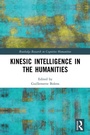
Guillemette Bolens
Kinesic Intelligence in the Humanities
Book
05/2025
1st Edition
Routledge
€67.10
Shipment within 10-20 days

Guillemette Bolens
Kinesic Intelligence in the Humanities
Book
12/2023
1st Edition
Routledge
€206.20
Shipment within 10-20 days
Person
Guillemette Bolens is Professor of Medieval and Comparative Literature at the University of Geneva, Switzerland. She is the author of several books, including The Style of Gestures: Embodiment and Cognition in Literary Narrative (Johns Hopkins UP, 2012) and Kinesic Humor: Literature, Embodied Cognition, and the Dynamics of Gesture (OUP, 2021). Her work has been published in Poetics Today, Cahiers de narratologie, Studia Neophilologica, and Cogent Arts & Humanities.
Content
Contents
List of Contributors
Introduction: What is Kinesic Intelligence?
Guillemette Bolens
Chapter 1: The Role of Kinesic Intelligence in Child Language Development
Aliyah Morgenstern
Chapter 2: Kinesic Intelligence in the Care Relationship: The Contribution of Clinical Psychology to Healthcare Provided to Adolescents and Young Adults with Cancer
Elise Ricadat
Chapter 3: Kinesic Intelligence and Historical Research: Gestural Communication at the Court of Henry VIII
Greg Walker
Chapter 4: Kinesic Intelligence in Common Law Reasoning
Maksymilian Del Mar
Chapter 5: Reading as Embodied Simulation: Literary Techniques and Intersubjective Collaboration
Paul B. Armstrong
Chapter 6: Why Love a Cat? An Anthropology of Human-Feline Kinesic Engagement On- and Off-line
Ellen Hertz
Chapter 7: Material Scent: Textiles beyond Touch
Jessica Hemmings
Index
List of Contributors
Introduction: What is Kinesic Intelligence?
Guillemette Bolens
Chapter 1: The Role of Kinesic Intelligence in Child Language Development
Aliyah Morgenstern
Chapter 2: Kinesic Intelligence in the Care Relationship: The Contribution of Clinical Psychology to Healthcare Provided to Adolescents and Young Adults with Cancer
Elise Ricadat
Chapter 3: Kinesic Intelligence and Historical Research: Gestural Communication at the Court of Henry VIII
Greg Walker
Chapter 4: Kinesic Intelligence in Common Law Reasoning
Maksymilian Del Mar
Chapter 5: Reading as Embodied Simulation: Literary Techniques and Intersubjective Collaboration
Paul B. Armstrong
Chapter 6: Why Love a Cat? An Anthropology of Human-Feline Kinesic Engagement On- and Off-line
Ellen Hertz
Chapter 7: Material Scent: Textiles beyond Touch
Jessica Hemmings
Index
