

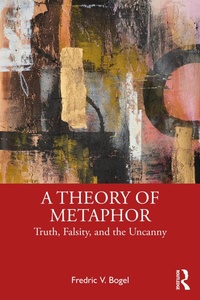
A Theory of Metaphor
Truth, Falsity, and the Uncanny
1st Edition
Published on 16. September 2025
118 pages
978-1-040-39667-4 (ISBN)
Description

A Theory of Metaphor: Truth, Falsity, and the Uncanny is a strikingly original analysis of metaphor. Scholarly and imaginative, this sophisticated theory builds on a simple definition: metaphors are not comparisons but statements of identity (A is B), statements simultaneously true and false.
Bogel explores a broad range of literary theory and philosophy: from Aristotle to Zizek, Augustine to Wittgenstein, Richards to Ricoeur and Blumenberg. The book analyzes a wide variety of literary and non-literary texts, including popular forms such as graveyard epitaphs, sermons, cartoons (Garry Trudeau's Doonesbury), and a haunting episode of Star Trek: The Next Generation. It extends the central concept of truth and falsity to the reader's encounter with metaphor, figural interpretation of scripture, entire poems as metaphors, the aesthetics of obliquity and textual impurity, and Freudian psychoanalysis-in particular, links between metaphor and the uncanny.
This rigorously and eloquently argued book will be invaluable to students of metaphor across such fields as literary criticism and theory, philosophy, linguistics, rhetoric, psychoanalysis, and media studies. Its arguments are enriched by numerous concrete examples and analyses that bring theory to life and help to reach beyond an academic audience. Bogel's ground-breaking study takes our understanding of metaphor in new and important directions.
Bogel explores a broad range of literary theory and philosophy: from Aristotle to Zizek, Augustine to Wittgenstein, Richards to Ricoeur and Blumenberg. The book analyzes a wide variety of literary and non-literary texts, including popular forms such as graveyard epitaphs, sermons, cartoons (Garry Trudeau's Doonesbury), and a haunting episode of Star Trek: The Next Generation. It extends the central concept of truth and falsity to the reader's encounter with metaphor, figural interpretation of scripture, entire poems as metaphors, the aesthetics of obliquity and textual impurity, and Freudian psychoanalysis-in particular, links between metaphor and the uncanny.
This rigorously and eloquently argued book will be invaluable to students of metaphor across such fields as literary criticism and theory, philosophy, linguistics, rhetoric, psychoanalysis, and media studies. Its arguments are enriched by numerous concrete examples and analyses that bring theory to life and help to reach beyond an academic audience. Bogel's ground-breaking study takes our understanding of metaphor in new and important directions.
Reviews / Votes
'Bogel's book reveals the complexities of metaphor, its ability to disclose and conceal meaning, to disrupt and reconstruct linguistic and cultural realities. Through his original endeavor, F. Bogel succeeds not only in reshaping the theory of metaphor, but also in reasserting the essential role metaphor plays in the way in which we communicate and perceive the world.' Adina PruteanuMore details
Edition
1. Auflage
Language
English
Place of publication
London
United Kingdom
Publishing group
Taylor & Francis Ltd
Target group
College/higher education
Professional and scholarly
Illustrations
1 Line drawings, black and white; 2 Halftones, black and white; 3 Illustrations, black and white
File size
0,90 MB
ISBN-13
978-1-040-39667-4 (9781040396674)
Copyright in bibliographic data and cover images is held by Nielsen Book Services Limited or by the publishers or by their respective licensors: all rights reserved.
Schweitzer Classification
Other editions
Additional editions
Book
09/2025
1st Edition
Routledge
€206.80
Shipment within 10-20 days
Book
09/2025
1st Edition
Routledge
€62.80
Shipment within 10-20 days
Person
Fredric V. Bogel is Professor of English, emeritus, at Cornell University, USA. He is the author of New Formalist Criticism: Theory and Practice (2013).
Content
Acknowledgements
1. Introduction: A Theory of Metaphor
2. Processing Metaphor: Resistance and Interpretation
3. Metaphor and Biblical Interpretation
4. The Persistence of the Tenor: Falsity in Truth
5. The Decline of Literal Truth and Reference
6. Poems as Metaphors: To Truth through Fiction
7. The Double Transit of Metaphor: Metaphor and the Uncanny
8. Novelty and the End State of Metaphor: Uncanny Doubling
9. The Uncanny: Psychoanalytic and Metaphoric
10. Metaphor and Affect: The Uncanny, Paradox, Wonder, Religion
11. Conclusion
Appendix
Bibliography
Index
1. Introduction: A Theory of Metaphor
2. Processing Metaphor: Resistance and Interpretation
3. Metaphor and Biblical Interpretation
4. The Persistence of the Tenor: Falsity in Truth
5. The Decline of Literal Truth and Reference
6. Poems as Metaphors: To Truth through Fiction
7. The Double Transit of Metaphor: Metaphor and the Uncanny
8. Novelty and the End State of Metaphor: Uncanny Doubling
9. The Uncanny: Psychoanalytic and Metaphoric
10. Metaphor and Affect: The Uncanny, Paradox, Wonder, Religion
11. Conclusion
Appendix
Bibliography
Index
