

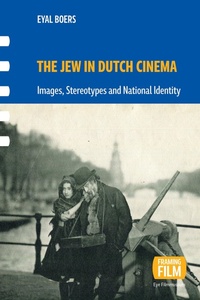
The Jew in Dutch Cinema
Images, Stereotypes and National Identity
Will be published approx. on 22. June 2026
216 pages
978-1-040-83943-0 (ISBN)
Description

This book is a pioneer study of the image of the Jew in Dutch cinema within the context of national cinema and identity.
The image of the Jew is examined from the 1914 silent film Weergevonden, through antisemitic films produced in the Netherlands under Nazi occupation, Dutch films of the first decades after the Second World War, and war films of the 1980s, to movies produced in the first two decades of the twenty-first century. While Dutch films in the first half of the twentieth century tended to emphasize the image of the Jew as the "other," Dutch films since the second half of the century have been more inclined to focus on the identity of the Jew who gradually becomes a member of the collective Dutch "self." The Jew in Dutch cinema plays a special role in defining Dutch national identity, illustrating the virtues and defects of the Dutch.
Elucidating Dutch history and identity and the way in which Jews are presented as part of the issue of Dutch national identity, the book also complements the research on the images of Jews and other ethnic minorities. It will be of interest to researchers in the fields of Film and Cultural Studies, in particular those studying ethnic/racial stereotypes, cultural identity, and national cinema.
The image of the Jew is examined from the 1914 silent film Weergevonden, through antisemitic films produced in the Netherlands under Nazi occupation, Dutch films of the first decades after the Second World War, and war films of the 1980s, to movies produced in the first two decades of the twenty-first century. While Dutch films in the first half of the twentieth century tended to emphasize the image of the Jew as the "other," Dutch films since the second half of the century have been more inclined to focus on the identity of the Jew who gradually becomes a member of the collective Dutch "self." The Jew in Dutch cinema plays a special role in defining Dutch national identity, illustrating the virtues and defects of the Dutch.
Elucidating Dutch history and identity and the way in which Jews are presented as part of the issue of Dutch national identity, the book also complements the research on the images of Jews and other ethnic minorities. It will be of interest to researchers in the fields of Film and Cultural Studies, in particular those studying ethnic/racial stereotypes, cultural identity, and national cinema.
More details
Series
Language
English
Place of publication
London
United Kingdom
Publishing group
Taylor & Francis Ltd
Target group
Professional and scholarly
Illustrations
17 Halftones, black and white; 17 Illustrations, black and white
File size
107,52 MB
ISBN-13
978-1-040-83943-0 (9781040839430)
Copyright in bibliographic data and cover images is held by Nielsen Book Services Limited or by the publishers or by their respective licensors: all rights reserved.
Schweitzer Classification
Other editions
Additional editions
Book
approx. 06/2026
1st Edition
Pallas Publications
€179.50
Not yet published
Person
Eyal Boers is a senior lecturer and head of film and television track at Ariel University's School of Communication, Israel. He was the chairman of the Israel Film Council from 2018 to 2022. He produced and directed the documentary films Classmates of Anne Frank (2008) and Live or Die in Entebbe (2012).
Content
Preface
1. Introduction
2. The Jews in Dutch Society: A Historical and Sociological Overview
3. Dutch National Cinema and Dutch National Identity
4. The Dutch Film Industry and the Jews
5. The Jew in Dutch Cinema - Images, Stereotypes, and the Shaping of National Identity
5.1 The Jew in Weergevonden: In Need of the Gentile's Grace
5.2 The Jew in Dutch Cinema Under Nazi Occupation: Greedy Rhino
5.3 The Jew in Dutch Cinema after the Second World War: In the Shadow of Anne Frank
5.4 The Jew in Dutch War Films of the 1980s: Passive Hero
5.5 Frans Weisz: The Jewish Auteur
5.6 The Jew in Dutch Movies in the Twenty-First Century: A Dutch Prototype or a Jewish Outsider?
Conclusion
Filmography & Bibliography
Index
1. Introduction
2. The Jews in Dutch Society: A Historical and Sociological Overview
3. Dutch National Cinema and Dutch National Identity
4. The Dutch Film Industry and the Jews
5. The Jew in Dutch Cinema - Images, Stereotypes, and the Shaping of National Identity
5.1 The Jew in Weergevonden: In Need of the Gentile's Grace
5.2 The Jew in Dutch Cinema Under Nazi Occupation: Greedy Rhino
5.3 The Jew in Dutch Cinema after the Second World War: In the Shadow of Anne Frank
5.4 The Jew in Dutch War Films of the 1980s: Passive Hero
5.5 Frans Weisz: The Jewish Auteur
5.6 The Jew in Dutch Movies in the Twenty-First Century: A Dutch Prototype or a Jewish Outsider?
Conclusion
Filmography & Bibliography
Index
