

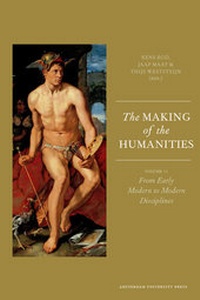
The Making of the Humanities
Volume II: From Early Modern to Modern Disciplines
1st Edition
Published on 10. January 2012
427 pages
978-90-485-1733-6 (ISBN)
Description

Rens Bod is professor of computational and digital humanities at the University of Amsterdam. Jaap Maat is a lecturer in philosophy at the University of Amsterdam. Thijs Weststeijn is a fellow of the Max Planck Institute for the History of Science in Berlin.
More details
Persons
Rens Bod is professor of computational and digital humanities at the University of Amsterdam. Jaap Maat is a lecturer in philosophy at the University of Amsterdam. Thijs Weststeijn is a fellow of the Max Planck Institute for the History of Science in Berlin.
Content
Introduction: The Dawn of the Modern Humanities
Rens Bod
1. Linguistics and Philology
The Rise of Philology: The Comparative Method, the Historicist Turn and the Surreptitious Influence of Giambattista Vico
Joep Leerssen
Linguistics 'ante litteram': Compiling and Transmitting Views on the Diversity and Kinship of Languages before the Nineteenth Century
Toon Van Hal
The Rise of the General Linguistics as an Academic Discipline: Georg von der Gabelentz as a Co-Founder
Els Elffers
II. The Humanities and the Sciences
The Mutual Making of Sciences and Humanities: Willebrord Snellius, Jacob Golius, and the Early Modern Entanglement of Mathematics and Philology
Fokko Jan Dijksterhuis
A 'Human' Science: Hawkins's Science of Music
Maria Semi
Bopp the Builder, Discipline Formation as Hybridization: The Case of Comparative Linguistics
Bart Karstens
III. Writing History and Intellectual History
Nineteenth-Century Historicism and Its Predecessors: Historical Experience, Historical Ontology and Historical Method
Jacques Bos
Fact and Fancy in Nineteenth-Century Historiography and Fiction: The Case of Macaulay and Roidis Foteini Lika
The Humanities as the Stronghold of Freedom: John Milton's Areopagitica and John Stuart Mill's On Liberty
Hilary Gatti
IV. The Impact of the East
The Impact on the European Humanities of Early Reports from Catholic Missionaries form China, Tibet and Japan between 1600 and 1700
Gerhard F. Strasser
The Middle Kingdom in the Low Countries: Sinology in the Seventeenth-Century Netherlands
Thijs Wetsteijn
The Oriental Origins of Orientalism: The Case of Dimitrie Cantemir Michiel Leezenberg
V. Artworks and Texts
The Role of Emotions in the Development of Artistic Theory and the System of Literary Genres
Mats Malm
Philology and the History of Art
Adi Efal
VI. Literature and Rhetoric
Bourgeois versus Aristocratic Models of Scholarship: Medieval Studies at the Académie des Incriptions, 1701-1751
Alicia C. Montoya
Ancients, Moderns and the Gothic in Eighteenth-Century Historiography
Neus Rotger
The Afterlife of Rhetoric in Hobbes, Vico and Nietzsche
David L. Marshall
VII. Academic Communities
The Documents of Feith: The Centralization of the Archive in Nineteenth-Century Historiography
Pieter Huistra
Humboldt in Copenhagen: Discipline Formation in the Humanities at the University of Copenhagen in the Nineteenth Century
Claus Møller Jørgensen
The Scholarly Self: Ideals of Intellectual Virtue in Nineteenth-Century Leiden
Herman Paul
Contributors
List of Figures
Index
Rens Bod
1. Linguistics and Philology
The Rise of Philology: The Comparative Method, the Historicist Turn and the Surreptitious Influence of Giambattista Vico
Joep Leerssen
Linguistics 'ante litteram': Compiling and Transmitting Views on the Diversity and Kinship of Languages before the Nineteenth Century
Toon Van Hal
The Rise of the General Linguistics as an Academic Discipline: Georg von der Gabelentz as a Co-Founder
Els Elffers
II. The Humanities and the Sciences
The Mutual Making of Sciences and Humanities: Willebrord Snellius, Jacob Golius, and the Early Modern Entanglement of Mathematics and Philology
Fokko Jan Dijksterhuis
A 'Human' Science: Hawkins's Science of Music
Maria Semi
Bopp the Builder, Discipline Formation as Hybridization: The Case of Comparative Linguistics
Bart Karstens
III. Writing History and Intellectual History
Nineteenth-Century Historicism and Its Predecessors: Historical Experience, Historical Ontology and Historical Method
Jacques Bos
Fact and Fancy in Nineteenth-Century Historiography and Fiction: The Case of Macaulay and Roidis Foteini Lika
The Humanities as the Stronghold of Freedom: John Milton's Areopagitica and John Stuart Mill's On Liberty
Hilary Gatti
IV. The Impact of the East
The Impact on the European Humanities of Early Reports from Catholic Missionaries form China, Tibet and Japan between 1600 and 1700
Gerhard F. Strasser
The Middle Kingdom in the Low Countries: Sinology in the Seventeenth-Century Netherlands
Thijs Wetsteijn
The Oriental Origins of Orientalism: The Case of Dimitrie Cantemir Michiel Leezenberg
V. Artworks and Texts
The Role of Emotions in the Development of Artistic Theory and the System of Literary Genres
Mats Malm
Philology and the History of Art
Adi Efal
VI. Literature and Rhetoric
Bourgeois versus Aristocratic Models of Scholarship: Medieval Studies at the Académie des Incriptions, 1701-1751
Alicia C. Montoya
Ancients, Moderns and the Gothic in Eighteenth-Century Historiography
Neus Rotger
The Afterlife of Rhetoric in Hobbes, Vico and Nietzsche
David L. Marshall
VII. Academic Communities
The Documents of Feith: The Centralization of the Archive in Nineteenth-Century Historiography
Pieter Huistra
Humboldt in Copenhagen: Discipline Formation in the Humanities at the University of Copenhagen in the Nineteenth Century
Claus Møller Jørgensen
The Scholarly Self: Ideals of Intellectual Virtue in Nineteenth-Century Leiden
Herman Paul
Contributors
List of Figures
Index
