

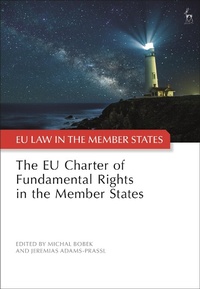
The EU Charter of Fundamental Rights in the Member States
1st Edition
Published on 24. December 2020
632 pages
978-1-5099-4093-6 (ISBN)
Description

Ten years after the Charter of Fundamental Rights of the European Union became part of binding primary law, and twenty years since its adoption, this volume assess the application of the EU Charter in the Member States. How often, and in particular by which actors, is the EU Charter invoked at the national level? In what type of situations is it used? Has the approach of national courts in general, and of constitutional courts in particular, to EU law to EU fundamental rights law changed following the entry into force of the Charter? What sort of interplay does the Charter generate with the national bill of rights and the European Convention? Is the life with the Charter on the national level a harmonious 'praktische Konkordanz' or rather a messy 'ménage à trois'?
These and other questions are discussed in the four parts that form the book. Part I is dedicated to the normative foundations. Part II sets out Member States' Perspectives, providing a structured, in-depth account of the Charter's operation in 16 different Member States. Part III provides a detailed evaluation of selected rights contained within the Charter. Part IV synthesises the materials presented up to that point to develop a series of broader perspectives, looking to discover underlying lessons about the relationship between EU fundamental rights law and national legal systems.
These and other questions are discussed in the four parts that form the book. Part I is dedicated to the normative foundations. Part II sets out Member States' Perspectives, providing a structured, in-depth account of the Charter's operation in 16 different Member States. Part III provides a detailed evaluation of selected rights contained within the Charter. Part IV synthesises the materials presented up to that point to develop a series of broader perspectives, looking to discover underlying lessons about the relationship between EU fundamental rights law and national legal systems.
More details
Series
Edition
1. Auflage
Language
English
Place of publication
London
United Kingdom
Publishing group
Bloomsbury Publishing PLC
Target group
College/higher education
ISBN-13
978-1-5099-4093-6 (9781509940936)
Copyright in bibliographic data and cover images is held by Nielsen Book Services Limited or by the publishers or by their respective licensors: all rights reserved.
Schweitzer Classification
Other editions
Additional editions
Michal Bobek | Jeremias Adams-Prassl
The EU Charter of Fundamental Rights in the Member States
Book
07/2022
Hart Publishing
€106.65
Shipment within 15-20 days
Michal Bobek | Jeremias Adams-Prassl
The EU Charter of Fundamental Rights in the Member States
Book
12/2020
Hart Publishing
€252.55
Shipment within 15-20 days
Persons
Michal Bobek is Advocate General at the Court of Justice of the European Union.
Jeremias Adams-Prassl is Professor of Law at Magdalen College, Oxford, and Deputy Director of the Institute of European and Comparative Law, University of Oxford.
Jeremias Adams-Prassl is Professor of Law at Magdalen College, Oxford, and Deputy Director of the Institute of European and Comparative Law, University of Oxford.
Content
Introduction
Jeremias Adams-Prassl and Michal Bobek
PART I
THE FOUNDATIONS
1. The Role of the EU Charter in the Member States
Koen Lenaerts
2. The EU Charter Ten Years On: A View from Strasbourg
Siofra O'Leary
PART II
MEMBER STATE PERSPECTIVES
3. Austria: United in Consistent Interpretation
Christoph Grabenwarter and Christine Pesendorfer
4. Belgium: The EU Charter in a Tradition of Openness
Sarah Lambrecht
5. Bulgaria: Rays of Light in a Cloudy Sky 9
Alexander Kornezov
6. Czech Republic and Slovakia: Another International Human Rights Treaty?
Adam Blisa, Pavel Molek and Katarina sipulova
7. The EU Charter before the French Parliament and Courts: Between (Great) Disillusion and (Little) Hope
Laurence Burgorgue-Larsen
8. Taking Up the European Mandate: The Charter Before German Courts
Mattias Wendel
9. Hungary: A Half-Hearted Look at the Charter
Antal Berkes, Andras Jakab and Pal Sonnevend
10. Ireland and the Charter: Ten Underwhelming Years?
Gerard Hogan
11. Italy: New Frontiers and Further Developments
Silvana Sciarra and Angelo Jr Golia
12. The Netherlands: The New Kid on the Block, Growing Pains or Growing Gains?
Corinna Wissels and Aniel Pahladsingh
13. Poland - The Charter of Fundamental Rights as a Last Resort?
Krystyna Kowalik-Banczyk
14. Portugal: Lukewarm Engagement with the Charter
Goncalo de Almeida Ribeiro and Patricia Fragoso Martins
15. Trials, Tributes and Tribulations: The EU Charter before the Slovenian Courts
Matej Accetto
16. The (Incomplete) Reception of the EU Charter of Fundamental Rights in Spain
Daniel Sarmiento and Xavier Codina
17. Limited But Not Inconsequential: The Application of the Charter by the Courts of England and Wales
Lady Arden and Takis Tridimas
PART III
SELECTED RIGHTS
18. Article 8: The Right to Data Protection
Orla Lynskey
19. Article 47: The Right to an Effective Remedy and to a Fair Trial
Kathleen Gutman
20. Article 50: The Elusive Shape of the Ne Bis In Idem Rule
Magdalena Lickova
21. Article 51: The Scope of Application of the Charter
Sara Iglesias Sanchez
22. Article 52: Twenty-Eight Shades of Interpretation?
Maja Brkan and sejla Imamovic
23. Why Article 53 of the Charter Should Ground the Application of National Fundamental Rights in Fully Harmonised Areas
Francois-Xavier Millet
PART IV
BROADER PERSPECTIVES
24. References for a Preliminary Ruling and the Charter of Fundamental Rights: Experiences and Data from 2010 to 2018
David Reichel and Gabriel N. Toggenburg
25. The Charter as a Standard of Constitutional Review in the Member States
Clara Rauchegger
26. Exporting Cherries for the Cakes: The Charter of Fundamental Rightsin Domestic Courts of the EU's Neighbourhood
Adam Lazowski
27. Protecting Fundamental Rights Beyond the Charter: Repositioning the Reverse Solange Doctrine in Light of the CJEU's Article 2 TEU Case-Law
Armin von Bogdandy and Luke Dimitrios Spieker
28. The Cosmopolitan and Federal Margins of Appreciation
Alexander Somek
Conclusion
Michal Bobek and Jeremias Adams-Prassl
Jeremias Adams-Prassl and Michal Bobek
PART I
THE FOUNDATIONS
1. The Role of the EU Charter in the Member States
Koen Lenaerts
2. The EU Charter Ten Years On: A View from Strasbourg
Siofra O'Leary
PART II
MEMBER STATE PERSPECTIVES
3. Austria: United in Consistent Interpretation
Christoph Grabenwarter and Christine Pesendorfer
4. Belgium: The EU Charter in a Tradition of Openness
Sarah Lambrecht
5. Bulgaria: Rays of Light in a Cloudy Sky 9
Alexander Kornezov
6. Czech Republic and Slovakia: Another International Human Rights Treaty?
Adam Blisa, Pavel Molek and Katarina sipulova
7. The EU Charter before the French Parliament and Courts: Between (Great) Disillusion and (Little) Hope
Laurence Burgorgue-Larsen
8. Taking Up the European Mandate: The Charter Before German Courts
Mattias Wendel
9. Hungary: A Half-Hearted Look at the Charter
Antal Berkes, Andras Jakab and Pal Sonnevend
10. Ireland and the Charter: Ten Underwhelming Years?
Gerard Hogan
11. Italy: New Frontiers and Further Developments
Silvana Sciarra and Angelo Jr Golia
12. The Netherlands: The New Kid on the Block, Growing Pains or Growing Gains?
Corinna Wissels and Aniel Pahladsingh
13. Poland - The Charter of Fundamental Rights as a Last Resort?
Krystyna Kowalik-Banczyk
14. Portugal: Lukewarm Engagement with the Charter
Goncalo de Almeida Ribeiro and Patricia Fragoso Martins
15. Trials, Tributes and Tribulations: The EU Charter before the Slovenian Courts
Matej Accetto
16. The (Incomplete) Reception of the EU Charter of Fundamental Rights in Spain
Daniel Sarmiento and Xavier Codina
17. Limited But Not Inconsequential: The Application of the Charter by the Courts of England and Wales
Lady Arden and Takis Tridimas
PART III
SELECTED RIGHTS
18. Article 8: The Right to Data Protection
Orla Lynskey
19. Article 47: The Right to an Effective Remedy and to a Fair Trial
Kathleen Gutman
20. Article 50: The Elusive Shape of the Ne Bis In Idem Rule
Magdalena Lickova
21. Article 51: The Scope of Application of the Charter
Sara Iglesias Sanchez
22. Article 52: Twenty-Eight Shades of Interpretation?
Maja Brkan and sejla Imamovic
23. Why Article 53 of the Charter Should Ground the Application of National Fundamental Rights in Fully Harmonised Areas
Francois-Xavier Millet
PART IV
BROADER PERSPECTIVES
24. References for a Preliminary Ruling and the Charter of Fundamental Rights: Experiences and Data from 2010 to 2018
David Reichel and Gabriel N. Toggenburg
25. The Charter as a Standard of Constitutional Review in the Member States
Clara Rauchegger
26. Exporting Cherries for the Cakes: The Charter of Fundamental Rightsin Domestic Courts of the EU's Neighbourhood
Adam Lazowski
27. Protecting Fundamental Rights Beyond the Charter: Repositioning the Reverse Solange Doctrine in Light of the CJEU's Article 2 TEU Case-Law
Armin von Bogdandy and Luke Dimitrios Spieker
28. The Cosmopolitan and Federal Margins of Appreciation
Alexander Somek
Conclusion
Michal Bobek and Jeremias Adams-Prassl
