

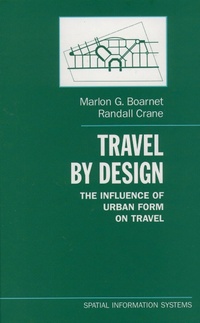
Travel by Design
The Influence of Urban Form on Travel
1st Edition
Published on 8. March 2001
235 pages
978-0-19-535246-7 (ISBN)
Description

Can transportation problems be fixed by the right neighborhood design? The tremendous popularity of the "new urbanism" and "livable communities" initiatives suggests that many persons think so. As a systematic assessment of attempts to solve transportation problems through urban design, this book asks and answers three questions: Can such efforts work? Will they be put into practice? Are they a good idea?
More details
Other editions
Additional editions
Book
04/2001
Oxford University Press Inc
€225.50
Shipment within 15-20 days
Content
- Intro
- Contents
- 1: An Overview of Travel by Design
- Urban Design and Transportation Planning
- Travel by Design?
- Will the New Designs Work?
- Will the New Designs Be Implemented?
- Urban Design in the Context of Transportation Policy
- 2: The Trouble with Traffic
- The Theory of Social Costs
- Air Quality Regulation and Automobile Emissions
- Traffic Congestion
- Neighborhood Quality of Life
- Summary
- 3: Studies of Urban Form and Travel
- The Influence of Transportation on Urban Form
- The Influence of Urban Form on Travel
- Hypothetical Studies
- Descriptive Studies
- Multivariate Statistical Studies
- Summary
- 4: The Demand for Travel
- A Behavioral Framework
- The Generic Impacts of Design Features on Travel
- Issues for Applied Empirical Work
- An Empirical Strategy
- Summary
- 5: An Empirical Study of Travel Behavior
- Overview and Data
- Base Models
- Incorporating Choices About Residential Location: An Empirical Model
- Incorporating Choices About Residential Location: Results
- Summary and Discussion
- 6: Neighborhood Supply Issues
- Neighborhood Supply
- Market Failure and Government Failure
- Planning Incentives
- Policy and Neighborhood Supply
- 7: Transit-Oriented Planning
- Transit-Oriented Planning
- Evidence from Southern California
- Interpreting the Evidence
- Two Behavioral Models of Transit-Oriented Planning
- Summary
- 8: A Case Study of Planning
- Data Sources and Background
- Transit-Oriented Development in the City of La Mesa
- Transit-Oriented Development in the City of San Diego
- Barriers to TOD Implementation in San Diego County
- Summary
- 9: Lessons for Research and Practice
- The Influence of the Built Environment on Travel
- Neighborhood Supply Obstacles
- Is Urban Design Good Transportation Policy?
- Policy Implications: Incentive versus Outcome Regulation
- Directions for Future Research
- Appendix: Data and Data Collection Methods for Chapter 7
- Notes
- References
- Index
- A
- B
- C
- D
- E
- F
- G
- H
- I
- J
- K
- L
- M
- N
- O
- P
- Q
- R
- S
- T
- U
- V
- W
- Z
