

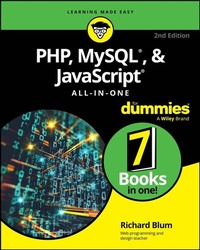
PHP, MySQL, & JavaScript All-In-One For Dummies
Description

Learn the essentials of creating web apps with some of the most popular programming languages
PHP, MySQL, & JavaScript All-in-One For Dummies bundles the essentials of coding in some of the most in-demand web development languages. You'll learn to create your own data-driven web applications and interactive web content. The three powerful languages covered in this book form the backbone of top online apps like Wikipedia and Etsy. Paired with the basics of HTML and CSS-also covered in this All-in-One Dummies guide-you can make dynamic websites with a variety of elements. This book makes it easy to get started. You'll also find coverage of advanced skills, as well as resources you'll appreciate when you're ready to level up.
- Get beginner-friendly instructions and clear explanations of how to program websites in common languages
- Understand the basics of object-oriented programming, interacting with databases, and connecting front- and back-end code
- Learn how to work according to popular DevOps principles, including containers and microservices
- Troubleshoot problems in your code and avoid common web development mistakes
This All-in-One is a great value for new programmers looking to pick up web development skills, as well as those with more experience who want to expand to building web apps.
More details
Other editions
Additional editions
Previous edition
Person
Richard Blum is a highly experienced programmer and systems administrator. He is also author of the most recent editions of Linux For Dummies and Linux All-in-One For Dummies.
Content
Introduction 1
Book 1: Getting Started with Web Programming 5
Chapter 1: Examining the Pieces of Web Programming 7
Chapter 2: Using a Web Server 29
Book 2: HTML5 and CSS3 57
Chapter 1: The Basics of HTML5 59
Chapter 2: The Basics of CSS3 89
Chapter 3: HTML5 Forms 121
Chapter 4: Advanced CSS3 143
Chapter 5: HTML5 and Multimedia 163
Book 3: JavaScript 183
Chapter 1: Introducing JavaScript 185
Chapter 2: Advanced JavaScript Coding 213
Chapter 3: Using jQuery 233
Chapter 4: Reacting to Events with JavaScript and jQuery 253
Chapter 5: Troubleshooting JavaScript Programs 273
Book 4: PHP 291
Chapter 1: Understanding PHP Basics 293
Chapter 2: PHP Flow Control 315
Chapter 3: PHP Libraries 339
Chapter 4: Considering PHP Security 365
Chapter 5: Object-Oriented PHP Programming 385
Chapter 6: Sessions and Carts 411
Book 5: MySQL 435
Chapter 1: Introducing MySQL 437
Chapter 2: Administering MySQL 457
Chapter 3: Designing and Building a Database. 483
Chapter 4: Using the Database 507
Chapter 5: Communicating with the Database from PHP Scripts 537
Book 6: Creating Object-Oriented Programs 557
Chapter 1: Designing an Object-Oriented Application 559
Chapter 2: Implementing an Object-Oriented Application 589
Chapter 3: Using AJAX 615
Chapter 4: Extending WordPress 647
Book 7: Using PHP Frameworks 673
Chapter 1: The MVC Method 675
Chapter 2: Selecting a Framework 689
Chapter 3: Creating an Application Using Frameworks 707
Index 729
