

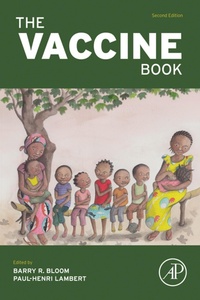
The Vaccine Book
2nd Edition
Published on 23. June 2016
664 pages
978-0-12-805400-0 (ISBN)
Description

The Vaccine Book, Second Edition provides comprehensive information on the current and future state of vaccines. It reveals the scientific opportunities and potential impact of vaccines, including economic and ethical challenges, problems encountered when producing vaccines, how clinical vaccine trials are designed, and how to introduce vaccines into widespread use.
Although vaccines are now available for many diseases, there are still challenges ahead for major diseases, such as AIDS, tuberculosis, and malaria. This book is designed for students, researchers, public health officials, and all others interested in increasing their understanding of vaccines. It answers common questions regarding the use of vaccines in the context of a rapidly expanding anti-vaccine environment.
This new edition is completely updated and revised with new and unique topics, including new vaccines, problems of declining immunization rates, trust in vaccines, the vaccine hesitancy, and the social value of vaccines for the community vs. the individual child's risk.
- Provides insights into diseases that could be prevented, along with the challenges facing research scientists in the world of vaccines
- Gives new ideas about future vaccines and concepts
- Introduces new vaccines and concepts
- Gives ideas about challenges facing public and private industrial investors in the vaccine area
- Discusses the problem of declining immunization rates and vaccine hesitancy
More details
Other editions
Additional editions
Barry R. Bloom | Paul-Henri Lambert
The Vaccine Book
Book
07/2016
2nd Edition
Academic Press
€116.55
Shipment within 15-20 days
Previous edition
Barry R. Bloom | Paul-Henri Lambert
The Vaccine Book
E-Book
12/2002
1st Edition
Academic Press
€70.95
Available for download
Content
Part I: Understanding Vaccine Impact at Population and Individual Levels1. The Impact of Vaccination on the Epidemiology of Infectious Diseases2. How Vaccines Work
Part II: How to Design, Assess and Produce Vaccines3. Vaccine Design in the 21st Century4. Vaccine Adjuvants5. Vaccine Production: Main Steps and Considerations6. How are Vaccines Assessed in Clinical Trials?7. Immunological Correlates of Vaccine-Mediated Protection
Part III: Vaccine Safety8. How Vaccine Safety is Monitored9. Vaccination and Autoimmune Diseases
Part IV: New Vaccination Strategies10. Maternal Immunization: Protecting Vulnerable Populations11. New Challenges for Pertussis Vaccines
Part V: Recently Introduced Vaccines12. Pneumococcus, Pneumococcal Disease, and Prevention13. Human Papillomavirus Vaccines14. Rotavirus Vaccines
Part VI: New Approaches for Needed Vaccines15. Antiviral Vaccines: Challenges and Advances16. New Approaches for Needed Vaccines: Bacteria17. Vaccines Against Parasites
Part VII: Major Global Vaccine Challenges18. Tuberculosis Vaccines19. Major Global Vaccine Challenges: Recent Progress in Malaria Vaccine Development20. AIDS Vaccines21. Influenza Vaccines and Vaccination Strategies
Part VIII: Ethical Considerations22. Ethical Considerations in Vaccine Trials in Resource-Limited Settings
Part IX: Vaccine Economics23. Economic Considerations for the Development of Global Vaccines: a Perspective From the Vaccine Industry24. Introduction of Vaccines Into National Programs25. Transitioning Immunization Into the Health Care System: Strengthening Routine Immunization in India
Part X: Trust in Vaccines26. Vaccine Acceptance27. Trust and Confidence in Vaccines: Tales of Three Vaccines, Lessons for Others
Part XI: Future Challenges28. Vaccines for Emerging Viral Diseases29. Cancer Immunotherapy by Checkpoint Blockade30. Adoptive Cellular Therapy With Synthetic T Cells as an "Instant Vaccine for Cancer and Immunity
