

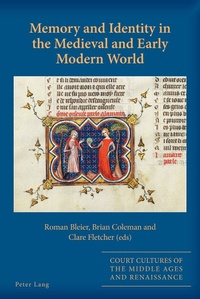
Memory and Identity in the Medieval and Early Modern World
Description

In both past and modern societies the concepts of memory and identity have been inextricably intertwined. Memory, through its power of recollection and reflection, is perceived as a central and necessary pathway for self-discovery, self-expression, and self-knowledge crucial to an understanding of the physical and spiritual world. Memory, in this way, becomes fundamental to identity itself, as it is through the complex process of both group and individual recollection and commemoration that cultural, political, national, religious, and gender identities are not only imagined but constructed, reconstructed, and represented.
Taking as its focus this complex interplay of memory and identity in the medieval and early modern European context, this volume of essays presents its findings under five thematic headings: ««The Poetics of Memory and Heroic Identity», «Cultural Memory and National Identities», «Emotional Identities», «Nota Bene: The Craft of Memory and Corrective Instruction» and «Memorialising Protestant Identities in Early Modern England». Contributions examine constructions of memory and identity in such key works as the Old English Soliloquies; the Old Norse kings' sagas Morkinskinna and Heimskringla; medieval Serbian hagiographies; Havelok the Dane; Sir Gawain and the Green Knight; Chaucer's Book of the Duchess, Troilus and Criseyde and Adam Scriveyn; Elizabethan translations of the Psalms; John Stearne's Confirmation and Discovery of Witchcraft; seventeenth-century portraiture. The research presented here offers valuable insights into the centrality of memory to medieval and early modern constructions of political, religious, and national identities and points up future avenues for scholarly investigation.
More details
Other editions
Additional editions
Persons
Roman Bleier, who holds a PhD in Digital Arts and Humanities from the Department of History, Trinity College Dublin, is a postdoctoral researcher at the Centre for Information Modelling-Austrian Centre for Digital Humanities at the University of Graz. His research interests include digital scholarly editing and digital history.
Brian Coleman is a graduate of Trinity College Dublin and a former Government of Ireland Postgraduate Scholar. His doctoral thesis focused on office and society in late medieval Ireland.
Clare Fletcher holds a PhD in Medieval Literature from the School of English, Trinity College Dublin, where she is currently teaching. A former Trinity College Postgraduate Scholar, her research interests lie mainly in late fourteenth-century English poetry and she has published on both Chaucer and Gower.
Content
Contents: The Poetics of Memory and Heroic Identity - John Scattergood: Sir Gawain and the Green Knight: Story- Telling, Memory and «Trouthe» - Natalie Hanna: Chaucer's Worthiest Knight: Heroic Identity in Troilus and Criseyde - Cultural Memory and National Identities - Marta Miller: Negotiating the Memory of Kings and Icelandic Identity: The Ideological Complexity of Morkinskinna and Heimskringla - Aleksandar Z. Savic: «A Most Splendent Path to Jerusalem»: Remembering the Holy Land in Medieval Serbian Hagiography (Thirteenth to Fourteenth Century) - Michael Knudson: Where Fact Meets Fiction: The Scandinavian Historical Roots of the Middle English Romance Havelok the Dane - Emotional Identities - Lucie Kaempfer: The Memory of Joy in Troilus and Criseyde: Identity and Emotional Temporality - Gerald Morgan: An Aristotelian Ideal: The Beauty and Virtue of Blanche of Lancaster in Chaucer's Book of the Duchess (c. 1368) - Scott Eaton: Confessions of a Witch- Finder: Fear and Desire in John Stearne's A Confirmation and Discovery of Witchcraft - Nota Bene: The Craft of Memory and Corrective Instruction - Sumner Braund: Meditations for a King? King Alfred, His Memory and the Old English Soliloquies - Seamus Dwyer: Scraping, Scribing and Shriving: The Language of Writing, Judgement and Penitence in Chaucer's «Adam Scriveyn» - Memorialising Protestant Identities in Early Modern England - Rosemary Keep: Ribbons and Righteousness: Memory and Multiple Identity in the Portrait of a Preston Haberdasher and His Family - Catherine R. Evans: Metanoia and Miserere Mei Deus: Penitential Memory in Anne Lock and Mary Sidney Herbert's Translations of Psalm 51.
