

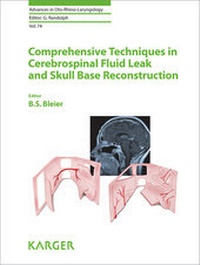
Comprehensive Techniques in CSF Leak Repair and Skull Base Reconstruction
1st Edition
Published on 12. December 2012
190 pages
978-3-8055-9953-5 (ISBN)
Available for download
Description

Written by international leading experts in the field of skull base surgery, this publication provides a comprehensive description of both the etiology and management of defects arising in the anterior skull base. The contributions explore the cutting edge techniques in cranial base repair including free grafting, pedicled endonasal and extranasal grafts as well as free flap reconstruction. Further, this volume provides a detailed description of how to enhance success in cerebrospinal fluid leak and encephalocele repair using an evidence-based approach to the diagnosis and localization. The contributions are accompanied by high-definition online videos that enable the reader to watch endoscopic skull base repairs performed by the masters while providing a step-by-step explanation of the techniques utilized. Otolaryngologist, neurosurgeons as well as physicians interested in learning about or wishing to optimize their techniques in anterior skull base reconstruction will find this publication indispensable reading.
More details
Other editions
Additional editions
Book
12/2012
1st Edition
S. Karger
€229.00
Article exhausted; check different version
Persons
Content
- Cover
- Front Matter
- Contents
- Preface
- Skull Base Anatomy and CSF Rhinorrhea
- Abstract
- Skull Base Anatomy
- Skull Base Embryology
- CSF Physiology
- CSF Leak Diagnosis
- History and Physical Examination
- Conclusion
- References
- Pathophysiology of Iatrogenic and Traumatic Skull Base Injury
- Abstract
- Traumatic/Iatrogenic Skull Base Injury
- Traumatic/Accidental Skull Base Injury
- Conclusion
- References
- Grafting Materials in Skull Base Reconstruction
- Abstract
- Autologous Tissues
- Acellular Human Dermis
- Engineered Collagen Products
- Rigid Support
- Tissue Glues
- Choice of Material
- References
- Free Graft Techniques in Skull Base Reconstruction
- Abstract
- Selection of Graft Material
- Intraoperative Technique
- Postoperative Management
- Conclusion
- References
- Nasoseptal Flap
- Abstract
- Vascular Anatomy
- Patient Selection
- Surgical Technique: Harvesting of Flap
- Surgical Technique: Reconstruction of Skull Base Defect
- Modifications of the Nasoseptal Flap: 'Rescue' Nasoseptal Flap
- Reuse of the Nasoseptal Flap
- Avoiding and Managing Intraoperative Complications
- Septum Donor Site
- Conclusion
- References
- Sphenopalatine-Derived Pedicled Flaps
- Abstract
- Vascularized versus Nonvascularized Grafts
- Technical Pearls
- Inferior Turbinate Flap
- Middle Turbinate Flap
- Postoperative Management
- Conclusion
- References
- Anteriorly Based Pedicled Flaps for Skull Base Reconstruction
- Abstract
- Limitations of Posteriorly Pedicled Flaps
- Bipedicled Anterior Septal Flap
- Anterior Lateral Nasal Wall Flaps
- Conclusions
- References
- Pedicled Extranasal Flaps in Skull Base Reconstruction
- Abstract
- Clinical Presentation
- High Risk Factors for Postoperative CSF Leak
- Management of Skull Base Defects
- Pedicled Extranasal Flap Options
- Conclusion
- Acknowledgements
- Disclosure Statement
- References
- Microvascular Free Flaps in Skull Base Reconstruction
- Abstract
- Defect Classification
- Reconstructive Options
- Flap Utilization and Design
- Postoperative Management and Complications
- Conclusion
- References
- Spontaneous Cerebrospinal Fluid Leak and Management of Intracranial Pressure
- Abstract
- Spontaneous CSF Leaks
- Pathophysiology
- Clinical Features
- Demographics
- Idiopathic Intracranial Hypertension
- Imaging of Spontaneous CSF Leaks
- Endoscopic Repair of Spontaneous CSF Leaks
- Transpterygoid Approach to Lateral Sphenoid Recess
- Assessment of Intracranial Pressure
- Medical Management of IIH
- Outcomes after Endoscopic Repair of Spontaneous CSF Leaks
- References
- Endoscopic Reconstruction of Frontal, Cribiform and Ethmoid Skull Base Defects
- Abstract
- Evaluation of the Skull Base Defect
- Preparation before Reconstruction
- Intracranial Layer
- Subdural Reconstruction
- Extracranial Layer
- Vascular Flaps
- Inferior Turbinate Pedicled Flap
- Flap Placement
- Dressings and Support
- Conclusion
- References
- Planum, Tubercular, Sellar and Clival Defects
- Abstract
- Materials for Skull Base Repair
- Sellar Defects
- Planum and Tubercular Defects
- Reconstruction of the Clivus and Posterior Skull Base
- Conclusion
- References
- Quality Control Approach to Cerebrospinal Fluid Leaks
- Abstract
- Identification of Risk Factors
- Monitoring of Outcomes
- Improving Outcomes
- Conclusions
- References
- Postoperative Care following Skull Base Reconstruction
- Abstract
- Intraoperative Planning for Postoperative Care
- Immediate Postoperative Care
- Early Home Care
- Short-andLong-TermFollow-Up
- Conclusion
- References
- Complications of Skull Base Reconstruction
- Abstract
- Classification and Risk Factors
- Skull Base Anatomy
- Complications
- Minimizing Morbidity and Reconstruction Failure
- Conclusion
- References
- Prevention and Management of Complications after Radiotherapy for Skull Base Tumors: A Multidisciplinary Approach
- Abstract
- Osteonecrosis
- Sinonasal-CutaneousFistulas
- Conclusion
- References
- Novel Techniques and the Future of Skull Base Reconstruction
- Abstract
- History of Laser Tissue Welding
- Biologic Solders and Chromophores
- Mechanism of Laser Tissue Welding
- Wound Repair Strength and Collateral Injury with LTW
- Clinical Challenges in LTW for Endoscopic Skull Base Reconstruction
- Conclusions
- References
- Author Index
- Subject Index
- Cover

