

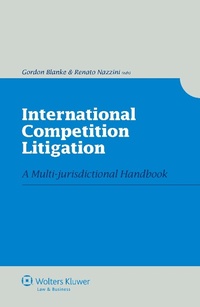
International Competition Litigation
A Multi-jurisdictional Handbook
Published on 1. August 2012
1064 pages
978-90-411-4693-9 (ISBN)
Description

Competition litigation has become a major area of practice and almost invariably involves more than one, and often several jurisdictions. Moreover, arbitration and other dispute resolution mechanisms alternative to litigation (ADR) are becoming increasingly important in competition law. This book examines all the relevant aspects of litigation, arbitration and ADR in a number of jurisdictions around the world to provide a thorough and exhaustive guide for practitioners based on the analysis of the policies and principles that underpin the law. The authors and editors are leading practitioners, academics and competition officials in their own jurisdictions and world-wide and bring together unrivalled expertise and practical insights which will be useful in planning and managing multi-jurisdictional competition disputes.
More details
Other editions
Additional editions
Book
08/2012
1st Edition
Kluwer Law International
€473.90
Shipment within 10-20 days
Content
- Intro
- Title
- Copyright
- Summary of Contents
- Table of Contents
- List of Editors
- List of Contributors
- List of Country Codes
- Preface
- Austria
- 1. Introduction
- 2. Legal Basis and Causes of Action
- 2.1. Tort
- 2.2. Contract
- 2.3. Restitution
- 2.4. Any Other Legal Bases/Causes of Action
- 2.4.1. Austrian Cartel Act
- 2.4.2. Federal Act against Unfair Competition
- 3. Standing of the Claimant
- 3.1. Conditions for Standing
- 3.2. Types of Claimant
- 3.2.1. Direct Purchasers
- 3.2.2. Indirect Purchasers
- 3.2.3. Possible Conflicts between Direct and Indirect Purchasers
- 3.2.4. Competitors
- 4. Remedies
- 4.1. Declarations
- 4.2. Compensatory Damages
- 4.3. Restitutionary Damages
- 4.4. Punitive/Exemplary/Aggravated/Multiple Damages
- 4.6. Interim Injunctions
- 4.7. Permanent Injunctions
- 4.7.1. Cease-and-Desist Orders Based on the Cartel Act
- 4.7.2. Cease-and-Desist Orders Based on the Act against Unfair Competition
- 5. Defences
- 5.1. Passing on Defence
- 5.2. Contribution
- 6. Limitation Periods
- 6.1. Limitation Periods by Cause of Action
- 6.2. When Does the Limitation Period Start Running?
- 6.3. Secret/Covert/Concealed Infringements
- 6.4. Continuing Infringements
- 6.5. Interruption of the Limitation Period
- 6.6. Suspension of the Limitation Period
- 6.7. Effect of Public Law Proceedings on the Limitation Period
- 7. Jurisdiction and Venue
- 7.1. Jurisdiction
- 7.2. Venue
- 7.3. Specialist Courts or Tribunals
- 7.4. Agreement on Jurisdiction
- 8. Procedure
- 8.1. Pre-action Procedures
- 8.2. Commencing Proceedings
- 8.3. Pleadings
- 8.4. Hearings
- 8.5. Judgments
- 8.6. Appeals
- 8.7. Enforcement/Execution of Judgments
- 9. Burden and Standard of Proof
- 9.1. Burden of Proof
- 9.2. Standard of Proof
- 9.3. Special Rules (eg Presumptions, Reversals of the Burden of Proof and Prima Facie Evidence)
- 9.4. The Court's Evaluation of the Evidence
- 10. Production and Presentation of Evidence
- 10.1. Types of Evidence
- 10.2. Disclosure
- 10.3. Privileges/Confidential Information
- 10.4. Expert Evidence
- 10.5. Presentation of Evidence at the Hearing
- 11. Funding and Costs
- 11.1. General Rules on Costs
- 11.2. Third-Party Funders
- 11.3. Conditional Fees
- 11.4. Contingency Fees
- 11.5. Availability of Public Funding (Legal Aid or Other Publicly Funded Schemes)
- 12. Concurrent Proceedings
- 12.1. Stays: Private Actions and Administrative Proceedings/Cartel Court Proceedings
- 12.2. Stays: Private Actions and Criminal Proceedings
- 12.3. Effect of Decisions by Competition Authorities and Civil Claims
- 12.3.1. European Commission Decisions
- 12.3.2. Decisions of the Cartel Court
- 12.4. Use of Evidence of the Competition Authority's File for Private Actions
- 12.5. Use of Evidence Adduced in Criminal Proceedings for Civil Claims
- 13. Collective Actions
- 14. Arbitration and ADR
- 14.1. Arbitrability
- 14.2. The Arbitrator's Ex Officio Duty to Raise Competition Law Issues
- 14.3. The Determination of the Applicable Competition Law(s)
- 14.4. The Arbitrator's Powers to Award Civil Law Remedies
- 14.5. Fact-Finding and Evidence
- 14.6. The Status of Previous Decisions by the Competent National Competition Authorities or Courts and Parallel Proceedings
- 14.7. The Arbitrator's Cooperation with Competition Authorities and the Courts
- 14.8. Availability of Class Actions
- 14.9. Review of Competition Law Awards by National Courts
- 14.10. ADR
- Bibliography
- Table of Cases
- Table of Legislation
- Croatia
- 1. Introduction
- 1.1. General
- 1.2. Substantive Law
- 2. Legal Basis and Causes of Action
- 2.1. Tort
- 2.2. Contract
- 2.3. Restitution
- 2.4. Other Private Law Legal Bases/Causes of Action
- 3. Standing of the Claimant
- 3.1. Conditions for Standing
- 3.2. Types of Claimant
- 3.2.1. Direct Purchasers
- 3.2.2. Indirect Purchasers
- 3.2.3. Possible Conflicts between Direct and Indirect Purchasers
- 3.2.4. Competitors
- 4. Remedies
- 4.1. Declarations
- 4.2. Compensatory Damages
- 4.3. Restitutionary Damages
- 4.4. Punitive/Exemplary/Aggravated/Multiple Damages
- 4.5. Restitution
- 4.6. Account for Profits
- 4.7. Interest
- 4.8. Interim Injunctions
- 4.9. Other Interim Remedies
- 4.10. Permanent Injunctions
- 5. Defences
- 5.1. Passing on Defence
- 5.2. Contribution
- 5.3. Other Available Defences
- 6. Limitation Periods
- 6.1. Limitation Periods by Cause of Action
- 6.2. When Does the Limitation Period Start Running?
- 6.3. Secret/Covert/Concealed Infringements
- 6.4. Continuing Infringements
- 6.5. Interruption of the Limitation Period
- 6.6. Suspension of the Limitation Period
- 6.7. Effect of Public Law Proceedings on the Limitation Periods
- 7. Jurisdiction and Venue
- 7.1. Jurisdiction
- 7.2. Venue
- 7.3. Specialist Courts or Tribunals
- 8. Procedure
- 8.1. Pre-action Procedures
- 8.2. Commencing the Proceedings
- 8.3. Pleadings
- 8.4. Hearings
- 8.5. Judgments
- 8.6. Appeals
- 8.7. Enforcement/Execution of Judgments
- 9. Burden and Standard of Proof
- 9.1. Burden of Proof
- 9.2. Standard of Proof
- 9.3. Legal and Evidential Burden
- 9.4. Special Rules
- 9.5. The Court's Evaluation of the Evidence
- 10. Production and Presentation of Evidence
- 10.1. Types of Evidence
- 10.2. Procedure for the Production of Evidence
- 10.3. Disclosure
- 10.4. Privileges
- 10.5. Confidential Information
- 10.6. Economic Evidence
- 10.7. Presentation of Evidence at the Hearing
- 11. Funding and Costs
- 11.1. Funding
- 11.2. Third-Party Funders
- 11.3. After-the-Event Insurance
- 11.4. Conditional Fees
- 11.5. Contingency Fees
- 11.6. Availability of Public Funding
- 11.7. Legal Costs
- 11.7.1. General Rules on Costs
- 11.7.2. Court's Discretion and Power to Depart from the General Rules
- 11.7.3. Protective Cost Orders
- 12. Concurrent Proceedings
- 12.1. Stays: Private Actions and Administrative Proceedings
- 12.2. Stays: Private Actions and Criminal Proceedings
- 12.3. Status of Decisions by Competition Authorities in Private Actions
- 12.4. Disclosure/Use of Evidence on the Competition Authority's File for Private Actions
- 12.5. Disclosure/Use of Evidence Adduced in Criminal Proceedings for Private Actions
- 13. Collective Actions
- 14. Arbitration and ADR
- 14.1. Arbitrability
- 14.2. The Arbitrator's Ex Officio Duty to Raise Competition Law Issues
- 14.3. The Determination of the Applicable Competition Law(s)
- 14.4. The Arbitrator's Powers to Award Civil Law Remedies
- 14.5. Fact-Finding and Evidence
- 14.6. The Status of Previous Decisions by the Competent National Competition Authorities or Courts and Parallel Proceedings
- 14.7. The Arbitrator's Cooperation with the Competition Authorities and the Courts
- 14.8. Availability of Class Actions
- 14.9. Review of Competition Law Awards by National Courts
- 14.10. ADR
- Bibliography
- Table of Cases
- Table of Legislation
- Czech Republic
- 1. Introduction
- 2. Legal Basis and Causes of Action
- 2.1. Tort
- 2.2. Contract
- 2.3. Restitution
- 2.4. Any Other Private Law Legal Bases/Causes of Action
- 3. Standing of the Claimant
- 3.1. Conditions for Standing
- 3.2. Direct and Indirect Purchasers
- 3.3. Possible Conflicts between Direct and Indirect Purchasers
- 3.4. Competitors
- 4. Remedies
- 4.1. Declarations
- 4.2. Compensatory Damages
- 4.3. Punitive/Exemplary/Aggravated/Multiple Damages
- 4.4. Restitution
- 4.5. Account for Profits (and forms of disgorgement of profits)
- 4.6. Interest
- 4.7. Interim Injunctions
- 4.8. Other Interim Remedies (e.g. Interim Payment Orders)
- 4.9. Permanent Injunctions
- 5. Defences
- 5.1. Passing-on Defence
- 5.2. Contribution
- 5.3. Any Other Defence Available
- 6. Limitation Periods
- 6.1. Limitation Periods by Cause of Action
- 6.2. When does the Limitation Period Start Running?
- 6.3. Secret/Covert/Concealed Infringements
- 6.4. Continuing Infringements
- 6.5. Interruption of the Limitation Period
- 6.6. Suspension of the Limitation Period
- 6.7. Effect of Public Law Proceedings on the Limitation Periods
- 7. Jurisdiction and Venue
- 7.1. Jurisdiction
- 7.2. Venue
- 7.3. Specialist Courts or Tribunals
- 8. Procedure
- 8.1. Pre-action Procedures
- 8.2. Commencing the Proceedings
- 8.3. Pleadings
- 8.4. Hearings
- 8.5. Judgments
- 8.6. Appeals
- 8.7. Enforcement/Execution of Judgments
- 9. Burden and Standard of Proof
- 9.1. Burden of Proof
- 9.2. Standard of Proof
- 9.3. Legal and Evidential Burden
- 9.4. Special Rules (Presumptions, Reversals of the Burden of Proof and Prima Facie Evidence, etc.)
- 9.5. The Court's Evaluation of the Evidence
- 10. Production and Presentation of Evidence
- 10.1. Types of Evidence
- 10.2. Procedure for the Production of Evidence
- 10.3. Disclosure
- 10.4. Privileges (in Particular, Legal Professional Privilege) and Confidential Information
- 10.5. Economic Evidence
- 10.6. Presentation of Evidence at the Hearing
- 11. Funding and Costs
- 12. Concurrent Proceedings
- 12.1. Stays: Private Actions and Administrative Proceedings
- 12.2. Stays: Private Actions and Criminal Proceedings
- 12.3. Status of Decisions by Competition Authorities (or Judgments by Courts in Public Law Proceedings) in Private Actions
- 12.4. Disclosure/Use of Evidence on the Competition Authority's File for Private Actions
- 12.5. Disclosure/Use of Evidence Adduced in Criminal Proceedings for Private Actions
- 13. Collective Actions
- 14. Arbitration and ADR
- Bibliography
- Table of Cases
- Table of Legislation
- England and Wales
- 1. Introduction
- 2. Legal Basis and Causes of Action
- 2.1. Tort
- 2.1.1. Causation
- 2.1.2. Quantum of Damages
- 2.2. Contract
- 2.3. Restitution
- 2.4. Statutory Cause of Action
- 3. Standing of the Claimant
- 3.1. Conditions for Standing
- 3.1.1. Breach of Statutory Duty
- 3.1.2. Section 47A CA98
- 3.1.3. Section 47B CA98
- 3.2. Types of claimant
- 3.2.1. Direct Purchasers
- 3.2.2. Potential Purchasers
- 3.2.3. Indirect Purchasers
- 3.2.4. Possible Conflicts between Direct and Indirect Purchasers
- 3.2.5. Competitors
- 3.2.6. Parties to Unlawful Agreements
- 4. Remedies
- 4.1. Declarations
- 4.2. Compensatory Damages
- 4.3. Restitutionary Remedies
- 4.4. Exemplary Damages
- 4.5. Interest
- 4.6. Interim Injunctions
- 4.6.1. Court's Jurisdiction
- 4.6.2. Cross-Undertaking in Damages
- 4.6.3. Criteria for the Grant of an Interim Injunction
- 4.6.4. Exceptions to the American Cyanamid Test
- 4.6.5. High Court Practice
- 4.6.6. CAT's Jurisdiction
- 4.7. Interim Payment Orders
- 4.8. Permanent Injunctions
- 5. Defences
- 5.1. Passing-On Defence
- 5.1.1. Arguments in Favour of the Existence of a Passing-on Defence
- 5.1.2. Arguments against the Existence of a Passing-on Defence
- 5.2. Contribution
- 5.3. Liability Not Attributable to Others
- 6. Limitation Periods
- 6.1. Limitation Periods by Cause of Action
- 6.2. When Does the Limitation Period Start Running?
- 6.3. Secret/Covert/Concealed Infringements
- 6.4. Continuing Infringements
- 6.5. Suspension of the Limitation Period
- 6.6. Effect of Public Law Proceedings on the Limitation Periods
- 7. Jurisdiction and Venue
- 7.1. Jurisdiction
- 7.1.1. The Brussels I Regulation
- 7.1.2. English Law
- 7.2. Venue
- 7.3. Specialist Courts or Tribunals
- 7.4. Transfer of Proceedings
- 8. Procedure
- 8.1. Legal Framework
- 8.2. Pre-action Procedures
- 8.3. Commencing Proceedings
- 8.3.1. High Court Proceedings
- 8.3.2. CAT Proceedings
- 8.4. Pleadings
- 8.4.1. High Court Proceedings
- 8.4.2. CAT Proceedings
- 8.5. Hearings
- 8.5.1. High Court Hearings
- 8.5.2. CAT Hearings
- 8.5.3. Interlocutory Hearings
- 8.5.3.1. Settlement
- 8.5.3.1.1. High Court
- 8.5.3.1.2. CAT
- 8.6. Judgments
- 8.6.1. Judgments and Orders of the High Court
- 8.6.2. Judgments and Orders of the CAT
- 8.7. Appeals
- 8.7.1. Appeals from the High Court
- 8.7.2. Appeals from the CAT
- 8.7.3. Appeals before the Court of Appeal
- 8.7.4. The Uk Supreme Court
- 8.8. Enforcement/Execution of Judgments
- 8.8.1. Judgments of the Civil Courts
- 8.8.2. Judgments of the CAT
- 9. Burden and Standard of Proof
- 9.1. Burden of Proof
- 9.2. Standard of Proof
- 10. Production and Presentation of Evidence
- 10.1. Types of Evidence
- 10.2. Disclosure
- 10.2.1. Standard Disclosure
- 10.2.1.1. Disclosure in the CAT
- 10.2.2. Pre-action Disclosure
- 10.2.3. Third-Party Disclosure
- 10.3. Privileges
- 10.3.1. Public-Interest Immunity
- 10.3.2. Legal Professional Privilege
- 10.3.3. Privilege against Self-Incrimination
- 10.4. Confidential Information
- 10.5. Expert Evidence
- 10.6. Presentation of Evidence at the Hearing
- 11. Funding and Costs
- 11.1. Funding
- 11.2. Third-Party Funders
- 11.3. After-the-Event Insurance
- 11.4. Conditional Fees
- 11.5. Contingency Fees
- 11.6. Availability of Public Funding (Legal Aid and Other Publicly Funded Schemes)
- 11.7. Legal Costs
- 11.7.1. Costs in the Ordinary Courts
- 11.7.2. Costs in the CAT
- 11.7.3. Bases for Awarding Costs
- 11.8. Cost Capping
- 11.9. Protective Cost Orders
- 11.10. Methods of Assessment
- 12. Concurrent Proceedings
- 12.1. Stays
- 12.1.1. Private Actions and Administrative Proceedings
- 12.1.2. Civil Claims and European Commission Proceedings
- 12.1.3. Civil Claims and OFT Proceedings
- 12.2. Stays: Civil Claims and Criminal Proceedings
- 12.3. Effect of Decisions by Competition Authorities and Civil Claims
- 12.3.1. European Commission Decisions
- 12.3.2. Decisions of the OFT
- 12.4. Use of Evidence Obtained in Public Law Proceedings for Civil Claims
- 12.4.1. Use of Evidence Obtained in European Commission Proceedings for Civil Claims
- 12.4.2. Use of Evidence Obtained in OFT Proceedings for Civil Claims
- 12.5. Use of Evidence Adduced in Criminal Proceedings for Civil Claims
- 13. Collective Actions
- 13.1. Collective Actions in the High Court
- 13.2. Representative Proceedings in the High Court
- 13.3. Group Litigation Orders
- 13.4. Representative Actions in the CAT
- 13.5. Recognition and Enforcement of Foreign Judgments in Collective Actions
- 14. Arbitration and ADR
- 14.1. Legal Framework
- 14.2. Arbitrability
- 14.3. The Arbitrator's Duty to Raise Competition Law Issues Ex Officio
- 14.3.1. Duty to Render an Enforceable Award and Mandatory Rules
- 14.3.2. Challenges to the Arbitrator's Jurisdiction over Competition Law Issues
- 14.3.3. Arbitrator's Potential Liability
- 14.3.4. Potential Liability of an Arbitral Institution and Arbitration Counsel
- 14.4. The Determination of the Applicable Competition Laws
- 14.5. The Arbitrator's Powers to Award Civil Law Remedies
- 14.6. Fact-Finding and Evidence
- 14.7. The Status of Previous Decisions by the Competent National Competition Authorities or Courts and Parallel Proceedings
- 14.7.1. Commission or OFT Decisions
- 14.7.2. Parallel Proceedings
- 14.7.3. Anti-suit Injunctions
- 14.8. The Arbitrator's Cooperation with Competition Authorities and the Courts
- 14.8.1. Section 45 AA 1996
- 14.8.2. Indirect Preliminary References
- 14.8.3. Cooperation with the OFT or the European Commission
- 14.9. Availability of Class Actions
- 14.10. Review of Competition Law Awards by National Courts
- 14.10.1. Jurisdictional Challenges
- 14.10.2. Procedural Challenges and Appeals on Points of Law
- 14.10.3. Recognition and Enforcement of Awards
- 14.11. ADR
- Bibliography
- Table of Cases
- Table of Legislation
- France
- 1. Introduction
- 2. Legal Basis and Causes of Action
- 2.1. Misconduct
- 2.1.1. Breach of a Provision
- 2.1.1.1. Restrictive Agreements
- 2.1.1.2. Abuse of Dominant Position
- 2.1.2. Where there Is No Legal Provision, Breach of a General Principle?
- 2.2. Harm
- 2.2.1. Harm must be Certain
- 2.2.1.1. Actual Harm must give Rise to Damages
- 2.2.1.1.1. Harm Suffered by Reason of a Loss
- 2.2.1.1.2. Harm Suffered by Reason of Lost Earnings
- 2.2.1.2. Future Harm that Is Certain must give Rise to Damage
- 2.2.1.3. Purely Potential Harm must be Set Aside
- 2.2.2. The Harm must be Direct
- 2.3 Causal Link
- 2.3.1. Overcharge caused by the Anticompetitive Practice
- 2.3.2. Overcharge caused by the Loss of Customers
- 2.3.3. Overcharges caused by the Loss of Value of the Undertaking or of the Business (fonds de commerce)
- 3. Standing of the Claimant
- 3.1. Interest in Bringing Proceedings
- 3.1.1. Examples in Matters Relating to Anticompetitive Practices
- 3.1.2. Examples Regarding Cancellation of a Contract Having an Anticompetitive Object or Effect
- 3.2. Standing to Bring Proceedings
- 3.2.1. Action for the Defence of a Collective Interest
- 3.2.1.1. Trade Unions and Professional Organizations
- 3.2.1.2. Associations
- 3.2.2. Action for the Defence of Interests of Other Persons
- 3.2.3. Example of the Action of a Taxpayer in Case of Restrictive agreement in a Tender Bid and Contract with a Public Person and Default on his Part
- 4. Remedies
- 4.1. Approach Retained under French Law
- 4.2. Resorting to an Expert
- 4.3. Losses Regarded as Likely to be Remedied by Case Law
- 4.3.1. Loss of Opportunity to enter the Market More Quickly and More Efficiently
- 4.3.2. Loss or Capturing of Customers
- 4.3.3. Financial Loss
- 4.3.4. Delay in the Negotiation of a Contract by Reason of a Concerted Practice Resulting in a Loss of Opportunity to have a New Outstanding Technology Authorized
- 4.3.5. Material and Non-Material Damage by Reason of Market Foreclosure
- 4.4. Origin of Loss
- 5. Defences and the Passing-on Defence
- 5.1. Elements of Justification
- 5.1.1. Elements of Justification under General Law
- 5.1.1.1. Force Majeure or Unforeseeable Circumstances
- 5.1.1.2. Act of the Victim
- 5.1.1.3. Act of Third Party'S Act
- 5.1.1.4. Act of Public Authority
- 5.1.2. Elements of Justification Specific to Restrictive Agreements
- 5.2. Specific Case of the 'Passing-On Defence'
- 5.2.1. The Solution Adopted under French Law
- 5.2.2. Compatibility of the Remedy under French Law with the Commission's Position
- 5.2.2.1. Relationship between Perpetrator of the Anticompetitive Practice and Indirect Victim
- 5.2.2.2. Relationship between Perpetrator of the Anticompetitive Practice and Direct Victim
- 6. Limitation Periods
- 6.1. Starting point
- 6.2. Duration of the Limitation Period
- 6.3. Interruption
- 7. Jurisdiction
- 8. Procedure
- 8.1. Right to Bring an Action
- 8.2. French System of Justice
- 8.2.1. Allocated Jurisdiction
- 8.2.1.1. The System of Jurisdiction (Degree)
- 8.2.1.2. Level of the Court
- 8.2.1.3. Type of Court
- 8.2.2. Territorial Jurisdiction
- 8.3. The Proceedings
- 8.3.1. Modes of Referring to the Competent Courts in Applications for the Award of Damages
- 8.3.2. Investigation of Damages Actions
- 8.3.3. Legal Force of the Judgment Rendered in a Damages Action
- 8.3.4. Exercise of Rights of Recourse
- 8.3.4.1. Different Recourses and their Effects
- 8.3.4.2. Specific Nature of Appeal in Cassation
- 9. Burden and Standard of Proof
- 10. Production and Presentation of Evidence
- 10.1. Preliminary Referral of a Competition Authority
- 10.1.1. The European Commission
- 10.1.2. The Competition Authority
- 10.1.2.1. Uncertainty as to the Authority of Res Judicata of the Authority's Decision
- 10.1.2.2. Collection of Evidence by the Competition Authority
- 10.1.2.2.1. General Power of Inquiry of the Competition Authority
- 10.1.2.2.2. Establishing Proof
- 10.1.2.2.3. General Obligation to Establish Minutes
- 10.1.2.2.4. Duty of Active Cooperation
- 10.1.3. Decision by a Competition Authority of Another Country
- 10.2. Direct Referral of the General Law Court
- 10.2.1. Victim's Investigations in Compliance with the Rules on Evidence
- 10.2.2. The Court's Part in the Gathering of Evidence
- 10.2.3. Referral to the Competition Authority
- 10.2.3.1. Rare Case Law on the Referral to the Competition Authority
- 10.2.3.2. Particular Case of Leniency Programmes
- 10.2.4 Resorting to an Expert
- 10.2.4.1. Quasi-Necessity for Expert Assessment
- 10.2.4.2. The Need for the Courts to Determine the Expert's Mission
- 11. Costs
- 12. Concurrent Proceedings
- 12.1. Actions before the Civil or Commercial Courts
- 12.1.1. Action on the Merits
- 12.1.2. Action for Interim Measures
- 12.2. Proceedings Brought before Criminal Courts
- 12.3. Proceedings Brought before the Administrative Courts
- 13. Collective Actions
- 13.1. Stakes
- 13.1.1. Arguments against the Introduction of Class Actions in French Law
- 13.1.1.1. Class Actions are Mostly Profitable for Lawyers
- 13.1.1.2. Class Actions go against Fundamental Principles of French Procedural, even Constitutional, Law
- 13.1.2. Arguments in Favour of the Introduction of Class Actions in French Law
- 13.1.2.1. Damages That Are Not Compensated Whilst They May Cover Very High Amounts Incurred by a Large Number of Persons
- 13.1.2.2. Existence of Ineffective Techniques for Compensating Multiple Individual Damages
- 13.2. Means
- 13.2.1. Consumer Associations' Class Action
- 13.2.2. Class Action
- 13.2.3. Under French Law
- 13.2.4. Under EU Law
- 13.2.5. Conclusion on Class Actions
- 14. Arbitration and ADR
- 14.1. Arbitrability of Competition Law
- 14.2. Particularities of the Arbitral Procedure in Competition Law
- 14.2.1. Jurisdiction of the Arbitrator: the Arbitration Agreement
- 14.2.2. Interpretation and Implementation in Competition Law
- 14.2.3. Sanctions that may be Ordered by the Arbitrator
- 14.2.4. Review of the Arbitration Award
- 14.3. Cooperation with the European Commission
- Bibliography
- Table of Cases
- Table of Legislation
- Germany
- 1. Introduction
- 2. Legal Basis and Causes of Action
- 2.1. Tort
- 2.2. Contract
- 2.3. Restitution
- 3. Standing of the Claimant
- 3.1. Conditions for Standing
- 3.2. Types of Claimant
- 3.2.1. Direct Purchasers
- 3.2.2. Potential Purchasers
- 3.2.3. Indirect Purchasers
- 3.2.4. Possible Conflicts between Direct and Indirect Purchasers
- 3.2.5. Competitors
- 3.2.6. Parties to Unlawful Agreements
- 4. Remedies
- 4.1. Declarations
- 4.2. Compensatory Damages
- 4.3. Restitutionary Damages
- 4.4. Punitive / Exemplary / Aggrieved / Multiple Damages
- 4.5. Restitution
- 4.6. Interests
- 4.7. Interim Injunctions
- 5. Defences
- 5.1. Passing on Defence
- 5.2. Contribution
- 6. Limitation Periods
- 6.1. Limitation Periods by Cause of Action
- 6.2. When Does the Limitation Period Start Running?
- 6.3. Secret / Covert / Concealed Infringements
- 6.4. Suspension of the Limitation Periods
- 6.5. Effect of Public Law Proceedings on the Limitation Period
- 7. Jurisdiction and Venue
- 7.1. Jurisdiction
- 7.2. Joining of Cases against Multiple Defendants
- 7.3. Venue
- 8. Procedure
- 8.1. Legal Framework
- 8.2. Pre-Action Procedures
- 8.3. Commencing Proceedings
- 8.4. Pleadings
- 8.5. Hearings
- 8.6. Participation of Third Parties
- 8.7. Judgments
- 8.8. Appeals
- 8.9. Enforcement/Execution of Judgments
- 9. Burden and Standard of Proof
- 9.1. Burden of Proof
- 9.2. Standard of Proof
- 9.3. Legal and Evidential Burden
- 9.4. Special Rules
- 9.4.1. Prima Facie Evidence of Loss
- 9.4.2. Damage Estimation (Section 287 ZPO)
- 9.5. The Court's Evaluation of the Evidence
- 10. Production and Presentation of Evidence
- 10.1. Types of Evidence
- 10.2. Procedure for the Production of Evidence
- 10.3. Disclosure
- 10.3.1. Action by Stages/Claim for Information
- 10.3.2. Access to the Federal Cartel Office's Files and Evidence (Bundeskartellamt)
- 10.3.3. Court Order for Disclosure
- 10.4. Privileges
- 10.4.1. Action by Stages / Claim for Information
- 10.4.2. Files and Evidence collected by the Federal Cartel Office
- 10.4.3. Court order for Disclosure
- 10.5. Confidential Information
- 10.6. Economic Evidence
- 10.7. Presentation of Evidence at the Hearing
- 11. Funding and Costs
- 11.1. Funding
- 11.2. Third-Party Funders
- 11.3. Conditional / Contingency Fees
- 11.4. Availability of Public Funding
- 11.5. General Rules on Costs
- 11.5.1. Cost Calculation
- 11.5.2. Cost Distribution
- 11.6. Court's Discretion and Power to Depart from the General Rules
- 11.7. Methods of Assessment
- 12. Concurrent Proceedings
- 12.1. Stays: Private Actions and Administrative Proceedings
- 12.2. Status of Decisions by Competition Authorities in Private Actions
- 12.3. Use of Evidence on the Competition Authority's File for Private Actions
- 13. Collective Actions
- 13.1. Bundling of Claims Through Assignment Agreements
- 13.2. Recognition and Enforcement of Foreign Judgments in Collective Actions
- 14. Arbitration and ADR
- 14.1. Arbitrability
- 14.1.1. Construction of Scope of Arbitration Clauses
- 14.1.2. Arbitrability of National and EU Competition Law
- 14.1.2.1. Sections 1, 19-21 GWB and Articles 101(1), 102 TFEU
- 14.1.2.2. Section 2 GWB and Article 101(3) TFEU
- 14.2. The Arbitrator's Ex Officio Duty to Raise Competition Law Issues
- 14.3. The Determination of the Applicable Competition Law(s)
- 14.3.1. Competition Laws Forming Part of the Lex Contractus
- 14.3.2. Competition Laws other Than Those of the Lex Contractus
- 14.4. The Arbitrator's Powers to Award Civil Law Remedies
- 14.5. Fact-Finding and Evidence
- 14.5.1. The Arbitrator's Fact-Finding Powers
- 14.5.2. The Allocation of Burden of Proof
- 14.5.3. Confidentiality
- 14.6. The Status of Previous Decisions by the Competent National Competition Authorities or Courts and Parallel Proceedings
- 14.6.1. The Status of Previous Decisions by the Competent National Competition Authorities
- 14.6.2. The Status of Previous Decisions by the Competent National Courts and Parallel Proceedings
- 14.6.2.1. The Status of Previous Decisions by the Competent National Courts
- 14.6.2.2. Parallel Proceedings
- 14.7. The Arbitrator's Cooperation with the Competition Authorities and the Courts
- 14.7.1. The Arbitrator's Cooperation with the Competition Authorities
- 14.7.2. The Arbitrator's Cooperation with the Courts
- 14.8. Availability of Class Actions
- 14.9. Review of Competition Law Awards by National Courts
- 14.9.1. Overview of the Proceedings Available
- 14.9.2. Competition Law as a Part of Public Policy
- 14.9.3. Violation of Public Policy
- 14.9.3.1. Complete Examination of the Arbitral Award
- 14.9.3.2. Notion of 'Contradiction to Public Policy'
- 14.9.3.3. Particularity of the Public Policy Control in Competition Matters
- 14.10. ADR
- 14.10.1. Mediation and Conciliation
- 14.10.2. Expert Determination
- Bibliography
- Table of Cases
- Table of Legislation
- Greece
- 1. Introduction
- 2. Legal Basis and Causes of Action
- 2.1. Tort
- 2.2. Contract
- 2.3. Restitution
- 2.4. Article 919 GCC
- 3. Standing of the Claimant
- 3.1. Conditions for Standing
- 3.2. Types of Claimant
- 3.2.1. Direct Purchasers
- 3.2.2. Indirect Purchasers
- 3.2.3. Possible Conflicts between Direct and Indirect Purchasers
- 3.2.4. Competitors
- 3.2.5. Potential Purchasers
- 4. Remedies
- 4.1. Declarations
- 4.2. Compensatory Damages
- 4.3. Restitutionary Remedies
- 4.4. Punitive or Exemplary Damages
- 4.5. Account for Profits
- 4.6. Interest
- 4.7. Interim Injunctions
- 4.8. Other Interim Remedies
- 4.9. Permanent Injunctions
- 5. Defences
- 5.1. Passing on Defence
- 5.2. Contribution
- 5.3. Other Defences
- 6. Limitation Periods
- 6.1. Limitation Periods by Cause of Action
- 6.2. When Does the Limitation Period Start Running?
- 6.3. Secret/Covert/Concealed Infringements
- 6.4. Continuing Infringements
- 6.5. Interruption of the Limitation Period
- 6.6. Suspension of the Limitation Period
- 6.7. Effect of Public Law Proceedings on the Limitation Periods
- 7. Jurisdiction and Venue
- 7.1. Jurisdiction
- 7.2. Venue
- 7.3. Specialist Courts or Tribunals
- 7.4. Transfer of Proceedings
- 8. Procedure
- 8.1. Legal Framework
- 8.2. Pre-action Procedures
- 8.3. Commencing Proceedings
- 8.4. Pleadings
- 8.5. Hearings
- 8.6. Judgments
- 8.7. Appeals
- 8.8. Enforcement/Execution of Judgments
- 9. Burden and Standard of Proof
- 9.1. Burden of Proof
- 9.1.1. Evidential and Legal Burden
- 9.1.2. General Rule on the Legal Burden of Proof
- 9.1.3. Special Rules on the Legal Burden of Proof
- 9.2. Standard of Proof
- 10. Production and Presentation of Evidence
- 10.1. Types of Evidence
- 10.2. Disclosure
- 10.2.1. Pre-action Disclosure
- 10.2.2. Disclosure during Judicial Proceedings
- 10.3. Privileges
- 10.4. Confidential Information
- 10.5. Expert Evidence
- 10.6. Presentation of Evidence at the Hearing
- 11. Funding and Costs
- 11.1. Funding
- 11.2. Third-Party Funders
- 11.3. After-the-Event Insurance
- 11.4. Conditional Fees
- 11.5. Contingency Fees
- 11.6. Availability of Public Funding
- 11.6.1. Legal aid pursuant to Law 3226/2004
- 11.6.2. Legal aid pursuant to Articles 194-204 GCCP
- 11.7. Legal Costs
- 11.7.1. General Rules on Costs
- 11.7.2. Court's Discretion and Power to Depart from the General Rules
- 11.8. Cost Capping
- 11.9. Protective Cost Orders
- 11.10. Methods of Assessment
- 12. Concurrent Proceedings
- 12.1. Stays: Civil Claims and Administrative Proceedings
- 12.1.1. Administrative Proceedings before the Greek Competition Commission
- 12.1.2. Administrative Proceedings before the European Commission
- 12.2. Stays: Civil Claims and Criminal Proceedings
- 12.3. Effect of Decisions by Competition Authorities and Civil Claims
- 12.3.1. Decisions of the Greek Competition Commission
- 12.3.2. Decisions of the European Commission
- 12.4. Use of Evidence Obtained in Public Law Proceedings for Civil Claims
- 12.4.1. Evidence Obtained in Proceedings before the Greek Competition Commission
- 12.4.2. Evidence Obtained in Proceedings before the European Commission
- 12.5. Use of Evidence Adduced in Criminal Proceedings for Civil Claims
- 13. Collective Actions
- 13.1. Forms of Collective Actions Available in Competition Cases
- 13.1.1. Opt-in Actions
- 13.1.2. Opt-out Actions and Collective Actions
- 13.1.3. Standing in Collective Actions
- 13.1.4. Funding in Opt-out Actions and Collective Actions
- 13.1.5. Consolidation of Multiple Collective Actions
- 13.1.6. Disclosure in Collective Actions
- 13.1.7. Remedies in Collective Actions
- 13.1.8. Distribution of Damages Awarded in Collective Actions
- 13.1.9. Res Judicata Effects of the Judgment in Collective Actions
- 13.1.10. Appeals in Collective Actions
- 13.1.11. Other Forms of Collective Redress
- 13.2. Recognition and Enforcement of Foreign Judgments in Collective Actions
- 14. Arbitration and ADR
- 14.1. Legal Framework
- 14.2. Arbitrability
- 14.3. The Arbitrator's Duty to Raise Competition Law Issues Ex Officio
- 14.4. The Determination of the Applicable Competition Law(s)
- 14.5. The Arbitrator's Powers to Award Civil Law Remedies
- 14.6. Fact-Finding and Evidence
- 14.7. The Status of Previous Decisions by the Competent National Competition Authorities or Courts and Parallel Proceedings
- 14.8. The Arbitrator's Cooperation with the Competition Authorities and the Courts
- 14.9. Availability of Class Actions
- 14.10. Review of Competition Law Awards by National Courts
- 14.11. ADR
- 14.11.1. Mediation in Civil and Commercial Matters
- 14.11.2. Settlement before Civil Courts
- 14.11.3. Disputes between Suppliers and Consumers
- Bibliography
- Table of Cases
- Table of Legislation
- Japan
- 1. Introduction
- 1.1. Overview of the Japanese Antimonopoly Act
- 1.2. Overview of Private Enforcement
- 2. Legal Basis and Cause of Action
- 2.1. Tort
- 2.2. Contract
- 2.3. Restitution
- 2.4. Any Other Private Law Legal Basis/Cause of Action in Japan
- 2.4.1. Private Action under Article 25 of the JAA
- 2.4.2. Undue Profit Claim
- 3. Standing of the Claimant
- 3.1. Condition for Standing
- 3.2. Direct Purchasers
- 3.3. Indirect Purchasers
- 3.4. Possible Conflicts between Direct and Indirect Purchasers
- 3.5. Competitors
- 4. Remedies
- 4.1. Declaration
- 4.2. Compensatory Damages
- 4.3. Restitutionary Damages
- 4.4. Punitive/Exemplary/Aggravated/Multiple Damages
- 4.5. Restitution
- 4.6. Account for Profits (and Forms of Disgorgement of Profits)
- 4.7. Interest
- 4.7.1. Contract Claim
- 4.7.2. Claim other than Contract Claim
- 4.8. Interim Injunction
- 4.9. Other Interim Remedies
- 4.10. Permanent Injunction
- 4.10.1. Cause of Action
- 4.10.2. Standing
- 4.10.3. Jurisdiction and Venue
- 4.10.4. Burden and Standard of Proof
- 4.10.5. Other Procedural Characteristics
- 5. Defences
- 5.1. Passing-on Defence
- 5.2. Contribution
- 5.3. Other Defences Available in Japan
- 5.3.1. Tort
- 5.3.1.1. Offset
- 5.3.1.2. Justification
- 5.3.1.2.1. Statute of Limitation
- 5.3.2. Contract
- 5.3.2.1. Offset
- 5.3.2.2. Statute of Limitation
- 5.3.3. Private Action under Article 25 of the JAA
- 5.3.4. Undue Profit Claim
- 6. Limitation Period
- 6.1. Limitation Period by Cause of Action
- 6.1.1. Tort
- 6.1.2. Contract
- 6.1.3. Private Action under Article 25 of the JAA
- 6.1.4. Undue Profit Claim
- 6.2. When Does the Limitation Period Start Running?
- 6.2.1. Tort
- 6.2.2. Contract
- 6.2.3. Private Action under Article 25 of the JAA
- 6.2.4. Undue Profit Claim
- 6.3. Secret/Covert/Concealed Infringements
- 6.3.1. Tort
- 6.3.2. Contract
- 6.3.3. Private Action under Article 25 of the JAA
- 6.3.4. Undue Profit Claim
- 6.4. Continuing Infringements
- 6.4.1. Tort
- 6.4.2. Contract
- 6.4.3. Private Action under Article 25 of the JAA
- 6.4.4. Undue Profit Claim
- 6.5. Interruption of the Limitation Period
- 6.6. Suspension of the Limitation Period
- 6.7. Effect of Public Law Proceedings on the Limitation Period
- 6.7.1. Tort
- 6.7.2. Contract
- 6.7.3. Private Action under Article 25 of the JAA
- 6.7.4. Undue Profit Claim
- 7. Jurisdiction and Venue
- 7.1. Introduction
- 7.1.1. Tort
- 7.1.2. Contract and Undue Profit Claim
- 7.1.3. Private Action under Article 25 of the JAA
- 7.2. Venue
- 7.3. Specialist Court or Tribunal
- 8. Procedure
- 8.1. Pre-action Procedures
- 8.2. Commencing Proceedings
- 8.3. Pleadings
- 8.4. Hearings
- 8.4.1. The First Hearing
- 8.4.2. Issue Arrangement
- 8.4.3. Preliminary Oral Proceedings
- 8.4.4. Preparatory Proceedings
- 8.4.5. Preparatory Proceedings by Means of Documents
- 8.4.6. Date for Scheduling Conference
- 8.4.7. Examination of Witnesses and Parties
- 8.5. Judgment
- 8.6. Appeals
- 8.7. Enforcement/Execution of Judgments
- 9. Burden of Proof
- 9.1. Introduction
- 9.1.1. Tort
- 9.1.2. Contract
- 9.1.3. Private Action under Article 25 of the JAA
- 9.1.4. Undue Profit Claim
- 9.2. Standard of Proof
- 9.3. Legal and Evidential Burden
- 9.4. Special Rules
- 9.5. The Court's Evaluation of the Evidence
- 10. Production and Presentation of Evidence
- 10.1. Types of Evidence
- 10.2. Procedure for Production of Evidence
- 10.3. Disclosure
- 10.4. Privileges
- 10.5. Confidential Information
- 10.6. Economic Evidence
- 10.7. Presentation of Evidence at the Hearing
- 11. Funding and Cost
- 11.1. Funding
- 11.2. Third-Party Funders
- 11.3. After-the-Event Insurance
- 11.4. Conditional Fees
- 11.5. Contingency Fees
- 11.6. Availability of Public Funding
- 11.7. General Rules on Costs
- 11.8. Court's Discretion and Power to Depart from the General Rules
- 11.9. Protective Cost Orders
- 12. Concurrent Proceedings
- 12.1. Stays: Private Actions and Administrative Proceedings
- 12.2. Stays: Private Actions and Criminal Proceedings
- 12.3. Status of Decisions by Competition Authorities in Private Actions
- 12.4. Disclosure/Use of Evidence on the Competition Authority's Filing for Private Actions
- 12.5. Disclosure/Use of Evidence Adduced in Criminal Proceedings for Private Actions
- 13. Collective Actions
- 13.1. Forms of Collective Actions Available in Competition Cases
- 13.2. Standing
- 13.3. Funding
- 13.4. Permission/Certification Stage
- 13.5. Choice/Appointment of the Lawyer/Lead Counsel
- 13.6. Consolidation of Multiple Collective Actions
- 13.7. Disclosure
- 13.8. Remedies
- 13.9. Distribution of Damages
- 13.10. Settlement
- 13.11. Res Judicata Effects of the Judgment
- 13.12. Appeals (Interlocutory and Final Appeals)
- 13.13. Cost
- 13.14. Recognition and Enforcement of Foreign Judgments in Collective Actions
- 13.15. Any Other Collective Redress
- 14. Arbitration and ADR
- 14.1. Arbitrability
- 14.1.1. Overview of Commercial Arbitration of Antitrust-Related Dispute
- 14.1.2. Characteristics of the Japanese Arbitration Act
- 14.1.3. Procedural Cost
- 14.1.4. Arbitrability
- 14.2. The Arbitrator's Ex-Officio Duty to Raise Competition Law Issues
- 14.3. The Determination of the Applicable Competition Laws
- 14.4. The Arbitrator's Powers to Award Civil Law Remedies
- 14.5. Fact-Finding and Evidence
- 14.6. The Status of Previous Decisions by the Competent National Competition Authorities or Courts and Parallel Proceedings
- 14.7. The Arbitrator's Cooperation with the Competition Authorities and the Courts
- 14.8. Availability of Class Action
- 14.9. Review of Competition Law Awards by National Courts
- 14.10. ADR
- Bibliography
- Table of Cases
- Table of Legislation
- Peru
- 1. Introduction
- 2. Legal Basis and Causes of Action
- 2.1. Tort
- 2.2. Contract
- 2.3. Restitution
- 2.4. Other Legal Basis or Causes of Action
- 3. Standing of the Claimant
- 3.1. Conditions for Standing
- 3.1.1. Breach of Antitrust Prohibitions
- 3.1.2. Torts
- 3.2. Types of Claimant
- 3.2.1. Direct Purchasers
- 3.2.2. Indirect Purchasers
- 3.2.3. Possible Conflicts between Direct and Indirect Purchasers
- 3.2.4. Competitors
- 4. Remedies
- 4.1. Declarations
- 4.2. Compensatory Damages
- 4.3. Disgorgement or Account for Profits
- 4.4. Restitution
- 4.5. Punitive, Exemplary, Aggravated or Multiple Damages
- 4.6. Interest
- 4.7. Interim Injunctions or Preliminary Measures
- 4.7.1. In Administrative Proceedings
- 4.7.1.1. The Commission's Jurisdiction
- 4.7.1.2. Requirements
- 4.7.1.3. Criteria for the Grant of an Interim Injunction
- 4.7.1.4. Interim Payment Orders
- 4.7.2. Judicial Proceedings
- 4.7.2.1. The Courts Jurisdiction
- 4.7.2.2. Requirements
- 4.7.2.3. Criteria for the Grant
- 4.7.3. Practice
- 4.8. Permanent Injunctions
- 5. Defences
- 5.1. Legal Basis
- 5.2. Types of Defences
- 5.2.1. Defences in Administrative Proceedings
- 5.2.2. Judicial Proceedings
- 5.3. Passing-on Defence
- 5.4. Contribution
- 5.4.1. Administrative Proceedings
- 5.4.2. Private Damages Actions
- 5.5. Other Defences
- 6. Limitation Periods
- 6.1. Limitation Periods by Cause of Action
- 6.2. When does the Limitation Period Start Running?
- 6.3. Secret/Covert/Concealed Infringements
- 6.4. Continuing Infringements
- 6.5. Interruption and Suspension of the Limitation Period
- 6.5.1. Interruption
- 6.5.2. Suspension of Limitation Periods
- 6.6. Effect of Public Law Proceedings
- 7. Jurisdiction and Venue
- 7.1. Jurisdiction
- 7.2. Venue
- 7.3. Specialist Courts or Tribunals
- 8. Procedure
- 8.1. Legal Framework
- 8.2. Administrative Proceedings
- 8.2.1. Pre-action Procedures
- 8.2.2. Commencing the Proceedings
- 8.2.3. Pleadings
- 8.2.4. Hearings
- 8.2.5. Judgments
- 8.2.6. Appeals
- 8.2.6.1. Competition Tribunal
- 8.2.6.2. Courts
- 8.2.7. Enforcement/Execution of Judgments
- 8.3. Follow-on Damages Actions
- 8.3.1. Legal Framework
- 8.3.2. Pre-action Procedures
- 8.3.3. Commencing the Proceedings
- 8.3.4. Pleadings
- 8.3.5. Hearings
- 8.3.6. Judgments
- 8.3.7. Appeals
- 8.3.8. Enforcement and Execution of Judgments
- 9. Burden and Standard of Proof
- 9.1. Statutory Standards for Antitrust Liability
- 9.2. Burden of Proof
- 9.3. Standard of Proof
- 10. Production and Presentation of Evidence
- 10.1. Types of Evidence
- 10.2. Procedure for the Production of Evidence
- 10.2.1. Administrative Proceedings
- 10.2.2. Judicial Proceedings
- 10.3. Disclosure
- 10.4. Privileges
- 10.5. Confidential Information
- 10.6. Economic Evidence
- 11. Funding and Costs
- 11.1. Funding
- 11.2. Third-Party Funders
- 11.3. After-the-Event Insurance
- 11.4. Conditional Fees
- 11.5. Contingency Fees
- 11.6. Availability of Public Funding
- 11.7. General Rules on Costs
- 11.7.1. In Administrative Proceedings
- 11.7.2. Judicial Proceedings
- 11.8. Cost Capping
- 11.9. Protective Cost Orders
- 12. Concurrent Proceedings
- 12.1. Stays: Private Actions and Administrative Proceedings
- 12.1.1. Stay of Private Actions
- 12.1.2. Grounds for Staying Administrative Proceedings
- 12.2. Stays: Private Actions and Criminal Proceedings
- 12.3. Status of Decisions by Competition Authorities in Private Actions
- 12.4. Use of Evidence Obtained in Public Law Proceedings for Civil Claims
- 12.5. Use of Evidence Adduced in Criminal Proceedings for Civil Claims
- 13. Collective Actions
- 13.1. Collective Actions
- 13.1.1. In Cases before INDECOPL
- 13.1.2. Collective Actions in the Judicial Proceedings
- 13.2. Standing
- 13.3. Funding
- 13.4. Permission/Certification Stage
- 13.5. Choice/Appointment of the Lawyer/Lead Counsel
- 13.6. Consolidation of Multiple Collective Actions
- 13.7. Disclosure
- 13.8. Remedies
- 13.9. Distribution of Damages
- 13.10. Settlements
- 13.11. Res Judicata Effects of the Judgment
- 13.12. Appeals
- 13.13. Costs
- 13.14. Recognition and Enforcement of Foreign Judgments in Collective Actions
- 13.15. Any Other Form of Collective Redress
- 14. Arbitration and ADR
- 14.1. Legal Framework
- 14.2. Arbitrability
- 14.3. The Arbitrator's Duty to Raise Competition Law Issues Ex Officio
- 14.4. The Determination of the Applicable Competition Law
- 14.5. The Arbitrator's Powers to Award Civil Law Remedies
- 14.6. Fact-Finding and Evidence
- 14.7. The Status of Previous Decisions by the Competent National Competition Authorities or Courts and Parallel Proceedings
- 14.8. The Arbitrator's Cooperation with Competition Authorities and the Courts
- 14.9. Availability of Class Actions
- 14.10. Review of Competition Law Awards by National Courts
- 14.10.1. Annulment
- 14.10.2. Recognition and Enforcement of Awards
- 14.11. ADR
- Table of Cases
- Table of Legislation
- Poland
- 1. INTRODUCTION
- 1.1. General Remarks on Polish Competition Law Regime
- 2. LEGAL BASIS AND CAUSES OF ACTION
- 2.1. Introductory Remarks
- 2.2. Relevant Provisions of the Polish Competition Law
- 2.3. The Civil Code
- 2.3.1 General Rules on Liability in Tort (Article 415 Civil Code)
- 2.3.2 General Principles of Contractual Liability (Article 417 Civil Code)
- 2.3.3 Unjust Enrichment (Article 405 Civil Code)
- 2.3.4 Other Laws
- 3. STANDING OF THE CLAIMANT
- 3.1. Conditions for Standing
- 3.1.1 Liability in Tort
- 3.1.2 Liability in Contract
- 3.1.3 Specific Laws
- 3.1.4 Other Actors
- 3.2. Types of Claimant
- 3.2.1 Direct Purchasers
- 3.2.2 Potential Purchasers
- 3.2.3 Indirect Purchasers
- 3.2.4 Possible Conflicts between Direct and Indirect Purchasers
- 3.2.5 Competitors
- 3.2.6 Parties to Unlawful Agreements
- 4. REMEDIES
- 4.1. Damages Claims
- 4.1.1 General Comments
- 4.1.2 Punitive and Exemplary Damages
- 4.1.3 Interest
- 4.2. Other Remedies
- 4.2.1 Claim for Return of Unjust Benefits
- 4.2.2 Injunctive Relief
- 4.2.3. Claim for Publication
- 4.2.4 Claim to Make Payment in Support of a Specific Social Cause
- 4.2.4.1. Interim Injunctions
- 5. DEFENCES
- 5.1. Passing on Defence
- 5.2. Contributory Negligence
- 6. LIMITATION PERIODS
- 6.1. General Rules on Prescription of Claims
- 6.2. Length of the Limitation Periods
- 6.3. When Does the Limitation Period Start Running?
- 6.4. Suspension of the Limitation Period
- 6.5. Interruption of the Limitation Period
- 6.6. Effect of Public Law Proceedings on the Limitation Periods
- 7. JURISDICTION AND VENUE
- 7.1. Jurisdiction
- 7.1.1 The Brussels: Regulation and other Sources of Law
- 7.1.2 Polish Law
- 7.1.3 Venue
- 7.1.4 Specialist Courts or Tribunals
- 8. PROCEDURE
- 8.1. Legal Framework
- 8.2. Pre-action Procedures
- 8.3. Commencing Proceedings
- 8.4. Pleadings
- 8.5. Hearings
- 8.6. Judgments
- 8.7. Appeals
- 8.8. Cassation Appeals before the Supreme Court
- 8.9. Enforcement/Execution of Judgments
- 9. BURDEN AND STANDARD OF PROOF
- 9.1. Burden of Proof
- 9.2. Standard of Proof
- 10. PRODUCTION AND PRESENTATION OF EVIDENCE
- 10.1. Types of Evidence
- 10.2. Disclosure
- 10.2.1 Standard Disclosure
- 10.2.2. Pre-action Disclosure
- 10.2.3 Third-party Disclosure
- 10.3. Privileges
- 10.3.1 Public-Interest Immunity
- 10.3.2 Legal Professional Privilege
- 10.3.3 Privilege Against Self-Incrimination
- 10.3.4 Confidential Information
- 11. FUNDING AND COSTS
- 11.1. Court Fees
- 11.2. Legal Costs
- 11.3. Funding
- 11.4. Contingency Fees
- 12. CONCURRENT PROCEEDINGS
- 12.1. Stays: Private Actions and Administrative Proceedings
- 12.1.1. Civil Claims and European Commission Proceedings
- 12.1.2. Civil Claims and OCCP Proceedings
- 12.2. Stays: Civil Claims and Criminal Proceedings
- 12.3. Use of Evidence Obtained in Public Law Proceedings for Civil Claims
- 13. COLLECTIVE ACTIONS
- 13.1. Class Actions
- 13.2. Co-participation Procedure
- 14. ARBITRATION AND ADR
- 14.1. Legal Framework
- 14.2. Arbitrability
- 14.3. The Arbitral Tribunal's Duty to Raise Competition Law Issues Ex Officio
- 14.3.1. Duty to Render an Enforceable Award and Mandatory Rules
- 14.3.2. Challenges to the Arbitral Tribunal's Jurisdiction over Competition Law Issues
- 14.3.3. Arbitrator's Potential Liability
- 14.3.4. Potential Liability of Arbitral Institutions
- 14.4. Determination of Applicable Competition Laws
- 14.5. Arbitral Tribunal's Powers to Award Civil Law Remedies
- 14.6. Fact-Finding and Evidence
- 14.7. Status of Previous Decisions by the Competent National Competition Authorities or Courts and Parallel Proceedings
- 14.7.1. Decisions of the Commission and of the OCCP
- 14.7.2. Parallel Proceedings
- 14.8. Cooperation of Arbitral Tribunals with Competition Authorities and Courts
- 14.9. Availability of Class Actions
- 14.10. ADR
- Bibliography
- Table of Cases
- Table of Legislation
- Scotland
- 1. Introduction
- 1.1. The Scottish Legal System
- 1.2. Principal Competition Laws Applicable in Scotland
- 1.3. Competition Litigation in Scotland
- 1.3.1. Competition Litigation in the CAT
- 1.3.2. Competition Litigation in the Civil Courts
- 2. Legal Basis and Causes of Action
- 2.1. Delict
- 2.2. Contract
- 2.3. Restitution
- 2.4. Other Causes of Action
- 3. Standing of the Claimant
- 3.1. Conditions for Standing
- 3.2. Direct Purchasers
- 3.3. Indirect Purchasers
- 3.4. Possible Conflicts between Direct and Indirect Purchasers
- 3.5. Competitors
- 4. Remedies
- 4.1. Declarations
- 4.2. Compensatory Damages
- 4.3. Restitutionary Damages
- 4.4. Punitive/Exemplary/Aggravated/Multiple Damages
- 4.5. Restitution
- 4.6. Account for Profits (Forms of Disgorgement of Profits)
- 4.7. Interest
- 4.8. Interim Interdict
- 4.9. Other Interim Remedies (e.g. Interim Payment Orders)
- 4.10. Permanent Interdict
- 5. Defences
- 5.1. Passing-on Defence
- 5.2. Contribution
- 5.3. Other Defences
- 5.4. Joint and Several Liability
- 6. Limitation Periods
- 6.1. Limitation Periods by Cause of Action
- 6.2. When Does the Limitation Period Start Running?
- 6.3. Secret/Covert/Concealed Infringements
- 6.4. Continuing Infringements
- 6.5. Interruption of Limitation Period
- 6.6. Extension of the Limitation Period
- 6.7. Effect of Public Law Proceedings on the Limitation Periods
- 7. Jurisdiction and Venue
- 7.1. Jurisdiction
- 7.1.1. General: Domicile
- 7.1.2. Special Jurisdiction: Multiple Defendants
- 7.1.3. Special Jurisdiction: Place of Harmful Event
- 7.1.4. Jurisdiction Clauses
- 7.1.5. Lis Pendens
- 7.1.6. Law Applicable to the Claim
- 7.2. Venue
- 7.3. Specialist Courts or Tribunals
- 8. Procedure
- 8.1. Pre-Action Procedures
- 8.2. Commencing the Proceedings
- 8.2.1. Court of Session
- 8.2.2. Sheriff Court
- 8.2.3. CAT
- 8.3. Pleadings
- 8.4. Hearings
- 8.5. Judgments
- 8.6. Appeals
- 8.6.1. The Sheriff Court
- 8.6.2. The Court of Session
- 8.7. Enforcement/Execution of Judgments
- 9. Burden/Standard of Proof
- 9.1. Burden of Proof
- 9.2. Standard of Proof
- 9.3. Legal and Evidential Burden
- 9.4. Special Rules (Presumptions, Reversals of the Burden of Proof, Prima Facie Evidence, etc.)
- 10. Production and Presentation of Evidence
- 10.1. Types of Evidence
- 10.2. Procedure for the Production of Evidence
- 10.3. Disclosure
- 10.4. Privileges
- 10.5. Confidential Information
- 10.6. Economic Evidence
- 10.7. Presentation of Evidence at the Hearing
- 11. Funding and Costs
- 11.1. Funding
- 11.2. Third-Party Funders
- 11.3. After-the-Event Insurance
- 11.4. Conditional Fees
- 11.5. Contingency Fees
- 11.6. Availability of Public Funding
- 11.7. General Rules on Costs
- 11.8. Court's Discretion and Power to Depart from the General Rules
- 11.9. Protective Cost Orders
- 12. Concurrent Proceedings
- 12.1. Stays: Private Actions and Administrative Proceedings
- 12.2. Stays: Private Actions and Criminal Proceedings
- 12.3. Status of Decisions by Competition Authorities (Or Judgments by Courts in Public Law Proceedings) in Private Actions
- 12.4. Disclosure/Use of Evidence on the Competition Authority's File for Private Actions
- 12.5. Disclosure/Use of Evidence Adduced in Criminal Proceedings for Private Actions
- 13. Collective Actions
- 13.1. Forms of Collective Actions Available in Competition Cases
- 13.2. Standing
- 13.3. Funding
- 13.4. Permission/Certification Stage
- 13.5. Consolidation of Multiple Collective Actions
- 13.6. Disclosure
- 13.7. Remedies
- 13.8. Distribution of Damages
- 13.9. Settlements
- 13.10. Appeals (Interlocutory and Final Appeals)
- 13.11. Costs
- 14. Arbitration
- 14.1. Arbitrability
- 14.2. The Arbitrator's Ex Officio Duty to Raise Competition Law Issues
- 14.3. The Determination of the Applicable Competition Law(s)
- 14.4. Arbitrator's Powers to Award Civil Law Remedies
- 14.5. Fact-Finding and Evidence
- 14.6. The Status of Previous Decisions by the Competent National Competition Authorities or Courts and Parallel Proceedings
- 14.7. The Arbitrator's Co-operation with the Competition Authorities and the Courts
- 14.7.1. Cooperation with the Courts
- 14.7.2. Cooperation with the OFT and Commission
- 14.8. Availability of Class Actions
- 14.9. Review of Competition Law Awards by National Courts
- 14.10. ADR
- Bibliography
- Table of Cases
- Table of Legislation
- Spain
- 1. Introduction
- 2. Legal Basis and Causes of Action
- 2.1. Non-Contractual Causes of Action
- 2.2. Contractual Causes of Action
- 2.3. Restitution
- 2.4. Statutory Causes of Action
- 3. Legal Standing of the Claimant
- 3.1. Conditions to be Met for Legal Standing to Exist
- 3.2. Types of Claimant
- 3.2.1. Direct Purchasers
- 3.2.2. Indirect Purchasers
- 3.2.3. Possible Conflicts between Direct and Indirect Purchasers
- 3.2.4. Competitors
- 4. Remedies
- 4.1. Declarations
- 4.2. Restitution
- 4.3. Compensatory Damages
- 4.3.1. Damages in Contractual Claims
- 4.3.2. Damages in Non-Contractual Claims
- 4.4. Punitive/Exemplary/Aggravated/Multiple Damages
- 4.5. Interest
- 4.6. Interim Injunctions
- 4.7. Interim Payment Orders
- 4.8. Permanent Injunctions
- 5. Defences
- 5.1. Passing-On Defence
- 5.2. Contribution
- 6. Limitation Periods
- 6.1. Limitation Periods by Cause of Action
- 6.1.1. Contractual Claims
- 6.1.2. Non-contractual Claims
- 6.1.3. Unfair Competition Claims
- 6.2. When Does the Limitation Period Start Running?
- 6.2.1. Contractual Claims
- 6.2.2. Non-contractual Claims
- 6.2.3. Unfair Competition Claims
- 6.3. Secret/Covert/Concealed Infringements
- 6.4. Continuing Infringements
- 6.5. Suspension of the Limitation Period
- 6.6. Effect of Public Law Proceedings on Limitation Periods
- 7. Jurisdiction and Venue
- 7.1. Jurisdiction
- 7.2. Specialist Courts or Tribunals
- 7.3. Venue
- 8. Procedure
- 8.1. Legal Framework
- 8.2. Pre-Action Procedures
- 8.3. Commencing the Proceedings and Pleadings
- 8.4. Hearings
- 8.5. Judgments
- 8.6. Appeals
- 8.7. Enforcement of Judgments
- 9. Burden and Standard of Proof
- 9.1. Burden of Proof
- 9.2. Standard of Proof
- 9.2.1. Presumptions
- 9.2.2. Special Rules
- 10. Production and Presentation of Evidence
- 10.1. Types of Evidence
- 10.2. Disclosure
- 10.2.1. Standard Disclosure
- 10.2.2. Third-Party Disclosure
- 10.2.3. Pre-action Disclosure
- 10.3. Privilege and Confidential Information
- 10.4. Expert Evidence
- 10.5. Presentation of Evidence at the Hearing
- 11. Funding and Costs
- 11.1. Funding
- 11.2. Third-Party Funders
- 11.3. After-the-Event Insurance
- 11.4. Conditional Fees
- 11.5. Contingency Fees
- 11.6. Availability of Public Funding (Legal Aid and Other Publicly Funded Schemes)
- 11.7. Legal Costs
- 11.8. Cost Capping
- 11.9. Protective Cost Orders
- 11.10. Methods of Assessment
- 12. Concurrent Proceedings
- 12.1. Stays: Private Actions and Administrative Proceedings
- 12.1.1. Civil Claims and European Commission Proceedings
- 12.1.2. Civil Claims and Proceedings before NCAs
- 12.2. Stays: Civil Claims and Criminal Proceedings
- 12.3. Effects of Decisions by Competition Authorities and Civil Claims
- 12.3.1. European Commission Decisions
- 12.3.2. Decisions of NCAs
- 12.4. Use of Evidence Obtained in Public Law Proceedings for Civil Claims
- 12.5. Use of Evidence Adduced in Criminal Proceedings for Civil Claims
- 13. Collective Actions
- 13.1. Forms of Collective Actions Available in Competition Cases
- 13.1.1. Collective Legal Standing
- 13.1.2. Prerequisites
- 13.1.2.1. Existence of Identical Facts Causing Loss to all Group Members
- 13.1.2.2. A Number of Affected Persons
- 13.1.2.3. Consumers and Users
- 13.1.3. Admissibility Procedure
- 13.1.4. Opt-in Mechanism
- 13.1.5. Opt-out Mechanism
- 13.1.6. Scope and Effects of Judgments in Collective Claims
- 13.2. Recognition and Enforcement of Judgments in Collective Actions
- 14. Arbitration and ADR
- 14.1. Legal Framework
- 14.2. Arbitrability
- 14.3. The Arbitrator's Duty to Raise Competition Law Issues Ex Officio
- 14.4. Determination of the Applicable Competition Law
- 14.5. The Arbitrator's Powers to Award Civil Law Remedies
- 14.6. Fact-Finding and Evidence
- 14.7. The Status of Previous Decisions Reached by Competent NCAs or Courts and Parallel Proceedings
- 14.7.1. Proceedings by Competition Authorities
- 14.7.2. Parallel Proceedings
- 14.8. Cooperation between the Arbitrator, the Competition Authorities and the Courts
- 14.9. Availability of Collective Actions
- 14.10. Review of Competition Law Awards by National Courts
- 14.10.1. Annulment of Arbitration Awards
- 14.10.2. Recognition and Enforcement
- 14.11. ADR
- Bibliography
- Table of Cases
- Table of Legislation
- Turkey
- 1. Introduction
- 2. Legal Basis and Causes of Action
- 2.1. Tort
- 2.2. Contract
- 2.3. Restitution
- 2.4. Statutory Cause of Action
- 3. Standing of the Claimant
- 3.1. Conditions for Standing
- 3.2. Direct Purchasers
- 3.3. Indirect Purchasers
- 3.4. Possible Conflicts Between Direct and Indirect purchasers
- 3.5. Competitors
- 3.6. Parties to Unlawful Agreements
- 4. Remedies
- 4.1. Declarations: Nullity Claims
- 4.2. Compensatory Damages
- 4.3. Restitution
- 4.3. Punitive/Exemplary/Aggravated/Multiple Damages
- 4.5. Disgorgement Damages
- 4.6. Interest
- 4.7. Interest
- 4.8. Permanent Injunctions
- 5. Defences
- 5.1. Passing on Defence
- 5.2. Contribution
- 5.3. Other Defences
- 6. Limitation periods
- 6.1. Limitation Periods by Cause of Action
- 6.1.1. Contract
- 6.1.2. Tort
- 6.1.3. Restitution
- 6.2. When does the Limitation Period Start Running?
- 6.2.1. Contract
- 6.2.2. Tort
- 6.2.3. Restitution
- 6.3. Secret/Covert/Concealed Infringements
- 6.4. Continuing Infringements
- 6.5. Interruption of the Limitation Period
- 6.6. Suspension of the Limitation Period
- 6.7. Effect of Public Law Proceedings on the Limitation Periods
- 7. Jurisdiction and Venue
- 7.1. Jurisdiction
- 7.2. venue
- 7.3. Specialist Courts or Tribunals
- 8. Procedure
- 8.1. Pre-action Procedures
- 8.2. Commencement of Proceedings
- 8.3. Pleadings
- 8.4. Hearings
- 8.5. Judgments
- 8.6. Appeals
- 8.7. Enforcement/Execution of Judgments
- 9. Burden and standard of proof
- 9.1. Burden of Proof
- 9.2. Standard of Proof
- 9.3. Special Rules
- 9.4. The Court's Evaluation of the Evidence
- 10. Production and presentation of evidence
- 10.1. Types of Evidence
- 10.2. Procedure for the Production of Evidence
- 10.3. Disclosure
- 10.4. Privileges
- 10.5. Confidential Information
- 10.6. Economic Evidence
- 10.7. Presentation of Evidence at the Hearing
- 11. Costs
- 11.1. General Rules on Costs
- 11.2. Court's Discretion and Power to Depart from the General Rules
- 11.3. Conditional Fees
- 11.4. Contingency Fees
- 11.5. Availability of Public Funding
- 11.6. Protective Cost Orders
- 12. Concurrent Proceedings
- 12.1. Stays: Private Actions and Administrative Proceedings
- 12.2. Stays: Private Actions and Criminal Proceedings
- 12.3. Status of Decisions by Competition Authorities (or Judgments by Courts in Public Law Proceedings) in Private Actions
- 12.4. Disclosure/Use of Evidence on the Competition Authority's File for Private Actions
- 12.5. Disclosure/Use of Evidence Adduced in Criminal Proceedings for Private Actions
- 13. Collective actions
- 14. Arbitration and ADR
- Bibliography
- Table of Cases
- Table of Legislation
- United States of America
- 1. Introduction
- 2. Legal Basis and Causes of Action
- 2.1. The Sherman Act Section 1 (15 U.S.C. § 1): Agreements in Restraint of Trade
- 2.1.1. An Agreement, Combination, or Conspiracy between Two or More Entities
- 2.1.2. An Unreasonable Restraint of Trade/the Rule of Reason and Per Se Analyses
- 2.2. The Sherman Act Section 2 (15 U.S.C. §2): Monopolies
- 2.3. The Clayton Act (15 U.S.C. §§ 12-27)
- 2.4. Robinson-Patman Act (15 U.S.C. §§ 13, 13A)
- 2.5. The Federal Trade Commission (FTC) Act (15 U.S.C. §§41-58)
- 2.6. The Interstate Commerce Requirement
- 2.7. Claims under the Antitrust Laws of the Various States
- 2.7.1. Parens Patriae Action
- 2.8. U.S. Government Enforcement of the Antitrust Laws
- 2.8.1. Criminal and Civil Enforcement by the Antitrust Division of the Department of Justice
- 2.8.2. The DOJ Antitrust Division's Corporate Leniency Program
- 2.8.3. ACPERA: the Antitrust Criminal Penalty Enhancement and Reform Act of 2004
- 2.9. Private Actions
- 2.10. Types of Private Claimants
- 2.10.1. Direct Purchasers
- 2.10.2. Indirect Purchasers/Remoteness
- 2.10.3. Potential Purchasers or Potential Competitors
- 3. Remedies
- 3.1. Treble Damages, Costs, and Attorneys' Fees
- 3.2. Measure of Damages
- 3.3. Joint and Several Liability/No Contribution
- 3.4. Interest
- 3.5. Declaratory Relief
- 3.6. Divestiture
- 3.7. Applicable Damage Burdens
- 3.8. Injunctions
- 3.8.1. Criteria for the Grant of an Interim Injunction
- 3.8.2. Permanent Injunctions
- 3.8.3. Undertakings
- 4. Common Defenses to Antitrust Claims
- 4.1. Exemptions and Immunities
- 4.2. Statutes of Limitation
- 4.2.1. Accrual of the Limitation Period
- 4.2.2. Tolling
- 4.2.3. Continuing Violations
- 4.2.4. Suspension of the Statute of Limitations
- 4.2.5. Class Action Tolling
- 4.2.6. Equitable Tolling or Fraudulent Concealment
- 4.3. Defenses Which Are Unavailable in Antitrust Cases
- 4.3.1. In Pari Delicto and Unclean Hands Defenses Unavailable
- 4.3.2. Passing on Defense Unavailable
- 5. Standing, Jurisdiction, and Venue
- 5.1. Standing and "Antitrust Injury"
- 5.1.1. Conditions for Standing for Private Injunctive Suits
- 5.2. Jurisdiction
- 5.2.1. Subject Matter Jurisdiction
- 5.2.2. The Foreign Trade Antitrust Improvement Act
- 5.2.3. Personal Jurisdiction
- 5.2.4. Venue
- 6. Legal Framework for Private Civil Actions
- 6.1. Overview of the U.S. Federal Courts
- 6.1.1. Multi-District Litigation
- 6.2. Preaction Procedures
- 6.3. Commencing Proceedings
- 6.4. Service of Process
- 6.5. Pleadings
- 6.5.1. The Complaint
- 6.5.2. Responding to a Complaint
- 6.5.3. The Answer
- 6.5.4. The Pre-Answer Motion to Dismiss
- 7. Disclosure or Discovery
- 7.1. The Broad Scope of Discovery in U.S. Litigation
- 7.1.1. The Particular Burdens of Discovery for Corporate Antitrust Defendants
- 7.1.2. Electronically Stored Information
- 7.1.3. Duty to Preserve
- 7.2. The Discovery Devices
- 7.3. Foreign Discovery
- 7.4. Third-Party Disclosure
- 7.5. Confidential Information
- 7.5.1. Protective Orders and Confidentiality Agreements
- 7.5.2. Filings "Under Seal"
- 7.6. Discovery of Information by Government Agencies
- 8. Concurrent Civil and Criminal Proceedings
- 8.1. Staying a Civil Action Pending a Government Investigation or Criminal Action
- 8.2. Government Judgments or Decrees: Effect on Pending Civil Antitrust Claims
- 8.2.1. Prima Facie Effect
- 8.2.2. Collateral Estoppel Effect of Government Proceedings
- 8.2.3. Additional Evidentiary Value of a Government Judgment or Decree
- 9. Privileges
- 9.1. Attorney-Client And Work-Product Privilege
- 9.2. Privilege Waivers Resulting From Disclosures to Government Agencies or Authorities
- 9.3. Privilege against Self-Incrimination
- 10. Class Actions
- 10.1. Class Action Requirements
- 10.2. Proof of Class-Wide Impact in Price-Fixing Cases
- 10.3. Opting Out of a Class Action, Judgment, and Settlement
- 11. Summary Judgment
- 12. Trials of Antitrust Actions
- 12.1. Right to a Jury Trial
- 12.2. Burden of Proof
- 12.3. Standard of Proof
- 12.4. Evidence
- 12.4.1. Hearsay Evidence
- 12.4.2. Expert Evidence
- 12.4.3. Potentially Prejudicial, Confusing, or Cumulative Evidence
- 12.5. Hearings
- 12.6. Verdict and Judgment
- 12.7. Appeals
- 12.8. Enforcement/Execution of Judgments
- 13. Funding and Costs
- 13.1. Third-Party Funding
- 13.2. Insurance
- 13.3. Contingency Fees
- 14. Arbitration
- 14.1. Legal Framework
- 14.2. Arbitrability of Antitrust Claims
- 14.3. Threshold Issues to Arbitrability
- 14.3.1. An Agreement to Arbitrate
- 14.3.2. Determination of Arbitrability
- 14.3.3. Unenforceable Arbitration Provisions
- 14.4. The Arbitrator's Powers
- 14.4.1. Duty to Render an Enforceable Award and Mandatory Rules
- 14.4.2. Challenges to the Arbitrator's Jurisdiction over Competition Law Issues
- 14.4.3. Potential Liability of Arbitrators and Arbitral Institutions
- 14.5. The Determination of the Applicable Laws
- 14.6. Fact-Finding and Evidence
- 14.7. Confidentiality
- 14.8. Parallel Proceedings
- 14.9. Class Action Arbitrations
- 14.10. The Arbitration Award
- 14.10.1. Procedures and Time Limits to Confirm or Vacate the Award
- 14.10.2. Confirmation of Arbitration Awards, Defenses to Confirmation, and Vacating Awards
- 14.10.3. The Narrow Scope of Judicial Review of Arbitration Awards
- Bibliography
- Table of Cases
- Table of Legislation
- Consolidated Bibliography
- Consolidated Table of Cases
- Consolidated Table of Legislation
- Consolidated Index
