

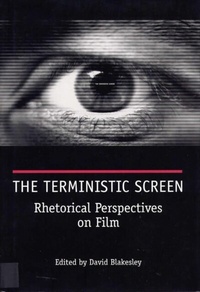
Terministic Screen
Rhetorical Perspectives on Film
1st Edition
Published on 28. September 2007
326 pages
978-0-8093-8766-3 (ISBN)
Description

The Terministic Screen: Rhetorical Perspectives on Film examines the importance of rhetoric in the study of film and film theory. Rhetorical approaches to film studies have been widely practiced, but rarely discussed until now. Taking on such issues as Hollywood blacklisting, fascistic aesthetics, and postmodern dialogics, editor David Blakesley presents fifteen critical essays that examine rhetoric's role in such popular films as The Fifth Element, The Last Temptation of Christ, The Usual Suspects, Deliverance, The English Patient, Pulp Fiction, The Music Man, Copycat, Hoop Dreams,and A Time to Kill. Aided by sixteen illustrations, these insightful essays consider films rhetorically, as ways of seeing and not seeing, as acts that dramatize how people use language and images to tell stories and foster identification. Contributors include David Blakesley, Alan Nadel, Ann Chisholm, Martin J. Medhurst, Byron Hawk, Ekaterina V. Haskins, James Roberts, Thomas W. Benson, Philip L. Simpson, Davis W. Houck, Caroline J.S. Picart, Friedemann Weidauer, Bruce Krajewski, Harriet Malinowitz, Granetta L. Richardson, and Kelly Ritter.
More details
Other editions
Additional editions
Book
03/2003
Southern Illinois University Press
€74.47
Article not available at the moment
Content
- Cover
- Title Page
- Copyright
- Contents
- Acknowledgments
- Introduction: The Rhetoric of Film and Film Studies by David Blakesley
- Part One: Perspectives on Film and Film Theory as Rhetoric
- 1. Mapping the Other: The English Patient, Colonial Rhetoric, and Cinematic Representation by Alan Nadel
- 2. Rhetoric and the Early Work of Christian Metz: Augmenting Ideological Inquiry in Rhetorical Film Theory and Criticism by Ann Chisholm
- 3. Temptation as Taboo: A Psychorhetorical Reading of The Last Temptation of Christ by Martin J. Medhurst
- 4. Hyperrhetoric and the Inventive Spectator: Remotivating The Fifth Element by Byron Hawk
- 5. Time, Space, and Political Identity: Envisioning Community in Triumph of the Will by Ekaterina V. Haskins
- 6. On Rhetorical Bodies: Hoop Dreams and Constitutional Discourse by James Roberts
- Part Two: Rhetorical Perspectives on Film and Culture
- 7. Looking for the Public in the Popular: The Hollywood Blacklist and the Rhetoric of Collective Memory by Thomas W. Benson
- 8. Copycat, Serial Murder, and the (De)Terministic Screen Narrative by Philip L. Simpson
- 9. Opening the Text: Reading Gender, Christianity, and American Intervention in Deliverance by Davis W. Houck and Caroline J. S. Picart
- 10. From "World Conspiracy" to "Cultural Imperialism": The History of Anti-Plutocratic Rhetoric in German Film by Friedemann Weidauer
- Part Three: Perspectives on Films about Rhetoric
- 11. Rhetorical Conditioning: The Manchurian Candidate by Bruce Krajewski
- 12. Sophistry, Magic, and the Vilifying Rhetoric of The Usual Suspects by David Blakesley
- 13. Textual Trouble in River City: Literacy, Rhetoric, and Consumerism in The Music Man by Harriet Malinowitz
- 14. Screen Play: Ethos and Dialectics in A Time to Kill by Granetta L. Richardson
- 15. Postmodern Dialogics in Pulp Fiction: Jules, Ezekiel, and Double-Voiced Discourse by Kelly Ritter
- Contributors
- Index
- Editor Biography
- Back Cover
