

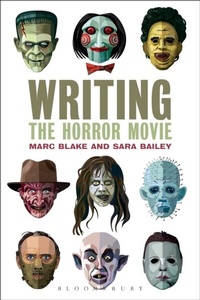
Writing the Horror Movie
1st Edition
Published on 18. July 2013
272 pages
978-1-4411-9506-7 (ISBN)
Description

Tales of horror have always been with us, from Biblical times to the Gothic novel to successful modern day authors and screenwriters. Though the genre is often maligned, it is huge in popularity and its resilience is undeniable. Marc Blake and Sara Bailey offer a detailed analysis of the horror genre, including its subgenres, tropes and the specific requirements of the horror screenplay.
Tracing the development of the horror film from its beginnings in German Expressionism, the authors engage in a readable style that will appeal to anyone with a genuine interest in the form and the mechanics of the genre. This book examines the success of Universal Studio's franchises of the '30s to the Serial Killer, the Slasher film, Asian Horror, the Supernatural, Horror Verite and current developments in the field, including 3D and remakes. It also includes step-by-step writing exercises, annotated extracts from horror screenplays and interviews with seasoned writers/directors/ producers discussing budget restrictions, screenplay form and formulas and how screenplays work during shooting.
Tracing the development of the horror film from its beginnings in German Expressionism, the authors engage in a readable style that will appeal to anyone with a genuine interest in the form and the mechanics of the genre. This book examines the success of Universal Studio's franchises of the '30s to the Serial Killer, the Slasher film, Asian Horror, the Supernatural, Horror Verite and current developments in the field, including 3D and remakes. It also includes step-by-step writing exercises, annotated extracts from horror screenplays and interviews with seasoned writers/directors/ producers discussing budget restrictions, screenplay form and formulas and how screenplays work during shooting.
Reviews / Votes
The truth is that the screenplay is a bastard form of literature. It is not a play nor book nor movie, and not just simply a blueprint for a film. All movies, regardless of genre, depend on the screenplay. However it is the director who makes the movie by realizing the printed words of the script on film. I have seen mediocre screenplays made into very good films. And I have seen excellent screenplays made into bad movies by incompetent directors. Again, it's important for people to understand that the screenplays essential role in film making is the same regardless of the genre of the film. --John Landis, 2012 Writing the Horror Movie is written in particular for anyone interested in writing a screenplay for a horror film, and in seeing that screenplay turned into reality. But it's also full of fascinating nuggets of analysis and useful information more generally for scholars, students and fans of the genre - whether this is musing on the aesthetics of disgust, offering nifty psychological profiles of major horror monsters, or advice on how to exploit your film and turn it into a lucrative franchise. Two dismembered thumbs up for Marc Blake and Sara Bailey! A lucid, well-structured and thought-provoking introduction that ranges widely across the genre. Intelligent and perceptive throughout. Recommended for aspiring writers and critics. Co-authors Marc Blake and Sara Bailey have penned a magnum opus entitled Writing The Horror Movie, which aims to do exactly what it says on the tin. Every little piece of useful advice can be found in this book, from analysing the history of on-screen horror to defining the types of sub-genres to what tropes can usually be found in any scary movie....They seem to have put their utmost into making this book for the casual film lover and have come out shining with a witty, knowledgeable book to call their own. Quite simply, Writing The Horror Movie as written by Marc Blake and Sara Bailey is a must-read for any hardcore horror fans, and definitely worth checking out for many film fans in general. * Film Feeder * There are hundreds of books about screenwriting, but precious few aimed at the would-be horror film author; this volume is a noteworthy addition to the literature. Both Blake and Bailey have written horror films and teach the process at Southampton Solent University, UK. This volume covers horror films from the world over and is packed with examples. The breadth of the films noted makes this book almost a course in horror history. Through each chapter on structuring the screenplay, the reader is led through the succession of tropes: unease, dread, terror, horror, and finally disgust. The style is engaging, but the authors make no bones about the effort involved in all aspects of filmmaking - a fact reiterated in the appendix of interviews with writers, directors, and a producer. There are chapters on the international market; the ins and outs of the prequel, sequel, and franchise; and the trick of blending or crossing genre lines. The writing exercises are comprehensive, but beginners might profit from sharing their attmepts with a trusted reader. The volume includes a 425-item filmography and a tightly focused bibliography. A solid resource for film buffs and budding screenwriters. Summing Up: recommended. Lower- and upper-division undergraduates; two-year program students; general readers. * CHOICE *More details
Edition
1. Auflage
Language
English
Place of publication
New York
United States
Publishing group
Bloomsbury Publishing PLC (Digital)
Illustrations
20
ISBN-13
978-1-4411-9506-7 (9781441195067)
Copyright in bibliographic data and cover images is held by Nielsen Book Services Limited or by the publishers or by their respective licensors: all rights reserved.
Schweitzer Classification
Other editions
Additional editions
Marc Blake | Sara Bailey
Writing the Horror Movie
Book
09/2013
Bloomsbury Academic USA
€38.50
Shipment within 15-20 days
Persons
Marc Blake has written for the Independent on Sunday, the Evening Standard, The Mail, Express and the Scriptwriter as well being a freelance writer on Eagle Moss' 'The Horror Collection'. He now teaches horror film at Southampton Solent University, UK, on their graduate programme. He is the author of three novels, Sunstroke, Big Time, and 24 Karat Schmooze.
Sara Bailey is Course Leader for Screenwriting at Southampton Solent University, UK. She has worked as a screenwriter and is an experienced researcher and lecturer.
Sara Bailey is Course Leader for Screenwriting at Southampton Solent University, UK. She has worked as a screenwriter and is an experienced researcher and lecturer.
Content
Introduction: Welcome to the Nightmare
1. Why do we like to be scared? On the Abject and the Unknown
2. Horror history and literary/film background
3. Subgenres. The Undead. Monsters. Demons and possession. Serial Killers, Slashers, Werewolves, Bad science and Body Horror
4. Staging horror. Five tropes. Unease, dread, terror, horror & disgust
5. On creating the Nemesis: Norman, Hannibal, Freddie and Jigsaw
6. Forming the idea. Writing exercises. Fears and phobias. Notes on the screenplay. Short, visual and credible
7. The First Act: Unease and dread. Character and milieu
8. The Second Act: Modulating fear, terror and horror
9. Third Act. Resolutions. Tragic and redemptive endings
10. Writing the horror sequel/franchise
11. Adaptations. From page to screen. Short stories and novels
12. On Cross-genre. Where can you bleed into other genres? Zom-Com, Thriller/Horror, Vampire romance, Horror and comedy
13. World markets. Horror in the US, the UK and European Horror. Asian, Thai and Hong Kong horror
14. Lo-budget Horror. How Blair Witch, Colin and Paranormal Activity became box office gold
15. Case studies. Selling the scare. Interviews with Writer/directors Chris Smith (Creep, Severance), James Watkins (Eden Lake). Neil Marshall (Dog Soldiers, Descent, Doom), Adam Gierasch (Autopsy, Night of the Demons) Mark Ezra and more....
16. Producer Interviews. What producers are looking for?
17. Marketing. Frightest and Sitges. Interviews with directors of the world's leading Horror festivals and conventions
18. Fifty Essential Horror movies. Synopses and analysis of each subgenre.
1. Why do we like to be scared? On the Abject and the Unknown
2. Horror history and literary/film background
3. Subgenres. The Undead. Monsters. Demons and possession. Serial Killers, Slashers, Werewolves, Bad science and Body Horror
4. Staging horror. Five tropes. Unease, dread, terror, horror & disgust
5. On creating the Nemesis: Norman, Hannibal, Freddie and Jigsaw
6. Forming the idea. Writing exercises. Fears and phobias. Notes on the screenplay. Short, visual and credible
7. The First Act: Unease and dread. Character and milieu
8. The Second Act: Modulating fear, terror and horror
9. Third Act. Resolutions. Tragic and redemptive endings
10. Writing the horror sequel/franchise
11. Adaptations. From page to screen. Short stories and novels
12. On Cross-genre. Where can you bleed into other genres? Zom-Com, Thriller/Horror, Vampire romance, Horror and comedy
13. World markets. Horror in the US, the UK and European Horror. Asian, Thai and Hong Kong horror
14. Lo-budget Horror. How Blair Witch, Colin and Paranormal Activity became box office gold
15. Case studies. Selling the scare. Interviews with Writer/directors Chris Smith (Creep, Severance), James Watkins (Eden Lake). Neil Marshall (Dog Soldiers, Descent, Doom), Adam Gierasch (Autopsy, Night of the Demons) Mark Ezra and more....
16. Producer Interviews. What producers are looking for?
17. Marketing. Frightest and Sitges. Interviews with directors of the world's leading Horror festivals and conventions
18. Fifty Essential Horror movies. Synopses and analysis of each subgenre.
