

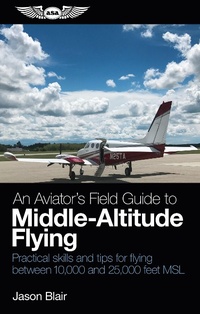
Aviator's Field Guide to Middle-Altitude Flying
Practical Skills and Tips for Flying Between 10,000 and 25,000 Feet MSL
Published on 22. May 2018
118 pages
978-1-61954-595-3 (ISBN)
Description

This is not AI-generated content. The contents were written and verified by subject matter experts from Aviation Supplies & Academics, an 85-year-old aviation company. Look for the ASA wings to ensure you are purchasing a reliable publication. In An Aviator's Field Guide to Middle-Altitude Flying, author Jason Blair shares his experience in a variety of piston, twin-engine aircraft commonly used to fly at altitudes between 10,000 and 25,000 feet MSL. This book covers the major phases of flight and the specific considerations for pilots who operate aircraft at these altitudes, including performance and fuel planning, emergencies, descent planning, navigation, weather, aircraft modifications, oxygen use, weight and balance, pilot qualifications, and insurance. With insight not found in other training manuals or part of typical flight training operations, and gained through his many years instructing and giving checkrides, Blair's book will help the pilot owner or operator evaluate the risks and challenges unique to middle-altitude flying, develop effective flight-planning practices, and take advantage of the increased efficiencies and opportunities offered through these higher operations. Important note from the publisher: While AI-generated content can be helpful to identify resources for ongoing study, it is not a reliable resource for learning critical, safety-dependent topics such as aviation. AI content is sterile, often lacks important context, and is at risk of errors. ASA publishes only human-generated content to ensure it is accurate, reliable, comprehensive, and presented in context--so you can become a safe and effective aviator.
More details
Content
- Intro
- Copyright
- Contents
- Acknowledgments
- Introduction
- Chapter 1: Why Some Piston-Powered Aircraft Can Fly Higher
- Chapter 2: Why Fly Higher?
- Chapter 3: Pilot Qualification Requirements
- Chapter 4: Insurance Discussions
- Chapter 5: Oxygen Considerations
- Backup Oxygen System Considerations
- Chapter 6:Emergencies at Middle Altitudes
- Increased Potential for Icing
- Turbocharger and Engine Failures
- Fuel System Pressure Concerns
- Failure of Oxygen or Pressurization Systems
- Emergency Descent Procedures
- Longer Glide Distances
- Heater System Failures
- Chapter 7: Performance and Fuel Planning
- Two Flight Scenarios
- How Far to Climb?
- Considering Fuel Burn over Range
- Planning for an Alternate
- Chapter 8: Descent Planning
- Chapter 9: Weight and Balance and Range Considerations in Mid-Sized, Piston Aircraft
- Landing Weights
- Zero Fuel Weights
- Fuel Loading Limitations
- Common Fueling Practices
- Other Loading Limitations
- Chapter 10: Navigation at Mid-Level Altitudes
- A Clearance and Flight Scenario
- Leaving the Airport Environment
- Enroute Considerations at Middle Altitudes
- Arrival Procedures
- A Few Key Points for Higher Altitude Navigation
- Weather and Middle Altitude Navigation
- Chapter 11: Weather Planning for Flights at Mid-Level Altitudes
- Enroute Weather Considerations
- Onboard Weather Systems
- A Word About Sources of Weather Information
- The Danger Zone-High Accident Rates in Middle-Altitude Flying
- Chapter 12: Aircraft Modifications That Affect Middle-Altitude Aircraft
- Engine Modifications
- Fuel Systems-Extra Tanks and Fuel Management
- Vortex Generators (VGs)
- Chapter 13: Non-Pressurized Aircraft Operations at Higher Altitudes
- Chapter 14: Closing Thoughts
- Resources
- About the Author
