

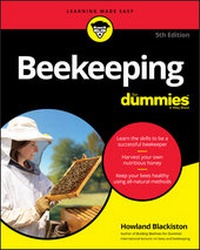
Beekeeping For Dummies
Description

Beekeeping For Dummies, 5th Edition, is one of the most popular titles in the For Dummies series available today. Including the latest information regarding every aspect of backyard beekeeping and honey production, this book describes how to get started, how to care for and safely handle bees, and how to maintain healthy and productive colonies.
This book is loaded with up-to-date, practical examples and helpful illustrations of proven techniques and strategies for both new and seasoned hobbyist beekeepers. Some of the updates for this brand-new edition include:
* New information regarding the critical role that nutrition plays in the health and productivity of your bees
* News about the latest beekeeping products, medications, and all-natural remedies
* Information regarding dozens of helpful beekeeping resources
* Redeemable coupons from beekeeping suppliers that save the reader money
Beekeeping For Dummies embodies the straightforward and simple approach made famous by the For Dummies series. Each and every reader will benefit from its accessible and approachable take on beekeeping.
More details
Other editions
Additional editions
Previous edition
Person
Content
- Intro
- Title Page
- Copyright Page
- Table of Contents
- Foreword
- Introduction
- About This Book
- Foolish Assumptions
- Icons Used in This Book
- Beyond the Book
- Where to Go from Here
- Part 1 Taking Flight with Beekeeping
- Chapter 1 To Bee, or Not to Bee?
- Discovering the Benefits of Beekeeping
- Harvesting liquid gold: Honey
- Bees as pollinators: Their vital role to our food supply
- Being part of the bigger picture: Save the bees!
- Getting an education: And passing it on!
- Improving your health: Bee therapies and stress relief
- Determining Your Beekeeping Potential
- Environmental considerations
- Zoning and legal restrictions
- Costs and equipment
- Time and commitment
- Beekeeper personality traits
- Allergies
- Deciding Which Beekeeping Approach to Follow
- Medicated beekeeping
- Natural beekeeping
- Organic beekeeping
- Combining approaches
- Chapter 2 Getting to Know Your Honey Bees
- Basic Body Parts
- Skeleton
- Head
- Thorax
- Abdomen
- The Amazing Language of Bees
- Pheromones
- Shall we dance?
- Getting to Know the Male and the Two Female Castes
- Her majesty, the queen
- The industrious little worker bee
- House bees
- Field bees
- The woeful drone
- The Honey Bee Life Cycle
- Egg
- Larva
- Pupa
- Other Stinging Insects
- Bumblebee
- Carpenter bee
- Mason bee
- Wasp
- Yellow jacket
- Bald-faced hornet
- Part 2 Starting Your Adventure
- Chapter 3 Alleviating Apprehensions and Making Decisions
- Overcoming Sting Phobia
- Knowing what to do if you're stung
- Watching for allergic reactions
- Building up a tolerance
- Understanding Local Laws and Ordinances
- Easing the Minds of Family and Neighbors
- Location, Location, Location: Where to Keep Your Hives
- Knowing what makes a perfect bee yard
- Urban considerations
- Understanding the correlation between geographical area and honey flavors
- Knowing When to Start Your Adventure
- Chapter 4 Selecting a Hive That's Perfect for You
- The Langstroth Hive
- The Kenyan Top Bar Hive
- The Apimaye Insulated Hive
- The Flow Hive
- The Warré (People's) Hive
- The Five-Frame Nuc Hive
- The Observation Hive
- Make a Beeline to the Best Beehive
- Hives for harvesting honey
- Hives for pollinating your garden
- A hive for learning and teaching
- Chapter 5 Basic Equipment for Beekeepers
- Starting Out with the Langstroth Hive
- Knowing the Basic Woodenware Parts of the Langstroth Hive
- Hive stand
- Bottom board
- Entrance reducer
- Deep-hive body
- Queen excluder
- Shallow or medium honey super
- Frames
- Foundation
- Inner cover
- Outer cover
- Knowing the Basic Parts of a Top Bar Hive
- The top bar
- Everything else
- Ordering Hive Parts
- Startup hive kits
- Setting up shop
- Adding on Feeders
- Hive-top feeder
- Entrance feeder
- Pail feeder
- Baggie feeder
- Frame feeder
- Top Bar hive feeders
- Fundamental Tools
- Smoker
- Hive tool and frame lifter
- Bee-Proof Clothing
- Veils
- Gloves
- Really Helpful Accessories
- Elevated hive stand
- Frame rest
- Bee brush
- Slatted rack
- Screened bottom board
- Beekeeper's toolbox
- Chapter 6 Obtaining and Installing Your Bees
- Determining the Kind of Bee You Want
- Deciding How to Obtain Your Initial Bee Colony
- Ordering package bees
- Buying a "nuc" colony
- Purchasing an established colony
- Capturing a wild swarm of bees
- Picking a Reputable Bee Supplier
- Deciding When to Place Your Order
- The Day Your Girls Arrive
- Bringing home your bees
- Recipe for sugar syrup
- Putting Your Bees into the Hive
- Hiving steps for Langstroth type hives and Steps 1-7 for Top Bar hives
- Hiving Steps 8-14 for Top Bar hives
- Watching your bees come and go from their new home
- Part 3 Time for a Peek
- Chapter 7 Opening Your Hive
- Establishing Visiting Hours
- Setting an Inspection Schedule
- Preparing to Visit Your Langstroth or Top Bar Hive
- Making "non-scents" a part of personal hygiene
- Getting dressed up and ready to go
- Lighting Your Smoker
- Opening a Langstroth Hive
- Removing the hive-top feeder
- Removing the inner cover
- Opening a Top Bar Hive
- The Hive's Open! Now What?
- Chapter 8 What to Expect When You're Inspecting
- Keeping a Journal
- Inspecting a Langstroth Hive
- Removing the first frame of your Langstroth hive
- Working your way through the Langstroth hive
- Holding up frames for inspection
- Knowing when it's time for more smoke
- Replacing Langstroth frames
- Closing the Langstroth hive
- Inspecting a Top Bar Hive
- Working your way through the Top Bar hive
- Top Bar comb management
- Looking into Top Bar cells
- Replacing the top bars and closing the hive
- Understanding What to Always Look For
- Checking for your queen
- Storing food
- raising brood
- Inspecting the brood pattern
- Recognizing foodstuffs
- Your New Colony's First Eight Weeks
- Checking in: A week after hiving your bees
- The second and third weeks
- Weeks four through eight
- Chapter 9 Different Seasons, Different Activities
- Lazy, Hazy, Crazy Days of Summer
- Your summer to-do list
- Your summertime commitment
- Falling Leaves Point to Autumn Chores
- Your autumn to-do list
- Your autumn time commitment
- Clustering in a Winter Wonderland
- Your winter to-do list
- Your wintertime commitment
- Spring Is in the Air (Starting Your Second Season)
- Your spring to-do list
- Your springtime commitment
- Administering spring medication
- Reversing hive bodies
- Managing Top Bar Hives in the Spring
- Finding the cluster
- Preventing the urge to swarm
- Expanding the brood nest
- The Beekeeper's Calendar
- Part 4 Common Problems and Simple Solutions
- Chapter 10 Anticipating and Preventing Potential Problems
- Running Away (to Join the Circus?)
- Swarming
- Absconding
- Where Did the Queen Go?
- Letting nature take its course
- Ordering a replacement queen
- Introducing a new queen to the hive
- Avoiding Chilled Brood
- Dealing with the Dreaded Robbing Frenzies
- Knowing the difference between normal and abnormal (robbing) behavior
- Putting a stop to a robbing attack
- Preventing robbing in the first place
- Ridding Your Hive of the Laying Worker Phenomenon
- How to know if you have laying workers
- Getting rid of laying workers
- Preventing Pesticide Poisoning
- The "Killer Bee" Phenomenon
- What are "killer bees"?
- Bee prepared!
- Chapter 11 Colony Collapse Disorder
- What Is CCD?
- What to Do If You Suspect CCD
- Why All the Fuss?
- What's Causing CCD?
- The cellphone theory
- It may be the perfect storm
- Answers to FAQs
- What You Can Do to Help
- Chapter 12 Keeping Your Bees Healthy
- Understanding the Importance of Good Nutrition
- What bees eat
- The need for good gut health
- Taking steps to ensure good nutrition
- Medicating or Not?
- Knowing the Big-Six Bee Diseases
- American foulbrood (AFB)
- European foulbrood (EFB)
- Chalkbrood
- Sacbrood
- Stonebrood
- Nosema
- A handy chart
- Chapter 13 Heading Off Honey-Bee Pests
- Parasitic Problems
- Varroa mites
- Tracheal mites
- Zombie (Phonid) flies
- Other Unwelcome Pests
- Wax moths
- Small hive beetle
- Ants, ants, and more ants
- Bear alert!
- Raccoons and skunks
- Keeping out Mrs. Mouse
- Some birds have a taste for bees
- Pest Control at a Glance
- Chapter 14 Raising Your Own Queens
- Why Raising Queens Is the Bee's Knees
- Understanding Genetics
- Dominant and recessive genes
- Inbreeding versus outcrossing
- Accentuate the positive
- What Makes a Queen a Queen
- Talking about the Birds and Bees for Honey Bees
- Creating Demand: Making a Queenless Nuc
- Queen-Rearing Method 1: Go with the Flow
- If the queen cells are capped
- If the queen cells are open
- Mind the timeline
- Queen-Rearing Method 2: The Miller Method
- Queen-Rearing Method 3: The Doolittle Method, also Known as Grafting
- Tools and equipment
- How it's done
- Providing nuptial housing
- Finding Homes for Your Queens
- Evaluating the Results
- The Queen Rearer's Calendar
- Marking Your Queens
- Part 5 Sweet Rewards
- Chapter 15 Honey, I Love You
- Appreciating the History of Honey
- Understanding the Composition of Honey
- Healing with Honey
- Honey and diabetes
- Honey's nutritional value
- Honey and children
- Choosing Extracted, Comb, Chunk, or Whipped Honey
- Extracted honey
- Comb honey
- Chunk honey
- Whipped honey
- Honeydew honey
- Taking the Terror out of Terroir
- Customizing your honey
- Honey from around the world
- The Commercialization of Honey
- Is it the real deal?
- Raw versus regular honey
- Organic or not?
- Your own honey is the best
- Appreciating the Culinary Side of Honey
- The nose knows
- Practice makes perfect
- Recognizing defects in honey
- Pairing Honey with Food
- Infusing Honey with Flavors
- Judging Honey
- Honey Trivia
- Chapter 16 Getting Ready for the Golden Harvest
- Having Realistic Expectations
- What Flavor Do You Want?
- Assembling the Right Equipment to Extract Honey
- Honey extractors
- Uncapping knife
- Honey strainer
- Other handy gadgets for extracting honey
- Honey containers
- Planning Your Extracted Honey Harvest Setup
- Gathering Comb Honey Equipment
- Section comb cartridges
- Cut comb
- Branding and Selling Your Honey
- Creating an attractive label
- Finding places to market your honey
- Selling your honey on the web
- Chapter 17 Honey Harvest Day
- Knowing When to Harvest
- Bad things come to those who wait!
- A few pointers to keep in mind when harvesting liquid gold
- Getting the Bees out of the Honey Supers
- Shakin' 'em out
- Blowin' 'em out
- Using a bee escape board
- Fume board and bee repellent
- Honey Extraction from a Langstroth Frame
- Harvesting honey using an extractor
- Cleaning frames after extracting
- Harvesting Honey from Your Top Bar Hive
- Selecting the comb to harvest
- Getting the bees off Top Bar comb
- Harvesting using the crush-and-strain method
- Harvesting honey using a honey press
- Harvesting cut-comb honey
- Harvesting Wax
- Part 6 The Part of Tens
- Chapter 18 More than Ten Fun Things to Do with Bees
- Making Two Langstroth Hives from One
- Making One Langstroth Hive from Two
- Dividing a Top Bar Hive into Two Colonies
- Combining Two Top Bar Hive Colonies
- Building an Elevated Hive Stand
- Building materials list
- Cut list
- Planting Flowers for Your Bees
- Asters (aster/callistephus)
- Bachelor's buttons (Centaurea)
- Bee balm (Monarda)
- Hyssop (Agastache)
- Malva (Malvaceae)
- Mint (Mentha)
- Nasturtium (Tropaeolum minus)
- Poppy (Papaver/Eschscholzia)
- Salvia (Salvia/farinacea-strata/ splendens/officinalis)
- Sunflowers (Helianthus/Tithonia)
- Brewing Mead: The Nectar of the Gods
- Create Cool Stuff with Propolis
- Propolis tincture
- Propolis ointment
- Propolis varnish
- Making Gifts from Beeswax
- Beeswax candles
- Beeswax furniture polish
- Beauty and the Bees
- Use your cappings
- Equipment
- The recipes
- Packaging and labeling
- Chapter 19 More than Ten Frequently Asked Questions about Bee Behavior
- Chapter 20 My Ten Favorite Honey Recipes
- Honey Curry Vegetable Dip
- Golden Cornbread
- Honey Picante Chicken Wings
- Apricot Honey Bread
- Asian Honey-Tea Grilled Prawns
- Broiled Scallops with Honey-Lime Marinade
- A Honey of a Chili
- Beef and Potato Tzimmes
- Chewy Honey Oatmeal Cookies
- Apple Honey Tart
- Part 7 Appendixes
- Appendix A Helpful Resources
- Honey Bee Information Websites
- Apiservices - Virtual beekeeping gallery
- The Barefoot Beekeeper
- Beemaster Forum
- Bee-Source.com
- Facebook - Top Bar Beekeeping
- Honey Bee Health Coalition
- Mid-Atlantic Apiculture Research and Extension Consortium (MAARAC)
- National Honey Board
- Bee Organizations and Conferences
- The American Apitherapy Society Inc.
- American Beekeeping Federation
- American Honey Producers
- Apiary Inspectors of America
- Apimondia: International Federation of Beekeepers' Associations
- Eastern Apiculture Society
- Heartland Apicultural Society Inc.
- International Bee Research Association
- USDA Agricultural Research Service
- The Western Apiculture Society
- Bee Journals and Magazines
- American Bee Journal
- Bee Culture
- Bee World
- Beekeeping Supplies and Equipment
- Apimaye Insulated Hives
- Barnyard Bees
- Bastin Bees
- Bee-commerce.com
- BeeInventive
- Bee Vital
- Betterbee
- Blue Sky Bee Supply
- Dadant & Sons, Inc.
- Glorybee Inc.
- Healthy Bees, LLC
- Hive Butler
- Hive Tracks
- Hungry Bear Farms
- Kelley Beekeeping
- Mann Lake
- Miller Bee Supply
- Oliverez
- Pierco
- Pigeon Mountain Trading Company
- Rossman Apiaries
- Sacramento Beekeeping Supplies
- Swienty Beekeeping Equipment (EU)
- Thorne Beekeeping Supply (UK)
- Western Bee Supplies
- State Bee Inspectors (United States)
- Appendix B Beekeeper's Checklist
- Appendix C Glossary
- Index
- Supplemental Images
- EULA
Introduction
Keeping honey bees is a unique and immensely rewarding hobby. If you have an interest in nature, you'll deeply appreciate the wonderful world that beekeeping opens up to you. If you're a gardener, you'll treasure the extra bounty that pollinating bees bring to your fruits, flowers, and vegetables. If you're a foodie, you will celebrate your own honey harvest. In short, you'll be captivated by these remarkable little creatures in the same way others have been captivated for thousands of years.
Becoming a beekeeper is easy and safe - it's a great hobby for the entire family. All you need is a little bit of guidance to get started. And that's exactly what this book is for. I provide you with a step-by-step approach for successful backyard beekeeping - follow it closely, and you can have a lifetime of enjoyment with your bees.
About This Book
This book is a reference, not a lecture. You certainly don't have to read it from beginning to end unless you want to. I organized the chapters in a logical fashion with sensitivity to the beekeeper's calendar of events. I include lots of great photographs and illustrations (each, I hope, is worth a thousand words) and lots of practical advice and suggestions.
Because Langstroth hives are far and away the most widely used type of hive in the world, most of the content is written with the assumption that you will start your adventure using some kind of Langstroth style hive. But since Top Bar hives (and Kenyan Top Bar hives in particular) have become increasingly popular, this fifth edition includes information of particular interest to you Top Bar beekeepers.
Whether you're just getting started or have been keeping bees for a few seasons or more, I guarantee you'll discover all sorts of new information and helpful tips. This book
- Lets you explore the many benefits of beekeeping and helps you decide whether beekeeping is the right hobby for you.
- Gives you some insight into a day in the life of the honey bee. You find out about the queen, the workers, and the drones, and the roles each plays in the colony. It explains basic bee anatomy and introduces you to a few other stinging insects.
- Deals with any apprehensions you may have about beekeeping (stings, neighbors' funny looks, local restrictions, environmental considerations, costs, and time and commitment).
- Helps you decide where you should locate your hive and how you can get started.
- Introduces you to seven different hive types that are popular among backyard beekeepers. You learn the benefits and drawbacks associated with each of these hives.
- Shows the basic tools and equipment you need. You find out about really cool gadgets and weird and wonderful accessories.
- Helps you decide the kind of honey bee to raise, and when and how to order your bees. You also find out what to do the day your "girls" arrive and how to safely and successfully transfer them to their new home.
- Explains how and when to go about approaching and opening up a colony of bees.
- Helps you understand exactly what you're looking for every time you inspect a colony. I include the specific tasks that are unique to the weeks immediately following the arrival of your bees as well as throughout the first season and into your second season.
- Discusses the tasks a beekeeper must perform year-round to maintain a healthy colony. Use it as a checklist of seasonal activities that you can refer back to year after year. There's a neat "Beekeeper's Calendar" that's keyed to different climates. Use this to identify the tasks you should do and when.
- Shows you how to anticipate the most common problems. Find out what to do if your hive swarms or simply packs up and leaves. Discover how to recognize problems with brood production and your precious queen.
- Provides the latest information about topics that are all the buzz in the media: colony collapse disorder (CCD), backyard pollination, the critical role that good bee nutrition plays in keeping your colony strong, healthy, and disease-free. Discover the nutritional value eating honey. Find out what you can do to help save the honey bees.
- Takes a detailed look at bee illnesses. Learn what medications you can use to keep your bees healthy and productive, year after year. Learn how to ensure optimum nutrition and living conditions for you bees to avoid illness in the first place. Discover natural approaches to keeping bees healthy that avoid or minimize the use of any chemicals.
- Teaches you the basics of raising your own queen bees for fun and profit.
- Gives you a yummy chapter 100 percent about honey. Find out about its influence throughout history, what it's composed of, the many different kinds and characteristics of honey, and how honey is used for health and wellness.
- Gives you a step-by-step approach for harvesting, bottling, and marketing your honey.
I also include some back-of-book materials, including helpful bee-related websites, journals, suppliers, and beekeeping associations. I give you a glossary of bee and beekeeping terms that you can use as a handy quick reference and some templates for creating your own beekeeping checklists and logs. Finally, there are some valuable discount coupons from major vendors that you can take advantage of to manage your hives, purchase equipment, and subscribe to one of the leading bee journals.
Foolish Assumptions
If you've never kept bees, this book has all the information you need to get started in beekeeping. I assume that you have no prior knowledge of the equipment, tools, and techniques.
However, if you've been a beekeeper for a while, this book is a terrific resource for you, too. You'll find the latest ideas on how to keep your bees healthier and more productive, as well as natural alternatives to traditional medication approaches. And if you're a city dweller, you'll benefit from the special hints and guidelines that are unique to urban beekeeping. You'll appreciate the way the book has been organized for easy and ongoing reference. I include a whole lot of "tricks of the trade." In short, this book is for just about anyone who's fallen in love with the bountiful honey bee.
Icons Used in This Book
Peppered throughout this book are helpful icons that present special types of information to enhance your reading experience and make you a stellar beekeeper.
Think of these tips as words of wisdom that - when applied - can make your beekeeping experience more pleasant and fulfilling!
These warnings alert you to potential beekeeping boo-boos that could make your experiences unpleasant and/or your little winged friends unhappy or downright miserable. Take them to heart!
I use this icon to point out things that need to be so ingrained in your beekeeping consciousness that they become habits. Keep these points at the forefront of your mind when caring for your bees.
Urban beekeeping involves special considerations and techniques. For those of you keeping bees in a city environment, these hints and suggestions will come in very handy.
The trend these days is to be very judicial about the use of chemicals in the hive - or to avoid them completely. Use this icon to learn about natural, nonchemical methods for ensuring your colony's health and otherwise dealing with problems.
Beyond the Book
There is much more information available from your author, and from the For Dummies brand, for your learning pleasure. Check out these resources to find out more about the art of beekeeping:
- The Cheat Sheet gives you quick reference tasks that you need to complete at various times of the year. Find out what you need to do in summer and winter to care for and protect your bees. To get this Cheat Sheet, simply go to
www.dummies.comand search for "Beekeeping For Dummies Cheat Sheet" in the Search box. - For Dummies online videos are available at
www.dummies.com/go/beekeepingfd5e. You can see everything from installing your bees to lighting a smoker. Watching me perform these tasks is an invaluable help to new and seasoned beekeepers. - And, although this book includes information about different beehives, I give you much more information in Building Beehives For Dummies (Wiley).
Where to Go from Here
You can start anywhere with For Dummies books, but there's a logic to beginning at the beginning. If that's not in your personality, consider starting with Chapter 5 to see what equipment you'll need to get started. Then move over to Chapter 6 to determine what kind of honey bee is right for you and what to do the day your "girls" arrive at your home.
You may have some apprehension about working around bees, such as stings and whether your neighbors will be comfortable with your new hobby. Check out Chapter 3 to get some ideas on how to win over your neighbors with information and jars of delicious honey.
Colony collapse disorder has been in the news over the last few years. Chapter 11 takes an in-depth look at this problem and answers common questions. Chapter 8 gives you info and advice about inspecting your hives and your bees, and Chapters 12 and...
