

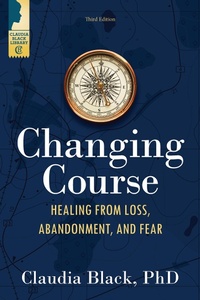
Changing Course
Description

In Changing Course-now fully revised and updated-Claudia Black extends a helping hand to anyone overcoming the complex trauma of growing up in an impaired family system.
Don't talk. Don't trust. Don't feel.
Being raised in a dysfunctional family system, whether unpredictable and chaotic or overly rigid and joyless, can set the course for chronic emotional pain in adulthood. Changing Course is a gentle, affirming guide to healing from childhood experiences of loss, abandonment, fear, and shame. Through carefully crafted questions, charts, exercises, and real-life stories of people impacted by various types of family impairment, Dr. Black skillfully presents an interactive process of healing from childhood wounds. You will learn four essential steps you can use to let go of old hurtful beliefs and behaviors and develop new skills for both redefining self and negotiating relationships.
More details
Other editions
Additional editions
Person
Claudia Black, PhD, is a world-renowned expert on addiction and codependency, bestselling author, and trainer internationally recognized for her pioneering and contemporary work with family systems and addictive disorders. She is the Clinical Architect of the Claudia Black Center for Young Adults, a Senior Fellow, and Addiction and Trauma Program Specialist at The Meadows Treatment Center in Arizona.
Content
- Cover
- Title Page
- Copyright
- Dedication
- Table of Contents
- A Note from the Author
- Chapter One Changing Course
- Living by the Rules
- Going Back to the Past
- Chronic Loss and Abandonment
- Denial
- Rigidity
- Isolation
- Shame
- How Chronic Loss Is Created
- The Impact of Our Losses
- Changing Course
- Chapter Two You Can't Go Forward without Finishing the Past
- Pain from the Past
- Past-Driven Present Pain
- Attempts to Control Our Pain
- Emotional Responses to Pain
- Behavioral Responses to Pain
- Cognitive Responses to Pain
- From a Past of Chronic Loss to the Turning Point
- Letting Go of the Past, Healing the Pain
- We Can't Go Forward without Finishing the Past
- Chapter Three Steps to Freedom
- Step One: Explore Past Losses
- A Cognitive Life Raft and Emotional Safety Net
- Fear of Feelings
- Overcoming the Fear of Feelings
- Step Two: Connect the Past to Present Life
- Step Three: Challenge Internalized Beliefs
- Step Four: Learn New Skills
- Applying the Four Steps to a Recovery Issue
- Recovery Can't Be Rushed
- Chapter Four Building Your Own Inner Adult
- Creating an Inner Holding Environment
- Core Recovery Skills
- Validating Yourself
- Letting Go of Some Control
- Continuum of Control
- Feeling Your Feelings
- Identifying Your Needs
- Setting Limits and Boundaries
- Creating a Core of Strength with the Recovery Skills
- Changing Course
- The Recovery Process
- Chapter Five The House We Lived In
- Family Secrets
- Identifying Family Roles
- Who Am I, If I'm Not Who I've Been?
- Ending Old Roles
- Chapter Six Recovery Is the Road to Yourself
- Reconstructing Relationships
- Sharing Your Pain and Grief with Family Members
- Confrontation as a Part of Sharing
- How Can I Share My Pain If My Parent Has Died?
- Present-Day Relationships
- Characteristics of a Healthy Relationship
- Charting the Characteristics of Your Relationships
- Chapter Seven Spirituality Is Something You Are
- Spirituality and Control
- Spirituality and the Fear of Abandonment
- Spirituality and Forgiveness
- Spirituality and Our Religious Upbringing
- Spirituality and the Spirit of Our Inner Child
- Practicing Spirituality
- Spirituality, the Turning Point to a New Course
- Turning Points to Recovery
- Acknowledgments
- Appendices
- Personal Loss Graph for Early Years
- Loss Graph Exercise (Early Years) Libby
- Loss Graph Exercise (Early Years) Tim
- Personal Loss Graph for Adult Years
- Loss Graph Exercise (Adult Years) Libby
- Loss Graph Exercise (Adult Years) Tim
- Charting Your Relationships
- About the Author
