

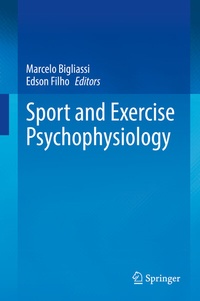
Sport and Exercise Psychophysiology
Description

This book addresses a critical gap in the literature, serving as a foundational resource for a rapidly evolving field that lacks a comprehensive reference point. It offers an in-depth exploration of research methods in exercise psychophysiology, beginning with a historical perspective before delving into key psychophysiological techniques and advanced methodologies for processing and interpreting biological data collected during exercise. Beyond methodology, the book examines core topics such as exercise tolerance, motivation, emotion regulation, attentional control, and cognition-unpacking the intricate psychophysiological mechanisms driving these phenomena. Designed to equip researchers and practitioners alike, it provides the necessary tools to design rigorous experiments and effectively apply complex psychophysiological methods in movement-related contexts. This resource is essential for anyone seeking a deeper understanding of how mind and body interact in the realm of exercise.
More details
Other editions
Additional editions
Persons
Marcelo Bigliassi, Ph.D., Assistant Professor of Psychophysiology and Neuroscience, College of Arts, Sciences & Education, Department of Teaching and Learning, Florida International University, USA, Director, Psychophysiology Laboratory, Visiting Professor of Neuroscience at University of Pavia, Italy, Former President, Society for Sports Neuroscience, Editor, Journal of Clinical Sport Psychology.
Edson Filho, Ph.D. Associate Professor of Sport, Exercise & Performance Psychology, Wheelock College of Education & Human Development, Boston University, USA, Director, Performance, Recovery & Optimization Laboratory, Certified Mental Performance Consultant (AASP), Supervisor and Practitioner, International Society of Sport Psychology, Associate Editor, Journal of Clinical Sport Psychology.
Content
Chapter 1 A Historical Overview and Future Directions in Sport and Exercise Psychophysiology.- Part 1 Research Methods in Sport and Exercise Psychophysiology.- Chapter 2 Basic and Applied Research in Sport and Exercise Psychophysiology.- Chapter 3 Psychophysiological Techniques Applied to Sports and Exercise.- Chapter 4 Data Collection and Analysis of Psychophysiological Metrics During Movement Execution.- Part 2 Psychophysiological Mechanisms Influencing Fatigue and Exercise Tolerance.- Chapter 5 The Psychophysiology of Fatigue.- Chapter 6 Changes in Neurotransmission During Exercise.- Chapter 7 Body Experiences to Gain Tolerance to Effort: Affective Motor Control Loops to Transform Stress into Self-Regulated Effort.- Chapter 8 Sensory Interventions to Improve Exercise Tolerance.- Chapter 9 Attention Allocation During Exercise Performed at Various Intensities.- Chapter 10 Exploring the Effects of Biofeedback and Neurofeedback on Exercise Tolerance.- Part 3 Psychophysiological Insights into Motivation, Emotion, and Cognitive Regulation in Exercise.- Chapter 11 Motivation, Discipline, and Exercise Behavior.- Chapter 12 Emotional Reactions to Exercise.- Chapter 13 Exploring the Psychophysiological Mechanisms Underlying the Relationship Between Cognitive Function and Exercise Performance.- Chapter 14 Neural Mechanisms Underlying Affective Regulation During Exercise.- Chapter 15 Self-Regulation of Exertion and Displeasure During Exercise.- Chapter 16 Emotions in Motion: Examining the Effects of Psychophysiological States in Exercise Behavior and Athletic Performance.
