

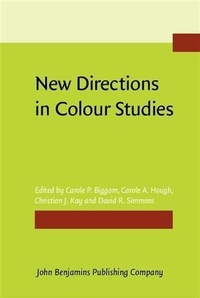
New Directions in Colour Studies
1st Edition
Published on 20. October 2011
XII, 462 pages
978-90-272-8485-3 (ISBN)
Description

Colour studies attracts an increasingly wide range of scholars from across the academic world. Contributions to the present volume offer a broad perspective on the field, ranging from studies of individual languages through papers on art, architecture and heraldry to psychological examinations of aspects of colour categorization, perception and preference. The chapters have been developed from papers and posters presented at a conference on Progress in Colour Studies (PICS08) held at the University of Glasgow. The volume both updates research reported at the earlier PICS04 conference (published by Benjamins in 2006 as Progress in Colour Studies volumes 1 and 2), and introduces new and exciting topics and developments in colour research. In order to make the articles maximally accessible to a multidisciplinary readership, each of the six sections following the initial theoretical papers begins with a short preface describing and drawing together the themes of the chapters within that section. There are seventeen colour illustrations.
More details
Other editions
Additional editions
Carole P. Biggam | Carole Hough | Christian Kay
New Directions in Colour Studies
Book
10/2011
John Benjamins Publishing Co
€111.30
Shipment within 10-15 days
Persons
Content
- New Directions in Colour Studies
- Title page
- LCC data
- Table of contents
- Preface
- References
- Abbreviations
- Section 1. Theoretical issues
- Illusions of colour and shadow
- References
- Universal trends and specific deviations
- 1. Introduction
- 2. A comparison of two language families
- 3. Wildcard terms
- 4. Discussion
- References
- Touchy-Feely colour
- 1. Introduction
- 2. History of an intuition
- 3. Secret life of an intuition
- 4. Touch-like Vision
- 5. Conclusion
- References
- Towards a semiotic theory of basic colour terms and the semiotics of Juri Lotman
- 1. Introduction
- 2. Juri Lotman's semiotic ideas on language
- 3. Very short critique of the theory of basic colour terms
- 4. Semiotic theory of the basic colour terms
- 5. Conclusions
- References
- Section 2. Languages of the world
- Preface to Section 2
- Basic colour terms of Arabic
- 1. Background and aims
- 2. Elicited lists
- 3. Colour naming
- 4. Discussion
- References
- Red herrings in a sea of data
- 1. Introduction
- 2. Scots and Scottish English
- 3. Dictionary evidence of the use of red in Scots
- 4. The SCOTS corpus
- 5. Red in SCOTS
- 6. Delving deeper: quantitative to qualitative
- 7. Red in compounds
- 8. Conclusion
- Acknowledgements
- References
- Appendix
- Towards a diachrony of Maltese basic colour terms
- 1. Preliminaries
- 2. The basic colour terms of Maltese
- 3. The non-basic colour system of Maltese
- 4. Formal aspects of Maltese colour terms
- 5. The evolution of blue in Arabic and Maltese
- 6. From brightness to hue in relation to blue in Arabic and Maltese
- References
- Rosa Schätze - Pink zum kaufen
- 1. Introduction
- 2. History and previous investigations
- 2.1 Rosa
- 2.2 Pink
- 3. Pink and rosa in magazines
- 3.1 A corpus study
- 3.2 Methodology
- 4. Results
- 4.1 Overall frequency
- 4.2 Objects of application
- 4.3 'Wrong' applications
- 4.4 Hyponymy relations
- 4.5 Scale perception
- 4.6 Collocations
- 4.7 Integration into the German language
- 5. Conclusion
- References
- Kashubian colour vocabulary
- 1. Introduction
- 2. Candidate basic colour terms in Kashubian
- 3. Psychological salience of Kashubian colour terms
- 4. Kashubian non-basic colour terms
- 5. Nouns, verbs, adjectives and adverbs related to the basic colour adjectives
- 6. A final word
- References
- Colour terms
- 1. Introduction
- 2. Colour terms as words
- 3. Colour terms as components of linguistic constructions
- 4. Modern Russian: Lexical development of colour terms
- 4.1 Objects as referents of new colour terms
- 4.2 Descriptive meanings of colour terms as denominal adjectives
- 5. Usage constraints of the emerging Russian colour terms: Driven by the noun taxonomic class
- 5.1 Koricnevyj: The Russian case of "browns"
- 5.2 Linguistic behaviour of Russian highly frequent non-basic colour terms
- 5.3 Linguistic behaviour of the Russian colour term 'new-comers'
- 6. Conclusions
- References
- Preliminary research on Turkish basic colour terms with an emphasis on blue
- 1. Introduction
- 2. Method
- 3. Subjects
- 4. Stimuli
- 5. Results
- 5.1 The list task
- 5.2 The colour naming task
- 5.3 Combined analysis
- 6. Discussion
- 7. Conclusion
- References
- Terms for red in Central Europe
- 1. Introduction
- 2. Methods and data
- 3. Hungarian and Czech BCTs with emphasis on red
- 4. A note on etymology
- 5. Collocations and connotations
- 6. The hypothesis: An areal phenomenon in Central Europe
- 7. Conclusion
- References
- Section 3. Colour in society
- Preface to Section 3
- Colours in the community
- 1. Introduction
- 2. Bynames
- 3. Surnames
- 4. Scottish surnames
- 5. Present-day bynames
- 6. Colour terms
- 6.1 Brown
- 6.2 Red
- 6.3 Fair/Grey
- 6.4 Black
- 7. Conclusion
- References
- Hues and cries
- 1. Primary colours: Giotto's joy
- 2. A kind of blue
- 3. Colour on colour
- 4. Conclusion: pain in colour
- References
- Colour appearance in urban chromatic studies
- 1. Contextual relativity of colours
- 2. Colour appearance
- 2.1 Material, texture and surface
- 2.2 Distance
- 2.3 Light and shadow
- 2.4 Natural and artificial light
- 3. Colour appearance and cities' identities
- References
- Aspects of armorial colours and their perception in medieval literature
- 1. Introduction
- 2. Heraldry and the herald
- 3. Colouring chivalric identity
- 4. Colouring identity in medieval romance
- 5. Conclusion
- References
- Warm, cool, light, dark, or afterimage
- 1. Introduction
- 2. Embodied color and background
- 2.1 Figure/Ground alignment
- 2.2 Vantage theory
- 2.3 BCTs, prototypes to polysemy
- 3. Study objective
- 4. Methodology - study tasks
- 4.1 Participants
- 4.2 Study design
- 4.3 Sequence and timing
- 5. General study results
- 5.1 warm/cool and light/dark compared to hue results
- 5.2 After-image color in relation to positive and negative assessment
- 5.3 General research results
- 6. Conclusion
- References
- The power of colour term precision
- 1. Introduction
- 2. Some necessary definitions
- 3. People's knowledge of ECT meaning
- 4. Lexical meaning - a cognitive linguistic perspective
- 5. The travelogue texts and their time
- 6. Some quantitative data: Colour term types and their density
- 7. Object domains and the precision of colour terms
- 8. The effects of non-basic colour terms in texts
- 9. Concluding discussion
- References
- Primary sources
- Secondary sources
- Categorical perception of colour
- Preface to Section 4
- Investigating the underlying mechanisms of categorical perception of colour using the event-related potential technique
- 1. Introduction to the debate
- 2. The ERP approach
- 2.1 Fonteneau and Davidoff (2007): Unattended colour change
- 2.2 Holmes et al. (2009): Attended colour change
- 2.3 Liu et al. (2009): Hemispheric asymmetries
- 2.4 Clifford et al. (2009): Infant effects
- 2.5 Thierry et al. (2009): Effects of colour language
- 3. Summary
- References
- Category training affects colour discrimination but only in the right visual field
- 1. Introduction
- 1.1 Overview
- 1.2 Background
- 1.3 The current study
- 2. Methods
- 2.1 Participants
- 2.2 Training phase
- 2.3 Target detection task
- 3. Results
- 3.1 Training results
- 3.2 Target detection results
- 4. Discussion
- References
- Effects of stimulus range on color categorization
- 1. Introduction: Color categorization and range effects
- 2. Experiments 1a, b and c
- 2.1 Participants
- 2.2 Experiment 1a: Apparatus, stimuli and design
- 2.3 Experiments 1b and 1c: Apparatus, stimuli, design and procedure
- 2.4 Results of experiments 1a, 1b and 1c
- 3. Categorical responses
- 3.1 Main effects
- 3.2 Condition by stimulus interaction.
- 3.3 Experiment by stimulus interaction.
- 4. Response times
- 4.1 Main effect
- 4.2 Condition by stimulus interaction.
- 5. Discussion
- 5.1 Summary of experiments and results
- 5.2 Stimulus range and color categorization
- References
- Section 5. Individual differences in colour vision
- Preface to Section 5
- Colour and autism spectrum disorders
- 1. Background
- 2. The impact of colour on reading speed, visual discrimination and atypical behaviour
- 3. Perception and discrimination of colour in ASD
- 4. Conclusions
- References
- Red-Green dichromats' use of basic colour terms
- 1. Background
- 2. R-G dichromats' use of BCTs: Partial information
- 2.1 Naming of surface colour prototypes
- 2.2 Are people diagnosed as dichromats true dichromats?
- 2.3 Some methodological considerations
- 3. A global view of BCT use in macular dichromats
- 3.1 Best exemplar task results
- 3.2 Mapping task results
- 4. Conclusions
- Acknowledgements
- References
- Synaesthesia in colour
- 1. Introduction
- 2. Phenomenonology of colour synaesthesia
- 3. The continuity hypothesis of synaesthesia
- 3.1 Experiencing colours when reading
- 3.2 Experiencing colours from touch
- 4. Conclusions
- References
- Towards a phonetically-rich account of speech-sound colour synaesthesia
- 1. Introduction
- 2. Existence and prevalence of speech-sound colour synaesthesia in relation to grapheme-colour synaesthesia
- 3. Which parameters of speech are involved in speech-colour mappings?
- 3.1 Parameters in the analysis of speech
- 3.2 Vowels
- 3.3 Consonants and larger speech units
- 3.4 Voice characteristics
- 4. Conclusion
- References
- Perceiving "grue"
- 1. Introduction
- 2. Materials and methods
- 2.1 Participants, stimuli and display
- 2.2 Categories
- 2.3 Filters
- 2.4 Data analysis
- 3. Results and comparison with previous simulation experiments
- 3.1 Colour-naming frequency
- 4. Discussion
- 4.1 Filter results are consistent with previous investigations on aged observers
- 4.2 Filter simulations support the lens-brunescence hypothesis
- 4.3 Plausibility of lens-brunescence-effect appearance during lifetime
- 5. Conclusion
- References
- Section 6. Colour preference and colour meaning
- Preface to Section 6
- References
- Age-dependence of colour preference in the U.K. population
- 1. Introduction
- 2. Quantitative studies of colour preference
- 3. A new colour preference model
- 4. Preference across ages
- 4.1 Aim of this study
- 4.2 Method
- 5. Results
- 6. Discussion
- 7. Conclusion
- Acknowledgements
- References
- Ecological valence and human color preference
- 1. Introduction
- 2. The ecological valence theory
- 3. The Berkeley Color Project
- 3.1 MRM design
- 3.2 Participant sample
- 3.3 Color sample
- 4. Experiment 1: BCP color preference ratings
- 4.1 Color preferences
- 4.2 Gender and expertise effects
- 5. Experiment 2: Weighted Affective Valence Estimates (WAVEs) of color
- 5.1 Estimating the WAVE
- 5.2 Fitting the models
- References
- Look and learn
- 1. Introduction
- 2. Links between preference for and acquisition of basic colours in early childhood
- 3. Links between preference for and naming of non-basic colours varying in saturation and hue
- 4. Links between preference for, attention to, memory and naming of, within-category colours varying in saturation, luminance, and hue
- 5. Conclusions
- References
- Effects of lightness and saturation on color associations in the Mexican population
- 1. Introduction
- 2. Method
- 2.1 Subjects
- 2.2 Materials
- 2.3 Procedure
- 3. Results
- 4. Discussion
- References
- Colour and emotion
- 1. Introduction
- 2. Pilot experiments
- 3. A systematic approach to measuring associations between colours and emotions
- 4. Experiment 1: Pleasant colours
- 4.1 Methods
- 4.2 Results
- 4.3 Discussion
- 5. Experiment 2: Unpleasant colours
- 5.1 Methods
- 5.2 Results
- 5.3 Discussion
- 6. Experiment 3: Mood-enhancing colours
- 6.1 Methods
- 6.2 Results
- 6.3 Discussion
- 7. Experiment 4: Calming colours
- 7.1 Methods
- 7.2 Results
- 7.3 Discussion
- 8. Results summary
- 9. General discussion
- 9.1 Results from other studies
- 10. The basis of colour-emotion associations
- 10.1 Stereotypical associations
- 10.2 Personal associations
- 10.3 Non-visual responses
- 11. Some final thoughts
- Acknowledgements
- References
- Colors and color adjectives in the cortex
- 1. Introduction
- 2. Color terms and the brain
- 3. The proposed model
- 4. Experiments and results
- 5. Conclusions
- References
- Section 7. Colour vision science
- Preface to Section 7
- Chromatic perceptual learning
- 1. Introduction
- 2. Method
- 2.1 Participants
- 2.2 Apparatus and stimuli
- 2.3 Design
- 2.4 Procedure
- 3. Results
- 3.1 Transfer across location
- 3.2 Transfer across colour
- 4. Discussion
- 5. Conclusions
- Acknowledgements
- References
- Unique hues
- 1. Introduction
- 2. Experiment 1: Behavioural unique hue settings
- 2.1 Apparatus and procedure
- 2.2 Results
- 3. Experiment 2: Brain activations in response to colour stimuli
- 3.1 Participants
- 3.2 Experimental design and stimuli
- 3.3 fMRI analysis
- 3.4 Pattern Classification Results
- 3.5 Correlation results in LGN and V1
- 4. Discussion
- References
- A short note on visual balance judgements as a tool for colour appearance matching
- References
- Index
