

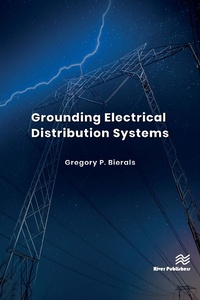
Grounding Electrical Distribution Systems
Description

The first concern and the most important reason for proper grounding techniques are to protect people from the effects of ground-faults and lightning. Creating an effective ground-fault current path to assure the operation of overcurrent protective devices on solidly grounded systems and to limit the voltage-rise on equipment frames during fault condition is of paramount importance.
The next concern is building and equipment protection. In this case, providing low impedance bonding and grounding paths between the system source, the electrical service and downstream equipment will serve to limit hazardous voltages due to faults and especially, lightning, A low resistance-to-ground system will serve to limit the voltage rise on systems and equipment.
But of equal importance is the length of the grounding electrode conductor. It is critical to limit the length of this conductor due to the increased impedance of lightning currents.
And finally, a properly installed grounding system will minimize the effects of electrical noise on sensitive circuits and stabilize the voltage-to-ground during normal operation.
This volume has extensive information on grounding electrical systems and equipment.
This information includes the following topics:
- System Grounding
- Equipment Grounding
- Bonding
- The Grounding Electrode System
- Solidly Grounded Systems
- Impedance Grounded Systems
- Grounding Separately-Derived Systems
- Calculating Ground-Fault Currents
- Conductor Insulation Withstand Ratings
- Conductor Fusing or Melting Currents
- Functional Grounding
- Lightning Protection
Readership: Anyone involved with designing a proper grounding system that will serve to protect people and equipment from the effects of ground faults and lightning. And to design a proper grounding system for special applications, including Solar and Wind Powered Systems.
More details
Other editions
Additional editions
Person
Gregory P. Bierals, President, Electrical Design Institute, LLC-has presented seminars worldwide on various topics including the National Electrical Code, Grounding Electrical Distribution Systems, Designing Overcurrent Protection, Electrical Equipment Maintenance, and Designing Electrical Systems for Hazardous (Classified) Locations. He has maintained an extensive client list during the past 45 years, and he has earned the reputation of being an extraordinary lecturer as a result of his organization of materials and knowledge of this subject.
Content
Introduction 1. Grounded and Ungrounded Systems System Grounding 2. A Practical Example 3. The Lightning Phenomenon 4. The Grounding Electrode System 5. Bonding 6. Ground-Fault Protection of Equipment 7. Overcurrent Protection Current Limitation Selective Coordination 8. Review of NEC 9. Special Considerations
