

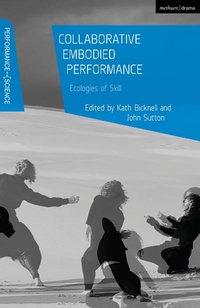
Collaborative Embodied Performance
Ecologies of Skill
1st Edition
Published on 27. January 2022
264 pages
978-1-350-19771-8 (ISBN)
Description

This book is about joint intelligence in action. It brings together scholarship in performance studies, cognitive science, sociology, literature, anthropology, psychology, architecture, philosophy and sport science to ask how tightly knit collaboration works. Contributors apply innovative methodologies to detailed case studies of martial arts, social interaction, freediving, site-specific artworks, Body Weather, human-AI music composition, Front-of-House at Shakespeare's Globe, acrobatics and failing at handstands. In each investigation, performance and theory are mutually revealing, informative and captivating.
Short chapters fall into thematic clusters exploring complex ecologies of skill, collaborative learning and the microstructure of embodied coordination, followed by commentaries from leading scholars in performance studies and cognitive science. Each contribution highlights unique features of the performance ecology, equipping performance makers, students and researchers with the theoretical, methodological and practical inspiration to delve deeper into their own embodied practices and critical thinking.
Short chapters fall into thematic clusters exploring complex ecologies of skill, collaborative learning and the microstructure of embodied coordination, followed by commentaries from leading scholars in performance studies and cognitive science. Each contribution highlights unique features of the performance ecology, equipping performance makers, students and researchers with the theoretical, methodological and practical inspiration to delve deeper into their own embodied practices and critical thinking.
More details
Series
Edition
1. Auflage
Language
English
Place of publication
London
United Kingdom
Publishing group
Bloomsbury Publishing PLC
Target group
Professional and scholarly
Illustrations
10 bw illus
ISBN-13
978-1-350-19771-8 (9781350197718)
Copyright in bibliographic data and cover images is held by Nielsen Book Services Limited or by the publishers or by their respective licensors: all rights reserved.
Schweitzer Classification
Other editions
Additional editions
Book
08/2023
Methuen Drama
€43.90
Shipment within 15-20 days
Persons
Kath Bicknell is a Research Fellow in the Discipline of Anthropology at Macquarie University, Australia.
John Sutton is Emeritus Professor in Philosophy and Cognitive Science at Macquarie University, Australia.
John Sutton is Emeritus Professor in Philosophy and Cognitive Science at Macquarie University, Australia.
Content
List of Figures
List of Contributors
Preface and Acknowledgements
Introduction: The Situated Intelligence of Collaborative Skills, John Sutton and Kath Bicknell (Macquarie University, Australia)
Part 1: Complex Ecologies of Embodied Collaboration
1. Dropping like Flies: Skilled Coordination and Front-of-House at Shakespeare's Globe, Evelyn B. Tribble (University of Connecticut, USA)
2. On the Edge of Undoing: Ecologies of Agency in Body Weather, Sarah Pini (University of Southern Denmark, Denmark)
3. A Conversation on Collaborative Embodied Engagement in Making Art and Architecture: Going Beyond the Divide Between 'Lower' and 'Higher' Cognition, Janno Martens (KU Leuven, Belgium), Ronald Rietveld (Rietveld Architecture-Art-Affordances, Netherlands) and Erik Rietveld (University of Twente and University of Amsterdam, Netherlands).
Commentary: Redirecting Our Telescope, Amy Cook (Stony Brook University, USA)
Part 2: Learning, Collaboration, and Socially Scaffolded Cognition
4. 'No Elephants Today!' Recurrent Experiences of Failure While Learning a Movement Practice, Kath Bicknell (Macquarie University, Australia) and Kristina Brümmer (Oldenburg University, Germany)
5. Not Breathing Together: The Collaborative Development of Expert Apnea, Greg Downey (Macquarie University, Australia)
6. Cultivating One's Skills Through the Experienced Other in Aikido, Susanne Ravn (University of Southern Denmark, Denmark)
7. Musical Agency and Collaboration in the Digital Age, Tom Roberts (University of Exeter, UK) and Joel Krueger (University of Exeter, UK).
Commentary: Embodied Learning Within Embodied Communities, Emily S. Cross (Macquarie University, Australia and University of Glasgow, UK)
Part 3: Symmetry and Synergy in Embodied Coordination
8. Symmetries of Social Performance-Environment Systems, Rachel W. Kallen (Macquarie University, Australia), Margaret Catherine Macpherson (University of Western Australia), Lynden K. Miles (University of Western Australia) and Michael J. Richardson (Macquarie University, Australia)
9. Sing's Trap: Staging Low-Commitment Strategizing in Muay Thai, Sara Kim Hjortborg (Macquarie University, Australia)
10. Intercorporeal Synergy Practices - Perspectives from Expert Interaction, Michael Kimmel (University of Vienna, Austria) and Stefan Schneider (Osnabrück University, Germany)
Commentary: Mixing Methods in the Study of Human Action, Anthony Chemero (University of Cincinnati, USA)
Afterwords
Commentary: Ecologies of Acting and Enacting, Catherine J. Stevens (Western Sydney University, Australia)
Commentary: Betwixt and Between, Ian Maxwell (The University of Sydney, Australia)
Index
List of Contributors
Preface and Acknowledgements
Introduction: The Situated Intelligence of Collaborative Skills, John Sutton and Kath Bicknell (Macquarie University, Australia)
Part 1: Complex Ecologies of Embodied Collaboration
1. Dropping like Flies: Skilled Coordination and Front-of-House at Shakespeare's Globe, Evelyn B. Tribble (University of Connecticut, USA)
2. On the Edge of Undoing: Ecologies of Agency in Body Weather, Sarah Pini (University of Southern Denmark, Denmark)
3. A Conversation on Collaborative Embodied Engagement in Making Art and Architecture: Going Beyond the Divide Between 'Lower' and 'Higher' Cognition, Janno Martens (KU Leuven, Belgium), Ronald Rietveld (Rietveld Architecture-Art-Affordances, Netherlands) and Erik Rietveld (University of Twente and University of Amsterdam, Netherlands).
Commentary: Redirecting Our Telescope, Amy Cook (Stony Brook University, USA)
Part 2: Learning, Collaboration, and Socially Scaffolded Cognition
4. 'No Elephants Today!' Recurrent Experiences of Failure While Learning a Movement Practice, Kath Bicknell (Macquarie University, Australia) and Kristina Brümmer (Oldenburg University, Germany)
5. Not Breathing Together: The Collaborative Development of Expert Apnea, Greg Downey (Macquarie University, Australia)
6. Cultivating One's Skills Through the Experienced Other in Aikido, Susanne Ravn (University of Southern Denmark, Denmark)
7. Musical Agency and Collaboration in the Digital Age, Tom Roberts (University of Exeter, UK) and Joel Krueger (University of Exeter, UK).
Commentary: Embodied Learning Within Embodied Communities, Emily S. Cross (Macquarie University, Australia and University of Glasgow, UK)
Part 3: Symmetry and Synergy in Embodied Coordination
8. Symmetries of Social Performance-Environment Systems, Rachel W. Kallen (Macquarie University, Australia), Margaret Catherine Macpherson (University of Western Australia), Lynden K. Miles (University of Western Australia) and Michael J. Richardson (Macquarie University, Australia)
9. Sing's Trap: Staging Low-Commitment Strategizing in Muay Thai, Sara Kim Hjortborg (Macquarie University, Australia)
10. Intercorporeal Synergy Practices - Perspectives from Expert Interaction, Michael Kimmel (University of Vienna, Austria) and Stefan Schneider (Osnabrück University, Germany)
Commentary: Mixing Methods in the Study of Human Action, Anthony Chemero (University of Cincinnati, USA)
Afterwords
Commentary: Ecologies of Acting and Enacting, Catherine J. Stevens (Western Sydney University, Australia)
Commentary: Betwixt and Between, Ian Maxwell (The University of Sydney, Australia)
Index
