

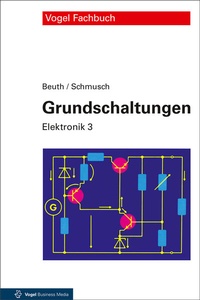
Grundschaltungen
Elektronik 3
18th Edition
Published in March 2018
514 pages
978-3-8343-6242-1 (ISBN)
Description

Dem Leser werden wichtige Kenntnisse der grundlegenden elektronischen Schaltungen vermittelt. Systematische Darstellung und Anschaulichkeit stehen im Vordergrund. Wirkungsweisen und Anwendungsmöglichkeiten von Schaltungen sind an praxisnahen Beispielen dargestellt. Obwohl in erster Linie als unterrichtsbegleitendes Lernmittel für Schulen und Fortbildungskurse konzipiert, ist ein Selbststudium ohne Weiteres möglich.
* Das Oszilloskop als vielseitiges Messgerät
* Gleichrichterschaltungen
* Verstärkerschaltungen
* Schaltungen zur Stabilisierung von Spannungen und Strömen
* Transistor-Schalterstufen
* Schaltungen mit Mehrschichtdioden
* Diac und Triac
* Kippschaltungen
* Generator- und Impulsformerschaltungen
* Grundlagen der Regelungstechnik
* Einführung in die Digitaltechnik
* Digitale Codes/digitale Zähl- und Speichertechnik
All prices
More details
Other editions
Additional editions
Book
04/2018
18th Edition
Vogel Communications Group GmbH & Co. KG
€34.80
Available immediately
Previous edition
Klaus Beuth | Wolfgang Schmusch
Grundschaltungen
E-Book
05/2013
17th Edition
Vogel Communications Group GmbH & Co. KG
€27.99
Available for download
Persons
Content
1 - Titel [Seite 3]
2 - Copyright / Impressum [Seite 4]
3 - Vorwort [Seite 5]
4 - Stichwortverzeichnis [Seite 505]
5 - Inhaltsverzeichnis [Seite 7]
5.1 - 1 Das Oszilloskop als vielseitiges Messgerät [Seite 15]
5.1.1 - 1.1 Kenndaten eines Oszilloskops [Seite 15]
5.1.2 - 1.2 Tastköpfe [Seite 19]
5.1.3 - 1.3 Ausführungsformen von Oszilloskopen [Seite 24]
5.1.4 - 1.4 Einsatzmöglichkeiten des Oszilloskops [Seite 32]
5.2 - 2 Gleichrichterschaltungen [Seite 41]
5.2.1 - 2.1 Allgemeines [Seite 41]
5.2.2 - 2.2 Netzgleichrichterschaltungen [Seite 41]
5.2.3 - 2.3 Siebschaltungen [Seite 54]
5.2.4 - 2.4 Dimensionierung von Netzgleichrichterschaltungen [Seite 60]
5.2.5 - 2.5 Spannungsverdopplerschaltungen [Seite 63]
5.2.6 - 2.6 Spannungsvervielfacher-Schaltungen [Seite 66]
5.2.7 - 2.7 Schaltnetzteile [Seite 68]
5.2.8 - 2.8 Kondensatornetzteile [Seite 74]
5.3 - 3 Verstärkerschaltungen [Seite 79]
5.3.1 - 3.1 Grundschaltung des Transistors [Seite 79]
5.3.2 - 3.2 Ersatzschaltung des Transistors bei Kleinsignalaussteuerung [Seite 80]
5.3.3 - 3.3 Emitterschaltung [Seite 85]
5.3.4 - 3.4 Kollektorschaltung (Emitterfolger) [Seite 111]
5.3.5 - 3.5 Basisschaltung [Seite 120]
5.3.6 - 3.6 Wechselspannungsverstärker [Seite 125]
5.3.7 - 3.7 Gleichspannungsverstärker [Seite 160]
5.3.8 - 3.8 Operationsverstärker [Seite 169]
5.4 - 4 Schaltungen zur Stabilisierungvon Spannungen und Strömen [Seite 225]
5.4.1 - 4.1 Einführung [Seite 225]
5.4.2 - 4.2 Konstantspannungsquelle [Seite 225]
5.4.3 - 4.3 Konstantstromquelle [Seite 228]
5.4.4 - 4.4 Stabilisierung [Seite 228]
5.5 - 5 Transistor-Schalterstufen [Seite 287]
5.5.1 - 5.1 Allgemeines [Seite 287]
5.5.2 - 5.2 Betriebsarten [Seite 288]
5.5.3 - 5.3 Schaltvorgänge und Schaltzeiten [Seite 292]
5.5.4 - 5.4 Schalten bei verschiedenartiger Belastung [Seite 297]
5.5.5 - 5.5 Belastbarkeit [Seite 303]
5.5.6 - 5.6 Mehrstufige Transistorschalter [Seite 312]
5.6 - 6 Schaltungen mit Mehrschichtdioden, Diac und Triac [Seite 315]
5.6.1 - 6.1 Vierschichtdiode als elektronischer Schalter [Seite 315]
5.6.2 - 6.2 Thyristor als elektronischer Schalter [Seite 316]
5.6.3 - 6.3 Diac und Triac als elektronische Schalter [Seite 327]
5.7 - 7 Kippschaltungen [Seite 329]
5.7.1 - 7.1 Bistabile Kippstufe [Seite 329]
5.7.2 - 7.2 Monostabile Kippstufe [Seite 340]
5.7.3 - 7.3 Astabile Kippschaltung (Multivibrator) [Seite 349]
5.7.4 - 7.4 Kippschaltungen mit Operationsverstärker [Seite 361]
5.8 - 8 Generatorschaltungen [Seite 363]
5.8.1 - 8.1 Prinzip einer Generatorschaltung [Seite 363]
5.8.2 - 8.2 Erzeugung rechteckförmiger Spannungen [Seite 366]
5.8.3 - 8.3 Erzeugung von sägezahnförmigen Spannungen [Seite 367]
5.8.4 - 8.4 Erzeugung sinusförmiger Spannungen [Seite 378]
5.9 - 9 Impulsformerschaltungen [Seite 391]
5.9.1 - 9.1 Zeitfunktionen von Strom und Spannung [Seite 391]
5.9.2 - 9.2 Begrenzerschaltungen [Seite 393]
5.9.3 - 9.3 Integrierglied [Seite 398]
5.9.4 - 9.4 Differenzierglied [Seite 401]
5.9.5 - 9.5 Schmitt-Trigger [Seite 406]
5.10 - 10 Grundlagen der Regelungstechnik [Seite 417]
5.10.1 - 10.1 Allgemeines [Seite 417]
5.10.2 - 10.2 Zeitverhalten der Regelkreisglieder [Seite 422]
5.10.3 - 10.3 Beispiele für einfache Regelkreise [Seite 432]
5.11 - 11 Einführung in die Digitaltechnik [Seite 437]
5.11.1 - 11.1 Grundbegriffe [Seite 437]
5.11.2 - 11.2 Logische Verknüpfungen [Seite 440]
5.11.3 - 11.3 Schaltungen logischer Glieder [Seite 449]
5.11.4 - 11.4 Pegelangaben «Low» und «High» [Seite 455]
5.11.5 - 11.5 Schaltungsanalyse [Seite 458]
5.11.6 - 11.6 Schaltalgebra [Seite 461]
5.11.7 - 11.7 Schaltungssynthese [Seite 466]
5.12 - 12 Digitale Codes und digitale Zähl- und Speichertechnik [Seite 469]
5.12.1 - 12.1 Darstellung von Ziffern und Zahlen [Seite 469]
5.12.2 - 12.2 Schaltungen zum Codieren und Decodieren [Seite 474]
5.12.3 - 12.3 Rechnen mit Dualzahlen [Seite 476]
5.12.4 - 12.4 Speichern und Verschieben digitaler Signale [Seite 482]
5.12.5 - 12.5 Zählerschaltungen [Seite 496]
2 - Copyright / Impressum [Seite 4]
3 - Vorwort [Seite 5]
4 - Stichwortverzeichnis [Seite 505]
5 - Inhaltsverzeichnis [Seite 7]
5.1 - 1 Das Oszilloskop als vielseitiges Messgerät [Seite 15]
5.1.1 - 1.1 Kenndaten eines Oszilloskops [Seite 15]
5.1.2 - 1.2 Tastköpfe [Seite 19]
5.1.3 - 1.3 Ausführungsformen von Oszilloskopen [Seite 24]
5.1.4 - 1.4 Einsatzmöglichkeiten des Oszilloskops [Seite 32]
5.2 - 2 Gleichrichterschaltungen [Seite 41]
5.2.1 - 2.1 Allgemeines [Seite 41]
5.2.2 - 2.2 Netzgleichrichterschaltungen [Seite 41]
5.2.3 - 2.3 Siebschaltungen [Seite 54]
5.2.4 - 2.4 Dimensionierung von Netzgleichrichterschaltungen [Seite 60]
5.2.5 - 2.5 Spannungsverdopplerschaltungen [Seite 63]
5.2.6 - 2.6 Spannungsvervielfacher-Schaltungen [Seite 66]
5.2.7 - 2.7 Schaltnetzteile [Seite 68]
5.2.8 - 2.8 Kondensatornetzteile [Seite 74]
5.3 - 3 Verstärkerschaltungen [Seite 79]
5.3.1 - 3.1 Grundschaltung des Transistors [Seite 79]
5.3.2 - 3.2 Ersatzschaltung des Transistors bei Kleinsignalaussteuerung [Seite 80]
5.3.3 - 3.3 Emitterschaltung [Seite 85]
5.3.4 - 3.4 Kollektorschaltung (Emitterfolger) [Seite 111]
5.3.5 - 3.5 Basisschaltung [Seite 120]
5.3.6 - 3.6 Wechselspannungsverstärker [Seite 125]
5.3.7 - 3.7 Gleichspannungsverstärker [Seite 160]
5.3.8 - 3.8 Operationsverstärker [Seite 169]
5.4 - 4 Schaltungen zur Stabilisierungvon Spannungen und Strömen [Seite 225]
5.4.1 - 4.1 Einführung [Seite 225]
5.4.2 - 4.2 Konstantspannungsquelle [Seite 225]
5.4.3 - 4.3 Konstantstromquelle [Seite 228]
5.4.4 - 4.4 Stabilisierung [Seite 228]
5.5 - 5 Transistor-Schalterstufen [Seite 287]
5.5.1 - 5.1 Allgemeines [Seite 287]
5.5.2 - 5.2 Betriebsarten [Seite 288]
5.5.3 - 5.3 Schaltvorgänge und Schaltzeiten [Seite 292]
5.5.4 - 5.4 Schalten bei verschiedenartiger Belastung [Seite 297]
5.5.5 - 5.5 Belastbarkeit [Seite 303]
5.5.6 - 5.6 Mehrstufige Transistorschalter [Seite 312]
5.6 - 6 Schaltungen mit Mehrschichtdioden, Diac und Triac [Seite 315]
5.6.1 - 6.1 Vierschichtdiode als elektronischer Schalter [Seite 315]
5.6.2 - 6.2 Thyristor als elektronischer Schalter [Seite 316]
5.6.3 - 6.3 Diac und Triac als elektronische Schalter [Seite 327]
5.7 - 7 Kippschaltungen [Seite 329]
5.7.1 - 7.1 Bistabile Kippstufe [Seite 329]
5.7.2 - 7.2 Monostabile Kippstufe [Seite 340]
5.7.3 - 7.3 Astabile Kippschaltung (Multivibrator) [Seite 349]
5.7.4 - 7.4 Kippschaltungen mit Operationsverstärker [Seite 361]
5.8 - 8 Generatorschaltungen [Seite 363]
5.8.1 - 8.1 Prinzip einer Generatorschaltung [Seite 363]
5.8.2 - 8.2 Erzeugung rechteckförmiger Spannungen [Seite 366]
5.8.3 - 8.3 Erzeugung von sägezahnförmigen Spannungen [Seite 367]
5.8.4 - 8.4 Erzeugung sinusförmiger Spannungen [Seite 378]
5.9 - 9 Impulsformerschaltungen [Seite 391]
5.9.1 - 9.1 Zeitfunktionen von Strom und Spannung [Seite 391]
5.9.2 - 9.2 Begrenzerschaltungen [Seite 393]
5.9.3 - 9.3 Integrierglied [Seite 398]
5.9.4 - 9.4 Differenzierglied [Seite 401]
5.9.5 - 9.5 Schmitt-Trigger [Seite 406]
5.10 - 10 Grundlagen der Regelungstechnik [Seite 417]
5.10.1 - 10.1 Allgemeines [Seite 417]
5.10.2 - 10.2 Zeitverhalten der Regelkreisglieder [Seite 422]
5.10.3 - 10.3 Beispiele für einfache Regelkreise [Seite 432]
5.11 - 11 Einführung in die Digitaltechnik [Seite 437]
5.11.1 - 11.1 Grundbegriffe [Seite 437]
5.11.2 - 11.2 Logische Verknüpfungen [Seite 440]
5.11.3 - 11.3 Schaltungen logischer Glieder [Seite 449]
5.11.4 - 11.4 Pegelangaben «Low» und «High» [Seite 455]
5.11.5 - 11.5 Schaltungsanalyse [Seite 458]
5.11.6 - 11.6 Schaltalgebra [Seite 461]
5.11.7 - 11.7 Schaltungssynthese [Seite 466]
5.12 - 12 Digitale Codes und digitale Zähl- und Speichertechnik [Seite 469]
5.12.1 - 12.1 Darstellung von Ziffern und Zahlen [Seite 469]
5.12.2 - 12.2 Schaltungen zum Codieren und Decodieren [Seite 474]
5.12.3 - 12.3 Rechnen mit Dualzahlen [Seite 476]
5.12.4 - 12.4 Speichern und Verschieben digitaler Signale [Seite 482]
5.12.5 - 12.5 Zählerschaltungen [Seite 496]
