

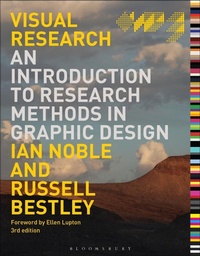
Visual Research
An Introduction to Research Methods in Graphic Design
3rd Edition
Published on 11. February 2016
224 pages
978-1-4742-3291-3 (ISBN)
Description

Packed with more than 200 colour illustrations, Visual Research explores a range of research methods that can be used by graphic designers and visual communicators in the development of clear and purposeful design solutions. The book introduces key terms and theories that underlie design research; examining the importance of visual grammar and design literacy, audience, communication theory and semiotics.
Each chapter features case studies that demonstrate how the use of research methods can form the basis of effective visual communication and design problem solving, eschewing end product analysis for a discussion of the way research feeds into the design process.
The third edition features new case studies in each chapter, updated design exercises and a new chapter on design-led tools and information design methods, in relation to both print and on-screen design.
Each chapter features case studies that demonstrate how the use of research methods can form the basis of effective visual communication and design problem solving, eschewing end product analysis for a discussion of the way research feeds into the design process.
The third edition features new case studies in each chapter, updated design exercises and a new chapter on design-led tools and information design methods, in relation to both print and on-screen design.
Reviews / Votes
Noble and Bestley have produced an amazing book: broad in scope, thorough in its explorations of the many dimensions of visual research, well organized and clear in its exposition, it is the best reference for anybody wanting to get a clear panorama of what visual research can mean. * Jorge Frascara, author and educator, USA * This book demystifies a variety of complex graphic design methodologies, making them understandable and compelling. An invaluable companion for any graduate level graphic design student, or instructor, it offers in-depth intelligent models, examples, background reading and explanations of strategies and approaches for employing visual research in the process of making graphic design. Definitive proof that graphic design is not dumb! * Michael Worthington, California Institute of the Arts, USA. Author of Two Lines Align * Research through, for, by, on and with design. In an age where design seems to be too important to be left only to designers, such a contemporary, deep, vivid and accessible speculation on visual research is like honey to bears. * Omar Vulpinari, Director of Expanded Media Fabrica, Vice President Icograda * This book is an excellent and comprehensive resource for understanding the power of design research and methodologies. The text clearly frames the creative process in the context of relevant theoretical discourse; case studies challenge readers to reconceive of design making, and exercises provide connection between ideas and practice. * Aaris Sherin, St. John's University, New York, USA * Visual Research is a stimulating introduction to the theories, processes, systems and artefacts that comprise our symbolic and material landscapes. Both explanatory and celebratory, Visual Research offers its readers definitions, examples, sources and suggested assignments to inspire alternative paths to a critically reflective and socially engaged practice. This second edition furthers and improves upon the work of the first edition, a book that I have used as a text for fourth-year graphic design students at the University of Minnesota, USA. It's also appropriate for students pursuing studio-oriented graduate degrees; their own visual experiments will have fresh benchmarks in the conceptual designs included in Visual Research. * Steven McCarthy, University of Minnesota, Minneapolis-St Paul, USA * Visual Research is an indispensable sourcebook with a focus on creative applications for design theory. It's hugely useful for students looking to extend their practical work and really inspirational. * Jonathan Hitchen, Manchester School of Art, UK * The word 'research' sounds to many like an 'academic' exercise but this book is firmly grounded in graphic design practice. Visual Research gives graphic design students and working designers alike a great introduction to concepts and methods that will make their work smarter, more interesting, and more useful. * Gunnar Swanson, graphic designer, educator, and design writer * Visual Research is one of the most comprehensive, engaging and useful books of its kind. The text guides the reader through the creative process in a relevant and accessible way that clearly relates to the way design professionals and design students work. Throughout it highlights inspirational projects to illustrate the concepts covered, and on this level works as an engrossing archive. * Neil Leonard, The Arts University College at Bournemouth, UK. Author of Basics Graphic Design: Research Methods * A comprehensive, thorough and highly accessible text, which clearly outlines the theories, methodologies and processes involved in Graphic Design visual research. Explained and contextualised through appropriate, contemporary case studies and activities it stimulates an informed and critically reflective approach to practice. * Simon Harrison, Leeds College of Art, UK * It is an invaluable resource to students, which demystifies the design research process. * Andy Ellison, Nottingham Trent University, UK * The book provides a detailed in-sight in to the background and theories of visual research with highly focussed case-studies (including Heraldry and architecture) and examples to support the students learning and critical developed. * Mike Martin, Chichester College, UK *More details
Series
Edition
3rd edition
Language
English
Place of publication
Lausanne
Switzerland
Publishing group
Bloomsbury Publishing PLC
Target group
College/higher education
Illustrations
200 colour illus
File size
38,16 MB
ISBN-13
978-1-4742-3291-3 (9781474232913)
Copyright in bibliographic data and cover images is held by Nielsen Book Services Limited or by the publishers or by their respective licensors: all rights reserved.
Schweitzer Classification
Other editions
Additional editions
Book
06/2018
Bloomsbury Visual Arts
€63.32
Article exhausted; check different version
Persons
Dr. Russell Bestley is Principal Lecturer in Graphic Design at London College of Communication, UK.
Ian Noble was a leading design researcher, educator, author and designer. He was Acting Academic Director of Communication Design at Kingston University, UK.
Ian Noble was a leading design researcher, educator, author and designer. He was Acting Academic Director of Communication Design at Kingston University, UK.
Content
Contents
Foreword
Introduction
1. Why and How?
Research Methodologies
Terms of Reference
A Manifesto for Higher Learning in Design
Key Concepts: Critical Thinking and Critical Reflection
Case Study 01: A Transferable Research Method
2. Design Literacy
Visual Literacy in Design Practice
Invisible Systems
Reading a Text
Key Concepts: The Designer as Author
Case Study 02: Visual Grammar
Exercises: Design Literacy
3. Analysis and Proposition
Research and Design
Defining the Project
Safety in Numbers
Key Concepts: Connotation and Denotation
Case Study 03: Graphic Design and Non Linear Research Methods
Exercises: Design Analysis
4. Visual Research Analytical Tools
Looking Closer
Qualitative and Quantitative Analysis
Make More Mistakes
Key Concepts: Rhetoric
Case Study 04: Emotionally Vague
Key Concepts: Structuralism and Semiotics
Exercises: Design Analysis
5. Theory in Practice
Engaging with Visual Research
Design and Politics
Key Concepts: Modernism and Postmodernism
Case Study 05: Biography - The Third Truth
Case Study 06: Between the Lines
Key Concepts: Post-structuralism
Exercises: The Practice of Theory
6. Audience and Message
Receiving End
Audience-centred Graphic Design
Case Study 07: Mapping Meaning
Case Study 08: Tirez Magazine
Key Concepts: Fitness Landscapes
Exercises: Are You Receiving Me?
7. Process and Materials
Practical Considerations
Form Follows Technology
Case Study 09: Public Relations
Case Study 10: Censorship
Key Concepts: Affordance
Exercises: Text Messages
8. Synthesis
The Process of Synthesis
Visualizing Research as Subject
Case Study 11: Hauntology
Case Study 12: Type and Language
Key Concepts: Rubbish Theory
Exercises: Practical Methods
9. Appendices
Acknowledgements
Further Reading
Index
Picture Credits
Foreword
Introduction
1. Why and How?
Research Methodologies
Terms of Reference
A Manifesto for Higher Learning in Design
Key Concepts: Critical Thinking and Critical Reflection
Case Study 01: A Transferable Research Method
2. Design Literacy
Visual Literacy in Design Practice
Invisible Systems
Reading a Text
Key Concepts: The Designer as Author
Case Study 02: Visual Grammar
Exercises: Design Literacy
3. Analysis and Proposition
Research and Design
Defining the Project
Safety in Numbers
Key Concepts: Connotation and Denotation
Case Study 03: Graphic Design and Non Linear Research Methods
Exercises: Design Analysis
4. Visual Research Analytical Tools
Looking Closer
Qualitative and Quantitative Analysis
Make More Mistakes
Key Concepts: Rhetoric
Case Study 04: Emotionally Vague
Key Concepts: Structuralism and Semiotics
Exercises: Design Analysis
5. Theory in Practice
Engaging with Visual Research
Design and Politics
Key Concepts: Modernism and Postmodernism
Case Study 05: Biography - The Third Truth
Case Study 06: Between the Lines
Key Concepts: Post-structuralism
Exercises: The Practice of Theory
6. Audience and Message
Receiving End
Audience-centred Graphic Design
Case Study 07: Mapping Meaning
Case Study 08: Tirez Magazine
Key Concepts: Fitness Landscapes
Exercises: Are You Receiving Me?
7. Process and Materials
Practical Considerations
Form Follows Technology
Case Study 09: Public Relations
Case Study 10: Censorship
Key Concepts: Affordance
Exercises: Text Messages
8. Synthesis
The Process of Synthesis
Visualizing Research as Subject
Case Study 11: Hauntology
Case Study 12: Type and Language
Key Concepts: Rubbish Theory
Exercises: Practical Methods
9. Appendices
Acknowledgements
Further Reading
Index
Picture Credits
