

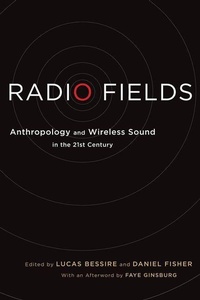
Radio Fields
Anthropology and Wireless Sound in the 21st Century
1st Edition
Published on 19. November 2012
277 pages
978-0-8147-6993-5 (ISBN)
Description

Radio is the most widespread electronic medium in the world today. As a form of technology that is both durable and relatively cheap, radio remains central to the everyday lives of billions of people around the globe. It is used as a call for prayer in Argentina and Appalachia, to organize political protest in Mexico and Libya, and for wartime communication in Iraq and Afghanistan. In urban centers it is played constantly in shopping malls, waiting rooms, and classrooms. Yet despite its omnipresence, it remains the media form least studied by anthropologists.
Radio Fields employs ethnographic methods to reveal the diverse domains in which radio is imagined, deployed, and understood. Drawing on research from six continents, the volume demonstrates how the particular capacities and practices of radio provide singular insight into diverse social worlds, ranging from aboriginal Australia to urban Zambia. Together, the contributors address how radio creates distinct possibilities for rethinking such fundamental concepts as culture, communication, community, and collective agency.
Radio Fields employs ethnographic methods to reveal the diverse domains in which radio is imagined, deployed, and understood. Drawing on research from six continents, the volume demonstrates how the particular capacities and practices of radio provide singular insight into diverse social worlds, ranging from aboriginal Australia to urban Zambia. Together, the contributors address how radio creates distinct possibilities for rethinking such fundamental concepts as culture, communication, community, and collective agency.
Reviews / Votes
"Radio Fields crackles and buzzes with the social life of radio and the noise of an anthropology of close listening. I can't imagine a more well-theorized and deeply grounded entree to the sensory mediation politics of radiophony in global public culture." - Steven Feld,Distinguished Professor of Anthropology and Music, University of New Mexico "Its potential for creating renewed interest and research on radio's relationship with culture and social change has been carefully cultivated, and that may ultimately be a much more significant achievement." - Peter Hart-Brinson (Mobilization) ""In a series of striking case studies, Radio Fields reveals the vibrancy and diversity of wireless technologies across an enormous geographic range. From radio that constitutes the nation to the pirate, religious, indigenous and & free radio that provide alternatives to it, the essays draw out the breadth of contemporary radio practices. Mixing together technological analyses of voice, liveness, and immediacy with their political effects, the volume shows how radio is felt as well as heard, and brings out the entanglements of audition, religion, technology, and politics that makes up the social life of radio around the world." - Brian Larkin,Barnard College, Columbia University "Radiofields has been recognized as a stimulating subject of research by a handful of interdisciplinary and regionally focused volumes, but RadioFields represents a concentrated effort to insert an anthropological voice into their discussions...Radio Fields is poised to inspire further research." (Journal of the Royal Anthropological Institute)
More details
Language
English
Place of publication
New York
United States
Target group
Professional and scholarly
File size
2,16 MB
ISBN-13
978-0-8147-6993-5 (9780814769935)
Copyright in bibliographic data and cover images is held by Nielsen Book Services Limited or by the publishers or by their respective licensors: all rights reserved.
Schweitzer Classification
Other editions
Additional editions
Book
11/2012
New York University Press
€34.00
Shipment within 15-20 days
Book
11/2012
New York University Press
€103.50
Shipment within 15-20 days
Persons
Faye Ginsburg (Afterword by)
Faye Ginsburg is Kriser Professor of Anthropology at New York University. Ginsburg is cofounder of the NYU Center for Disability Studies and author of Contested Lives: The Abortion Debate in an American Community and coauthor of Disability Worlds.
Lucas Bessire (Editor)
Lucas Bessire is Assistant Professor of Anthropology at the University of Oklahoma.
Daniel Fisher (Editor)
Daniel Fisher is a lecturer in Anthropology at Macquarie University.
Faye Ginsburg is Kriser Professor of Anthropology at New York University. Ginsburg is cofounder of the NYU Center for Disability Studies and author of Contested Lives: The Abortion Debate in an American Community and coauthor of Disability Worlds.
Lucas Bessire (Editor)
Lucas Bessire is Assistant Professor of Anthropology at the University of Oklahoma.
Daniel Fisher (Editor)
Daniel Fisher is a lecturer in Anthropology at Macquarie University.
Content
- Cover
- Contents
- Acknowledgments
- 1 Introduction: Radio Fields
- 2 Aurality under Democracy: Cultural History of FM Radio and Ideologies of Voice in Nepal
- 3 From the Studio to the Street: Producing the Voice in Indigenous Australia
- 4 Editing the Nation: How Radio Engineers Encode Israeli National Imaginaries
- 5 Reconsidering Muslim Authority: Female "Preachers" and the Ambiguities of Radio-Mediated Sermonizing in Mali
- 6 Community and Indigenous Radio in Oaxaca: Testimony and Participatory Democracy
- 7 The Cultural Politics of Radio: Two Views from the Warlpiri Public Sphere
- 8 Frequencies of Transgression: Notes on the Politics of Excess and Constraint among Mexican Free Radios
- 9 "Foreign Voices": Multicultural Broadcasting and Immigrant Representation at Germany's Radio MultiKulti
- 10 "We Go Above": Media Metaphysics and Making Moral Life on Ayoreo Two-Way Radio
- 11 Appalachian Radio Prayers: The Prosthesis of the Holy Ghost and the Drive to Tactility
- 12 Radio in the (i)Home: Changing Experiences of Domestic Audio Technologies in Britain
- 13 "A House of Wires upon Wires": Sensuous and Linguistic Entanglements of Evidence and Epistemologies in the Study of Radio Culture
- Radio Fields: An Afterword
- About the Contributors
- Index
- A
- B
- C
- D
- E
- F
- G
- H
- I
- J
- K
- L
- M
- N
- O
- P
- Q
- R
- S
- T
- U
- V
- W
- Y
- Z
