


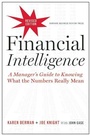
Financial Intelligence, Revised Edition
Description

The book Inc. magazine calls one of "the best, clearest guides to the numbers" on the market.
Inc. magazine calls it one of "the best, clearest guides to the numbers" on the market. Readers agree, saying it's exactly "what I need to know" and calling it a "must-read" for decision makers without expertise in finance.
Since its release in 2006, Financial Intelligence has become a favorite among managers who need a guided tour through the numbers--helping them to understand not only what the numbers really mean, but also why they matter.
This new, completely updated edition brings the numbers up to date and continues to teach the basics of finance to managers who need to use financial data to drive their business. It also addresses issues that have become even more important in recent years--including questions around the financial crisis and those around broader financial and accounting literacy.
Accessible, jargon-free, and filled with entertaining stories of real companies, Financial Intelligence gives nonfinancial managers the confidence to understand the nuance beyond the numbers--to help bring everyday work to a new level.
All prices
More details
Other editions
Additional editions
Persons
Karen Berman and Joseph Knight are the founders of the Los Angeles-based Business Literacy Institute. They train managers at organizations such as American Express, P&G, Pacific Life, GM and Tyco International. They have been interviewed in a wide range of print media including BusinessWeek, USA Today and the Los Angeles Times.
Content
- Intro
- Contents
- Preface
- Part 1: The Art of Finance (and Why It Matters)
- Chapter 1: You Can't Always Trust the Numbers
- Chapter 2: Spotting Assumptions, Estimates, and Biases
- Chapter 3: Why Increase Your Financial Intelligence?
- Chapter 4: The Rules Accountants Follow--and Why You Don't Always Have To
- Part 1 Toolbox
- Part 2: The (Many) Peculiarities of the Income Statement
- Chapter 5: Profit Is an Estimate
- Chapter 6: Cracking the Code of the Income Statement
- Chapter 7: Revenue
- Chapter 8: Costs and Expenses
- Chapter 9: The Many Forms of Profit
- Part 2 Toolbox
- Part 3: The Balance Sheet Reveals the Most
- Chapter 10: Understanding Balance Sheet Basics
- Chapter 11: Assets
- Chapter 12: On the Other Side
- Chapter 13: Why the Balance Sheet Balances
- Chapter 14: The Income Statement Affects the Balance Sheet
- Part 3 Toolbox
- Part 4: Cash Is King
- Chapter 15: Cash Is a Reality Check
- Chapter 16: Profit Does Not Equal Cash
- Chapter 17: The Language of Cash Flow
- Chapter 18: How Cash Connects with Everything Else
- Chapter 19: Why Cash Matters
- Part 4 Toolbox
- Part 5: Ratios: Learning What the Numbers Are Really Telling You
- Chapter 20: The Power of Ratios
- Chapter 21: Profitability Ratios
- Chapter 22: Leverage Ratios
- Chapter 23: Liquidity Ratios
- Chapter 24: Efficiency Ratios
- Chapter 25: The Investor's Perspective
- Part 5 Toolbox
- Part 6: How to Calculate (and Really Understand) Return on Investment
- Chapter 26: The Building Blocks of ROI
- Chapter 27: Figuring ROI
- Part 6 Toolbox
- Part 7: Applied Financial Intelligence: Working Capital Management
- Chapter 28: The Magic of Managing the Balance Sheet
- Chapter 29: Your Balance Sheet Levers
- Chapter 30: Homing In on Cash Conversion
- Part 7 Toolbox
- Part 8: Creating a Financially Intelligent Company
- Chapter 31: Financial Literacy and Corporate Performance
- Chapter 32: Financial Literacy Strategies
- Chapter 33: Financial Transparency: Our Ultimate Goal
- Part 8 Toolbox
- Appendix: Sample Financials
- Notes
- Acknowledgments
- Index
- About the Authors
