

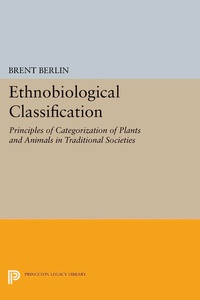
Ethnobiological Classification
Principles of Categorization of Plants and Animals in Traditional Societies
1st Edition
Published on 14. July 2014
354 pages
978-1-4008-6259-7 (ISBN)
Description

A founder of and leading thinker in the field of modern ethnobiology looks at the widespread regularities in the classification and naming of plants and animals among peoples of traditional, nonliterate societies--regularities that persist across local environments, cultures, societies, and languages. Brent Berlin maintains that these patterns can best be explained by the similarity of human beings' largely unconscious appreciation of the natural affinities among groupings of plants and animals: people recognize and name a grouping of organisms quite independently of its actual or potential usefulness or symbolic significance in human society. Berlin's claims challenge those anthropologists who see reality as a "set of culturally constructed, often unique and idiosyncratic images, little constrained by the parameters of an outside world." Part One of this wide-ranging work focuses primarily on the structure of ethnobiological classification inferred from an analysis of descriptions of individual systems. Part Two focuses on the underlying processes involved in the functioning and evolution of ethnobiological systems in general.
Originally published in 1992.
The Princeton Legacy Library uses the latest print-on-demand technology to again make available previously out-of-print books from the distinguished backlist of Princeton University Press. These editions preserve the original texts of these important books while presenting them in durable paperback and hardcover editions. The goal of the Princeton Legacy Library is to vastly increase access to the rich scholarly heritage found in the thousands of books published by Princeton University Press since its founding in 1905.
Originally published in 1992.
The Princeton Legacy Library uses the latest print-on-demand technology to again make available previously out-of-print books from the distinguished backlist of Princeton University Press. These editions preserve the original texts of these important books while presenting them in durable paperback and hardcover editions. The goal of the Princeton Legacy Library is to vastly increase access to the rich scholarly heritage found in the thousands of books published by Princeton University Press since its founding in 1905.
More details
Other editions
Additional editions
Brent Berlin
Ethnobiological Classification
Principles of Categorization of Plants and Animals in Traditional Societies
Book
04/2016
Princeton University Press
€121.90
Article not available at the moment
Brent Berlin
Ethnobiological Classification
Principles of Categorization of Plants and Animals in Traditional Societies
Book
07/2014
Princeton University Press
€46.50
Article not available at the moment

Brent Berlin
Ethnobiological Classification
Principles of Categorization of Plants and Animals in Traditional Societies
Book
07/1992
Princeton University Press
€92.85
Article exhausted; check different version
Person
Brent Berlin
Content
Pt. 1 Plan
Ch. 1 On the Making of a Comparative Ethnobiology 3
1.1 Intellectualist and Utilitarian Approaches in Ethnobiology 3
1.2 Why Is It Notable That Nonliterates "Know So Much" about Nature? 5
1.3 The Bases of Ethnobiological Classification 8
1.4 Relativist and Comparativist Approaches in Ethnobiology 11
1.5 General Principles of Ethnobiological Classification, 1966-1976 13
1.6 Band-aids or Tune-up? General Principles, 1989 20
1.7 Summary of General Principles 31
1.8 The Changing Conventions of Data Presentation as a Reflection of Changing Theory in Ethnobiological Classification 35
Ch. 2 The Primacy of Generic Taxa in Ethnobiological Classification 52
2.1 The Selected Subset of Plants and Animals 53
2.2 The Concept of the Genus: Historical Antecedents 54
2.3 Evidence for the Perceptual Salience of Generic Taxa 60
2.4 Generic Taxa, Ethnobiological Rank, and Analytic Terminology 64
2.5 On Predicting the Subset of Generic Taxa 78
2.6 The Internal Structure of Folk Generic Taxa 90
2.7 Nature's Fortune 500+: Empirical Generalizations on the Upper Numbers of Generic Taxa in Systems of Ethnobiological Classification 96
Ch. 3 The Nature of Specific Taxa 102
3.1 Distinctive Biological Properties of Specific Taxa 103
3.2 The Internal Structure of Specific Contrast Sets 108
3.3 Residual Categories? 114
3.4 General Nomenclatural Properties of Specific Taxa 116
3.5 Cultural Factors Contributing to the Recognition of Specific Taxa 118
3.6 Patterns in the Distribution and Size of Specific Contrast Sets 122
Ch. 4 Natural and Not So Natural Higher-Order Categories 134
4.1 Higher-Order Categories in Ethnobiological Classification 138
4.2 Taxa of Intermediate Rank 139
4.3 Taxa of Life-Form Rank 161
4.4 The Nature of Unaffiliated Generic Taxa and the Life-Form Debate 171
4.5 Convert Groupings of Unaffiliated Generics = Covert Life Forms? 176
4.6 The Bases of Life-Form Taxa: Utilitarian vs. Perceptual Motivations 181
4.7 The Plant and Animal Kingdoms 190
Pt. 2 Process
Ch. 5 Patterned Variation in Ethnobiological Knowledge 199
5.1 Werner's Gray-haired Omniscient Native Speaker-Hearer 200
5.2 The Basic Data of Ethnobiological Description and the Search for Patterns 201
5.3 Collecting the Basic Data from Which Patterns Might Emerge 202
5.4 Some Significant Types of Variation in Ethnobiological Knowledge 203
5.5 Discovering the Patterns Underlying the Biological Ranges of Folk Taxa 206
5.6 Some Factors Contributing to Cognitive Variation 223
Ch. 6 Manchung and Bikua: The Nonarbitrariness of Ethnobiological Nomenclature 232
6.1 Early Experiments on Sound Symbolism 234
6.2 Ethnobiological Sound Symbolism in Huambisa: Birds and Fish 235
6.3 Universal Sound Symbolism or Simple Onomatopoeia? 240
6.4 Comparison with Other Ethnoornithological Vocabularies 245
6.5 Fish, Again 247
6.6 Closing Observations on Huambisa Sound Symbolism 249
6.7 "-r-" is for FROG 250
6.8 Lexical Reflections of Cultural Significance 255
Ch. 7 The Substance and Evolution of Ethnobiological Categories 260
7.1 Toward a Substantive Inventory of Ethnobiological Categories 261
7.2 The Evolution of Ethnobiological Categories: Typological Speculations 272
7.3 Epilogue 290
References 291
Author Index 309
Index of Scientific Names 313
Index of Ethnobiological Names 322
Subject Index 331
Ch. 1 On the Making of a Comparative Ethnobiology 3
1.1 Intellectualist and Utilitarian Approaches in Ethnobiology 3
1.2 Why Is It Notable That Nonliterates "Know So Much" about Nature? 5
1.3 The Bases of Ethnobiological Classification 8
1.4 Relativist and Comparativist Approaches in Ethnobiology 11
1.5 General Principles of Ethnobiological Classification, 1966-1976 13
1.6 Band-aids or Tune-up? General Principles, 1989 20
1.7 Summary of General Principles 31
1.8 The Changing Conventions of Data Presentation as a Reflection of Changing Theory in Ethnobiological Classification 35
Ch. 2 The Primacy of Generic Taxa in Ethnobiological Classification 52
2.1 The Selected Subset of Plants and Animals 53
2.2 The Concept of the Genus: Historical Antecedents 54
2.3 Evidence for the Perceptual Salience of Generic Taxa 60
2.4 Generic Taxa, Ethnobiological Rank, and Analytic Terminology 64
2.5 On Predicting the Subset of Generic Taxa 78
2.6 The Internal Structure of Folk Generic Taxa 90
2.7 Nature's Fortune 500+: Empirical Generalizations on the Upper Numbers of Generic Taxa in Systems of Ethnobiological Classification 96
Ch. 3 The Nature of Specific Taxa 102
3.1 Distinctive Biological Properties of Specific Taxa 103
3.2 The Internal Structure of Specific Contrast Sets 108
3.3 Residual Categories? 114
3.4 General Nomenclatural Properties of Specific Taxa 116
3.5 Cultural Factors Contributing to the Recognition of Specific Taxa 118
3.6 Patterns in the Distribution and Size of Specific Contrast Sets 122
Ch. 4 Natural and Not So Natural Higher-Order Categories 134
4.1 Higher-Order Categories in Ethnobiological Classification 138
4.2 Taxa of Intermediate Rank 139
4.3 Taxa of Life-Form Rank 161
4.4 The Nature of Unaffiliated Generic Taxa and the Life-Form Debate 171
4.5 Convert Groupings of Unaffiliated Generics = Covert Life Forms? 176
4.6 The Bases of Life-Form Taxa: Utilitarian vs. Perceptual Motivations 181
4.7 The Plant and Animal Kingdoms 190
Pt. 2 Process
Ch. 5 Patterned Variation in Ethnobiological Knowledge 199
5.1 Werner's Gray-haired Omniscient Native Speaker-Hearer 200
5.2 The Basic Data of Ethnobiological Description and the Search for Patterns 201
5.3 Collecting the Basic Data from Which Patterns Might Emerge 202
5.4 Some Significant Types of Variation in Ethnobiological Knowledge 203
5.5 Discovering the Patterns Underlying the Biological Ranges of Folk Taxa 206
5.6 Some Factors Contributing to Cognitive Variation 223
Ch. 6 Manchung and Bikua: The Nonarbitrariness of Ethnobiological Nomenclature 232
6.1 Early Experiments on Sound Symbolism 234
6.2 Ethnobiological Sound Symbolism in Huambisa: Birds and Fish 235
6.3 Universal Sound Symbolism or Simple Onomatopoeia? 240
6.4 Comparison with Other Ethnoornithological Vocabularies 245
6.5 Fish, Again 247
6.6 Closing Observations on Huambisa Sound Symbolism 249
6.7 "-r-" is for FROG 250
6.8 Lexical Reflections of Cultural Significance 255
Ch. 7 The Substance and Evolution of Ethnobiological Categories 260
7.1 Toward a Substantive Inventory of Ethnobiological Categories 261
7.2 The Evolution of Ethnobiological Categories: Typological Speculations 272
7.3 Epilogue 290
References 291
Author Index 309
Index of Scientific Names 313
Index of Ethnobiological Names 322
Subject Index 331
