

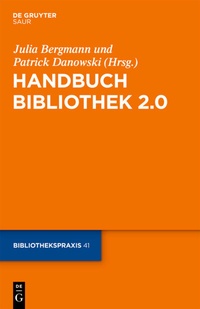
Handbuch Bibliothek 2.0
1st Edition
Published on 27. September 2010
XII, 392 pages
978-3-11-023210-3 (ISBN)
Description

Unter Bibliothek 2.0 verstehen die Herausgeber eine Einrichtung, die die Prinzipien des Web 2.0 wie Offenheit, Wiederverwendung (ReUse), Kollaboration und Interaktion in der Gesamtorganisation anwendet. Bibliotheken erweitern Serviceangebote und Arbeitsabläufe um die Möglichkeiten der Web 2.0-Technologien. Dies verändert Berufsbild und Selbstverständnis der Bibliothekare. Der Sammelband bietet einen kompletten Überblick zum Thema Bibliothek 2.0 und den aktuellen Stand der Entwicklungen aus technologischer, soziologischer, informationstheoretischer sowie praxisorientierter Sicht.
Reviews / Votes
"Die Lektüre der Beiträge ist in jedem Fall anregend."HjT in: ABDOS-Mitteilungen 2/2010More details
Other editions
Additional editions
Julia Bergmann | Patrick Danowski
Handbuch Bibliothek 2.0
Book
09/2010
1st Edition
De Gruyter Saur
€134.95
Shipment within 7-9 days
Persons
Julia Bergmann, Freiberufliche Trainerin für Informationskompetenz, Bremen und Patrick Danowski, Institute of Science and Technology Austria, Klosterneuburg, Österreich
Content
1 - Inhalt [Seite 6]
2 - Willkommen beim Handbuch Bibliothek 2.0! [Seite 14]
3 - Welcome to the Library 2.0 Handbook! [Seite 16]
4 - Ist Bibliothek 2.0 überhaupt noch relevant? - Eine Einleitung [Seite 18]
5 - Openness: Die Bibliothek als demokratische und demokratiefördernde Einrichtung im Internetzeitalter [Seite 34]
6 - Der Katalog 2.0: Mit Web 2.0 zum Online-Katalog der nächsten Generation [Seite 50]
7 - Ein Tag sagt mehr als tausend Worte? - Kreatives Potenzial und Neotags in Tagging-Systemen [Seite 76]
8 - Der OPAC als Suchmaschine [Seite 100]
9 - Bibliothek für unterwegs [Seite 122]
10 - Mikroformate [Seite 142]
11 - Mashups und Bibliotheken [Seite 156]
12 - Podcasting: Das ungeliebte Social-Media-Stiefkind [Seite 174]
13 - Raus in die Öffentlichkeit mit Facebook & Co [Seite 180]
14 - Datenschutz in der Bibliothek 2.0 [Seite 198]
15 - E-Book-Reader und ihre Auswirkungen auf Bibliotheken [Seite 220]
16 - Gaming als bibliothekarisches Zukunftsthema [Seite 236]
17 - Tuben, Festzeiten und Gesichtsbücher: Die Wahrnehmung einer neuen Informationswelt in einer öffentlichen Bibliothek [Seite 258]
18 - Web 2.0 in einer Kleinstadtbibliothek [Seite 274]
19 - Universitätsbibliothek Dortmund 2.0 [Seite 282]
20 - "Man nehme..." Zutaten für ein abwechslungsreiches Blog à la Stadtbibliothek Salzgitter [Seite 300]
21 - Anreicherungen, Mashups und Vernetzungen von Titeln in einem heterogenen Katalogverbund am Beispiel des Kölner UniversitätsGesamtkatalogs KUG [Seite 306]
22 - Katalog 2.0 im Eigenbau: Das beluga-Projekt der Hamburger Bibliotheken [Seite 330]
23 - LibraryThing - die kollaborative Bibliothek 2.0 [Seite 346]
24 - Lernen 2.0 - Bericht aus der Praxis [Seite 366]
25 - Welche Vorteile bringen Anwendungen des Web 2.0 für Weiterbilder in Bibliotheken? [Seite 384]
26 - Autorenverzeichnis [Seite 400]
27 - Lizenzen der Artikel [Seite 406]
2 - Willkommen beim Handbuch Bibliothek 2.0! [Seite 14]
3 - Welcome to the Library 2.0 Handbook! [Seite 16]
4 - Ist Bibliothek 2.0 überhaupt noch relevant? - Eine Einleitung [Seite 18]
5 - Openness: Die Bibliothek als demokratische und demokratiefördernde Einrichtung im Internetzeitalter [Seite 34]
6 - Der Katalog 2.0: Mit Web 2.0 zum Online-Katalog der nächsten Generation [Seite 50]
7 - Ein Tag sagt mehr als tausend Worte? - Kreatives Potenzial und Neotags in Tagging-Systemen [Seite 76]
8 - Der OPAC als Suchmaschine [Seite 100]
9 - Bibliothek für unterwegs [Seite 122]
10 - Mikroformate [Seite 142]
11 - Mashups und Bibliotheken [Seite 156]
12 - Podcasting: Das ungeliebte Social-Media-Stiefkind [Seite 174]
13 - Raus in die Öffentlichkeit mit Facebook & Co [Seite 180]
14 - Datenschutz in der Bibliothek 2.0 [Seite 198]
15 - E-Book-Reader und ihre Auswirkungen auf Bibliotheken [Seite 220]
16 - Gaming als bibliothekarisches Zukunftsthema [Seite 236]
17 - Tuben, Festzeiten und Gesichtsbücher: Die Wahrnehmung einer neuen Informationswelt in einer öffentlichen Bibliothek [Seite 258]
18 - Web 2.0 in einer Kleinstadtbibliothek [Seite 274]
19 - Universitätsbibliothek Dortmund 2.0 [Seite 282]
20 - "Man nehme..." Zutaten für ein abwechslungsreiches Blog à la Stadtbibliothek Salzgitter [Seite 300]
21 - Anreicherungen, Mashups und Vernetzungen von Titeln in einem heterogenen Katalogverbund am Beispiel des Kölner UniversitätsGesamtkatalogs KUG [Seite 306]
22 - Katalog 2.0 im Eigenbau: Das beluga-Projekt der Hamburger Bibliotheken [Seite 330]
23 - LibraryThing - die kollaborative Bibliothek 2.0 [Seite 346]
24 - Lernen 2.0 - Bericht aus der Praxis [Seite 366]
25 - Welche Vorteile bringen Anwendungen des Web 2.0 für Weiterbilder in Bibliotheken? [Seite 384]
26 - Autorenverzeichnis [Seite 400]
27 - Lizenzen der Artikel [Seite 406]
