

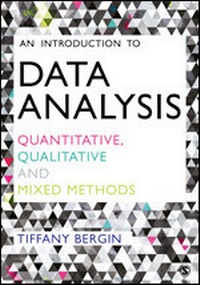
An Introduction to Data Analysis
Quantitative, Qualitative and Mixed Methods
1st Edition
Published on 15. October 2018
296 pages
978-1-5264-5233-7 (ISBN)
Description

Covering the general process of data analysis to finding, collecting, organizing, and presenting data, this book offers a complete introduction to the fundamentals of data analysis.
Using real-world case studies as illustrations, it helps readers understand theories behind and develop techniques for conducting quantitative, qualitative, and mixed methods data analysis. With an easy-to-follow organization and clear, jargon-free language, it helps readers not only become proficient data analysts, but also develop the critical thinking skills necessary to assess analyses presented by others in both academic research and the popular media.
It includes advice on:
- Data analysis frameworks
- Validity and credibility of data
- Sampling techniques
- Data management
- The big data phenomenon
- Data visualisation
- Effective data communication
Whether you are new to data analysis or looking for a quick-reference guide to key principles of the process, this book will help you uncover nuances, complexities, patterns, and relationships among all types of data.
Using real-world case studies as illustrations, it helps readers understand theories behind and develop techniques for conducting quantitative, qualitative, and mixed methods data analysis. With an easy-to-follow organization and clear, jargon-free language, it helps readers not only become proficient data analysts, but also develop the critical thinking skills necessary to assess analyses presented by others in both academic research and the popular media.
It includes advice on:
- Data analysis frameworks
- Validity and credibility of data
- Sampling techniques
- Data management
- The big data phenomenon
- Data visualisation
- Effective data communication
Whether you are new to data analysis or looking for a quick-reference guide to key principles of the process, this book will help you uncover nuances, complexities, patterns, and relationships among all types of data.
Reviews / Votes
Bergin's book has a clear and straight-forward structure covering the key points and issues required to engage in qualitative, quantitative or mixed methods research. This is an accessible introduction for undergraduates encountering research methods for the first time. -- Anna Robb Tiffany Bergin is clearly an experienced and effective teacher, reminiscent of the late Cathie Marsh (both authors taught research methods at Cambridge). This book is informed by professional experience outside academia and is recommended as required reading in research methods (quantitative, qualitative, and mixed) for courses in sociology, social policy and related areas. It can serve either as a course text or as a self-teaching aid.Well organised and easy to use, written in a no-nonsense style, addressing the reader throughout as "you" with emphasis on learning by doing hands-on with real data, it is full of sound practical advice and stresses the importance of organising your work and especially on communicating your findings. -- John F Hall
More details
Language
English
Place of publication
London
United Kingdom
Target group
College/higher education
ISBN-13
978-1-5264-5233-7 (9781526452337)
Copyright in bibliographic data and cover images is held by Nielsen Book Services Limited or by the publishers or by their respective licensors: all rights reserved.
Schweitzer Classification
Other editions
Additional editions
Book
11/2018
1st Edition
SAGE Publications Ltd
€168.10
Shipment within 15-20 days
Book
11/2018
1st Edition
SAGE Publications Ltd
€87.40
Shipment within 15-20 days
Person
Content
Chapter 1: Introducing Data
Chapter 2: Thinking like a Data Analyst
Chapter 3: Finding, Collecting, and Organizing Data
Chapter 4: Introducing Quantitative Data Analysis
Chapter 5: Applying Quantitative Data Analysis: Correlations, T-Tests, and Chi-Square Tests
Chapter 6: Introducing Qualitative Data Analysis
Chapter 7: Applying Qualitative Data Analysis
Chapter 8: Introducing Mixed Methods: How to Synthesize Quantitative and Qualitative Data Analysis Techniques
Chapter 9: Communicating Findings and Visualizing Data
Chapter 10: Conclusion: Becoming a Data Analyst
Chapter 2: Thinking like a Data Analyst
Chapter 3: Finding, Collecting, and Organizing Data
Chapter 4: Introducing Quantitative Data Analysis
Chapter 5: Applying Quantitative Data Analysis: Correlations, T-Tests, and Chi-Square Tests
Chapter 6: Introducing Qualitative Data Analysis
Chapter 7: Applying Qualitative Data Analysis
Chapter 8: Introducing Mixed Methods: How to Synthesize Quantitative and Qualitative Data Analysis Techniques
Chapter 9: Communicating Findings and Visualizing Data
Chapter 10: Conclusion: Becoming a Data Analyst
